
Key Takeaways
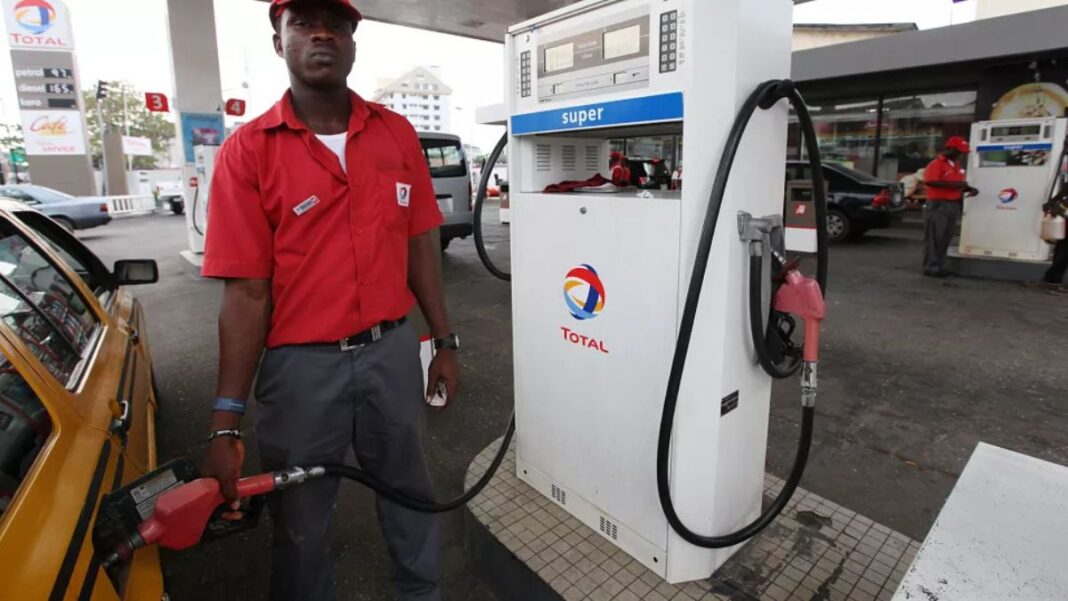
- Super Petrol Stabilized at FCFA 840/L: Premium unleaded petrol (Super) stands at FCFA 840 per liter nationwide at licensed filling stations following government subsidy adjustments.
- Gasoil Diesel Maintained at FCFA 828/L:Automotive diesel fuel (Gasoil) retails at FCFA 828 per liter, directly influencing commercial freight tariffs along major transit corridors.
- Social Subsidies Protect Domestic Kerosene and LPG: Domestic lamp kerosene (Pétrole lampant) remains subsidized at FCFA 350 per liter, while a 12.5 kg domestic cooking gas cylinder (butane) stays fixed at FCFA 6,500.
The Macroeconomics Behind Cameroon’s Pump Prices
Fuel pricing in Cameroon sits at the intersection of international oil market fluctuations, state-managed fiscal policy, and regional energy distribution mechanics. Under the coordination of the Ministry of Water Resources and Energy (MINEE) alongside the Ministry of Commerce (MINCOMMERCE), downstream petroleum pricing operates through a regulated structure managed by the Caisse de Stabilisation des Prix des Hydrocarbures (CSPH).
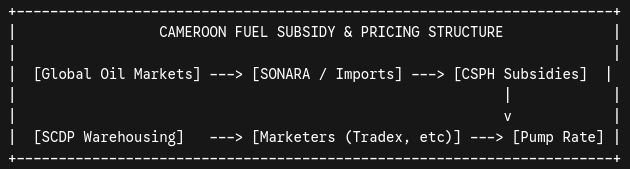
Historically, the Cameroonian state absorbed significant price shocks by funding bulk fuel subsidies to insulate consumer purchasing power. However, under structural fiscal consolidation guidelines aligned with the International Monetary Fund (IMF), the government initiated progressive subsidy reductions. These reform measures aim to redirect state capital toward national infrastructure projects, public healthcare, and agricultural development, while preserving social protections on sensitive products like domestic kerosene.
National Fuel Price Structure
Official retail pump prices apply uniformly across urban and rural filling stations managed by major distribution companies—including Tradex, TotalEnergies, Neptune Oil, Corlay (Oando), and Ola Energy.
| Fuel Type | Official Unit | Retail Price (FCFA / XAF) | Est. Price (USD Equivalent) | Target Sector & Use Case |
| Super Petrol (Essence) | 1 Liter | FCFA 840 | $1.41 | Passenger vehicles, commercial taxis, motorcycle taxis (bendskins) |
| Gasoil (Diesel) | 1 Liter | FCFA 828 | $1.39 | Heavy freight trucks, intercity buses, industrial generators |
| Domestic Kerosene (Pétrole) | 1 Liter | FCFA 350 | $0.59 | Rural household lighting, domestic cooking in peri-urban areas |
| Domestic Gas (LPG / Butane) | 12.5 kg Cylinder | FCFA 6,500 | $10.92 | Urban and sub-urban household cooking fuel |
| Industrial Fuel Oil (180) | 1 Liter | FCFA 580 – 620 | $0.97 – $1.04 | Thermal power generation, industrial processing plants |
Downstream Logistics: SONARA and SCDP Operations
Understanding supply stability requires examining domestic refining and distribution infrastructure. The National Refining Company (Société Nationale de Raffinage – SONARA), located at Pointe Limboh near Limbe in the Southwest region, historically supplied processed fuels. Following the 2019 refinery fire, Cameroon transitioned primarily to refined petroleum imports managed through competitive international tenders under MINEE oversight.
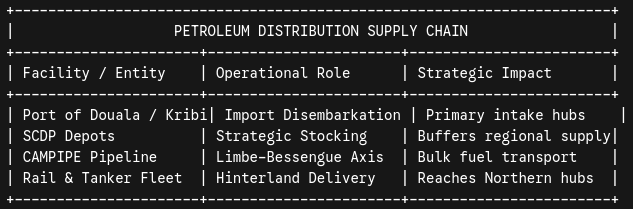
Once imported refined products reach maritime terminals at Douala or Kribi, the Société Camerounaise de Dépôts Pétroliers (SCDP) assumes control of strategic storage and regional distribution. SCDP depots strategically situated in Yaoundé (Mvan), Douala (Bessengue), Bafoussam, Belabo, Ngaoundéré, and Garoua store fuel stocks to prevent localized shortages across the country’s ten regions.
Transport Cascades: Impact on Public Fares and Cargo Logistics
Fuel price adjustments ripple directly through Cameroon’s transportation ecosystem. Diesel (Gasoil) drives logistics for heavy freight container trucks traveling the Douala-Chadian corridor (N3 and N1 highways), as well as intercity coach services linking Yaoundé, Bafoussam, and Douala.
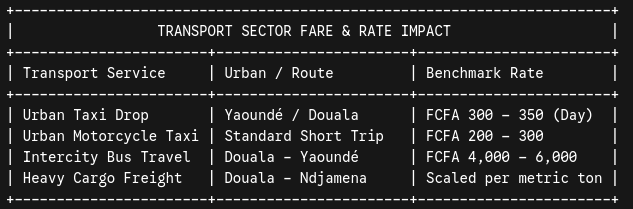
- Urban Public Transport: Taxi fares in major metropolitan hubs like Yaoundé and Douala operate under negotiated agreements between urban transport unions and the Ministry of Transport (MINT). Official daytime base fares range between FCFA 300 and FCFA 350, though night tariffs run slightly higher.
- Motorcycle Taxis (Bendskins): Unregulated pricing models mean motorcycle taxi drivers immediately adjust short-distance fares by FCFA 50 to FCFA 100 following any pump rate adjustment to offset higher daily fueling expenses for their Super petrol-fueled engines.
- Freight and Agricultural Logistics: Cargo transport operators factor higher diesel costs directly into agricultural haulage. Transporting plantains from the West region or cassava from the South into urban consumer markets reflects elevated freight overheads.
Regional Fuel Dynamics: Border Trade and Rural Surcharges
While pump rates at formal distribution stations remain strictly regulated by the state, geographical factors create localized pricing variations across border zones and rural interiors:
- The Far North & North Regions: Proximity to Nigeria historically exposes northern border markets to cross-border petroleum flows (Zoua-zoua or informal fuel). When informal supply routes tighten, demand shifts abruptly to licensed stations in Garoua and Maroua, occasionally testing local SCDP depot reserves.
- Rural & Hinterland Access: In isolated agricultural divisions lacking formal pump stations (such as parts of the East, South, and Northwest regions), independent resellers distribute fuel in informal jerrycans (bidons). In these remote areas, logistics surcharges push the effective price of Super petrol to FCFA 950 – 1,100 per liter.
- Maritime & Inland Fishing Zones: Fishermen operating in coastal zones like Bakassi, Kribi, and Youpwé rely on outboard engine fuel mixtures (petrol mixed with two-stroke oil), making their operating costs directly sensitive to pump adjustments on Super petrol.
Practical Guidance for Consumers and Fleet Operators
Managing transport expenses and fuel budgeting requires tactical strategies in the current market environment:
- Verify Pump Calibration at Stations: Patronize major distribution networks (Tradex, TotalEnergies, Neptune) equipped with digital volumetric meters audited by MINCOMMERCE to ensure full measure delivery per liter paid.
- Utilize Electronic Fuel Cards: Fleet managers and individual drivers can adopt prepaid fleet management cards offered by primary marketers. These cards eliminate cash-handling leaks, offer corporate fuel discounts, and provide detailed tracking of consumption patterns.
- Optimize Bulk Delivery for Industrial Generators: Facilities relying on diesel back-up generators should source Gasoil in bulk quantities directly through licensed wholesale distributors via SCDP depots, bypassing retail station markups.
- Report Illegal Price Gouging:Station operators charging above official regulated rates (FCFA 840/L Super, FCFA 828/L Gasoil, FCFA 6,500 per butane gas cylinder) can be reported directly to MINEE regional delegations or local administrative authorities.
Frequently Asked Questions
Why is domestic kerosene significantly cheaper than petrol and diesel in Cameroon?
The Cameroonian government maintains targeted social subsidies on domestic kerosene (Pétrole lampant) to keep energy accessible for low-income and rural households that depend on it for lighting and cooking, preventing a rise in household energy poverty.
What is the official price of a 12.5 kg cooking gas cylinder in Cameroon?
The official, state-regulated price for a standard 12.5 kg domestic cooking gas cylinder (butane) is FCFA 6,500 across all authorized distribution outlets nationwide.
How does the government regulate fuel pump prices across the country?
Fuel prices are regulated by the Ministry of Water Resources and Energy (MINEE) and the Ministry of Commerce (MINCOMMERCE) in coordination with the Caisse de Stabilisation des Prix des Hydrocarbures (CSPH). CSPH uses a fiscal equalization mechanism to absorb transport differentials, ensuring uniform pump prices across licensed filling stations nationwide.

