
Key Takeaways
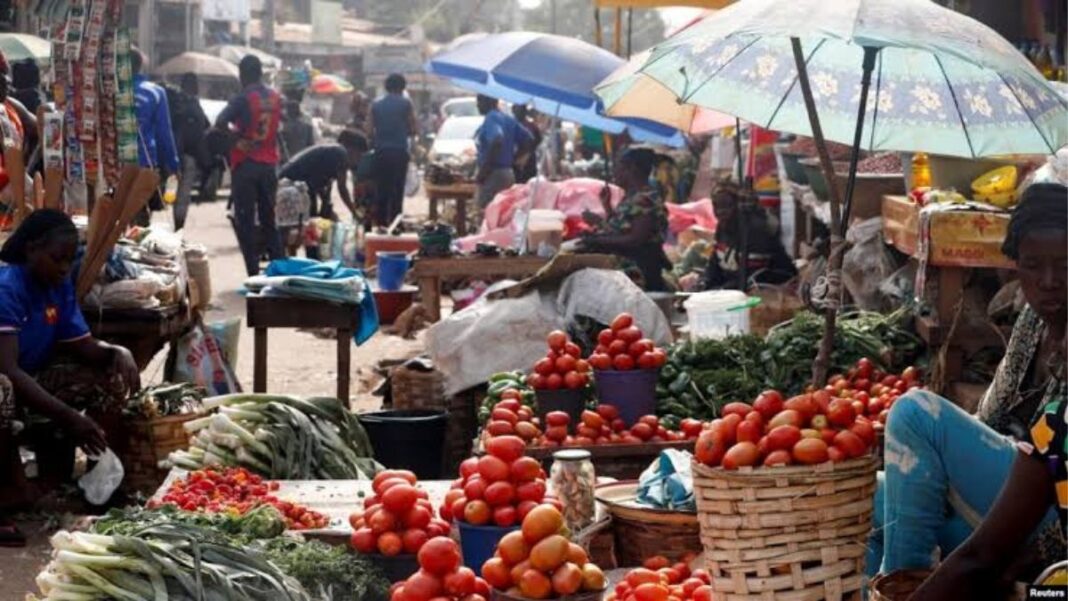
- Core Staples & Protein Dynamics: Imported 5% broken rice remains stabilized between FCFA 450 and 550/kg, while local meat prices face sustained pressure, with boneless beef retailing at FCFA 3,500 – 4,000/kg in major urban centers.
- Fuel & Household Energy Baseline: Regulated petroleum pump prices stand firm at FCFA 840/L for Super petrol and FCFA 828/L for Gasoil diesel, alongside the state-subsidized FCFA 6,500 standard 12.5 kg cooking gas cylinder.
- Construction & Industrial Materials: Standard grade-42.5 Portland cement (50 kg bag) ranges from FCFA 4,500 to 5,200 depending on proximity to coastal grinding plants, while corrugated iron roofing sheets average FCFA 6,500 – 8,500 per sheet.
Navigating Cameroon’s Commercial Pricing Landscape
Analyzing market prices in Cameroon requires an understanding of the interplay between government-regulated tariffs, regional agricultural cycles, port import dynamics, and hinterland transportation logistics. The Ministry of Commerce (MINCOMMERCE) and the National Institute of Statistics (INS) continuously track commodity pricing across primary consumption centers to gauge national inflation trends.
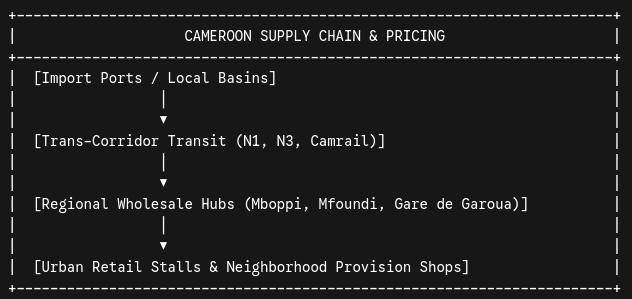
While state administrative mechanisms—such as the Caisse de Stabilisation des Prix des Hydrocarbures (CSPH) and official price ceilings—enforce uniformity on energy and select imported items, open-air food and raw material markets fluctuate based on seasonal factors. Supply lines stretching along the Douala-Yaoundé (N3) corridor and the Northern rail axis (Camrail) directly dictate final retail markups.
National Commodity Price Breakdown Table
The table below presents benchmark price ranges for high-volume commodities across major Cameroonian markets (Marché Mboppi in Douala, Marché Mfoundi in Yaoundé, Marché Central in Bafoussam, and Marché de Garoua).
| Commodity Category | Standard Unit | Average Price (FCFA / XAF) | Est. Price (USD Equivalent) | Key Market Drivers |
| Imported Broken Rice (5%) | 1 kg | FCFA 450 – 550 | $0.75 – $0.92 | High port availability; price-monitored by MINCOMMERCE |
| Refined Cooking Oil (Mayor) | 1 Liter | FCFA 1,500 – 1,750 | $2.50 – $2.92 | Urban staple; subject to domestic oilseed processing quotas |
| Fresh Beef (Boneless) | 1 kg | FCFA 3,500 – 4,000 | $5.83 – $6.67 | Cattle freight logistics from Adamawa and Northern zones |
| Super Petrol | 1 Liter | FCFA 840 | $1.41 | State-regulated pump price uniform at licensed stations |
| Gasoil (Automotive Diesel) | 1 Liter | FCFA 828 | $1.39 | Regulated price; directly impacts commercial freight rates |
| Domestic Butane Gas | 12.5 kg Cylinder | FCFA 6,500 | $10.92 | Heavily subsidized social energy staple nationwide |
| Portland Cement (42.5) | 50 kg Bag | FCFA 4,500 – 5,200 | $7.50 – $8.67 | Factory-gate proximity (Cimencam, Dangote, Mira) |
| Rebar Steel (12mm) | Per Bar (12m) | FCFA 5,500 – 6,500 | $9.17 – $10.83 | Scrap metal processing and billet import costs |
| Raw Cocoa Beans | 1 kg (Farm-gate) | FCFA 2,500 – 3,200 | $4.17 – $5.33 | Dynamic export market driven by global terminal futures |
Food Staples and Protein Markets
Food accounts for nearly half of average household consumption expenditure in Cameroonian urban centers. The retail landscape divides between mass-imported grains and locally harvested agro-commodities.
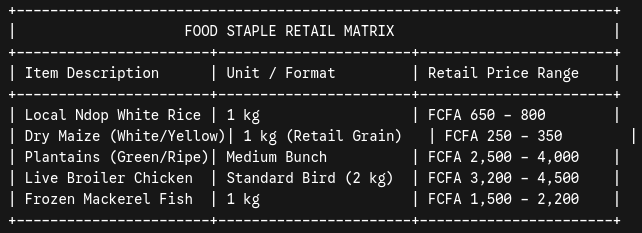
Imported grains dominate coastal cities due to port accessibility, whereas local varieties—such as Ndop rice from the Northwest or Yagoua parboiled rice from the Far North—command price premiums of FCFA 650 to 800/kg owing to domestic transport expenses.
Protein distribution relies heavily on livestock transport from northern pastoral belts down to municipal abattoirs in southern cities. Consequently, boneless beef reaches FCFA 4,000/kg at retail butcher stalls in Yaoundé, whereas fresh pork presents a lower-cost alternative at FCFA 2,300 – 3,000/kg.
Building Materials and Construction Sector Rates
Cameroon’s expanding urban infrastructure and real estate sector drive steady demand for structural building materials. Domestic manufacturing capacity—anchored by major cement producers like Cimencam, Dangote Cement, Medcem, and Mira Construction Materials—has stabilized supply across primary distribution hubs.
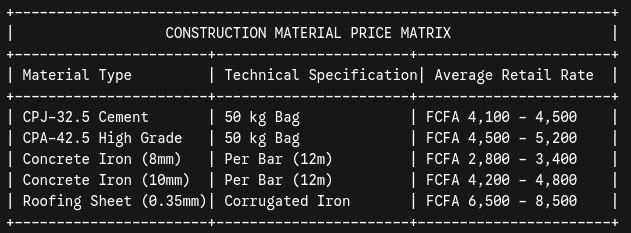
- Cement Distinctions: Standard CPJ-32.5 grade cement, commonly used for non-structural masonry and plastering, retails between FCFA 4,100 and 4,500 per bag. High-strength CPA-42.5 cement for structural reinforced concrete commands FCFA 4,500 to 5,200, with prices trending slightly higher in inland cities like Bertoua or Ngaoundéré due to rail and truck freight markups.
- Metallurgical Products: Deformed steel rebar prices track international billet imports and scrap metal recycling operations centered around Douala’s industrial zones (Bonabéri).
Energy, Fuel, and Regulated Staples
The downstream energy sector remains strictly managed by state authorities to prevent retail price volatility.
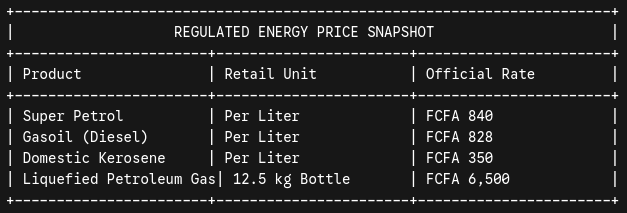
Fuel tariffs at filling stations nationwide follow regulated structures set by MINEE and MINCOMMERCE, backed by the CSPH equalization fund to ensure price parity across urban and rural stations alike. Domestic kerosene (Pétrole lampant) benefits from targeted subsidies at FCFA 350/L to preserve access for rural and off-grid households.
Export Cash Crops: Cocoa and Coffee Farm-Gate Rates
Cameroon’s rural agricultural economy is anchored by cash crop production—primarily cocoa (fève de cacao) and coffee (Robusta and Arabica)—managed under the oversight of the National Cocoa and Coffee Board (ONCC).
- Cocoa Beans: Farm-gate prices in key production basins (Meme Division in the Southwest, Moungo in the Littoral, and Haute-Sanaga in the Centre) reflect global cocoa futures. Recent market seasons have recorded historical highs, with high-quality dry cocoa beans fetching between FCFA 2,500 and 3,200 per kilogram at primary buyer collection points.
- Coffee Markets: Robusta coffee harvested in the West and East regions averages FCFA 1,200 to 1,600/kg, while Arabica varieties grown at higher elevations in the Northwest command up to FCFA 2,000/kg for fully washed grades.
Regional Price Variations: Coastal, Inland, and Northern Hubs
Geographic location creates distinct pricing profiles across the country’s economic zones:
- Douala (Littoral Port Hub): Lowest price points nationwide for imported grains, frozen marine fish, and manufactured construction materials due to direct port proximity. Conversely, fresh agricultural produce (plantains, tubers) carries higher retail margins due to urban distribution costs.
- Yaoundé (Centre Administrative Hub): Serves as a central market for agricultural produce coming from the Centre, South, and West regions. However, red meat, sea fish, and industrial goods reflect added freight expenses relative to coastal ports.
- Bafoussam (Western Agro-Basin): Offers lower retail pricing on fresh vegetables, Irish potatoes, maize, and poultry products. Industrial items and imported goods carry slight inland transport adjustments.
- Garoua & Maroua (Northern Pastoral Zones): Feature low price points for beef, sheep, goat meat, sorghum, and millet. Conversely, coastal commodities (plantains, palm oil, marine fish) carry significant logistics markups due to transit distances exceeding 1,000 km.
Practical Procurement Advice for Buyers and Businesses
Commercial procurement managers and individual household shoppers can optimize purchasing efficiency using several market-tested practices:
- Source Fresh Produce at Primary Markets: In Yaoundé, buy plantains and ground crops directly at Marché Mfoundi or Marché 8ème early in the morning when rural delivery trucks arrive. In Douala, Marché Sandaga offers direct wholesale pricing on incoming agricultural shipments.
- Procure Industrial Goods from Factory Distributors: For construction projects, sourcing cement directly from authorized brand distributors or factory depots in 100-bag minimum lots yields savings of FCFA 200 to 400 per bag compared to neighborhood building supply yards.
- Monitor MINCOMMERCE Promotional Caravans: Take advantage of periodic state-sponsored Ventes Promotionnelles organized by the Ministry of Commerce in major cities, where basic staples like sugar, cooking oil, rice, and soaps are sold directly at factory-gate prices.
- Utilize Bulk Purchasing Networks: Buying cereals and pulses in 50 kg sacks through local wholesale cooperatives lowers the per-kilogram cost by up to 18% compared to retail unit measurements (boîtes or kilos).
Frequently Asked Questions
Why do cement prices vary between coastal and inland regions in Cameroon?
Cement pricing variations stem from transport and logistics costs. Factories located near ports in Douala benefit from direct access to imported raw clinker, while shipping finished bags to inland cities like Bertoua or Garoua adds rail and road freight overheads.
What authority regulates commodity prices in Cameroon?
The Ministry of Commerce (MINCOMMERCE) regulates commodity pricing, monitors market compliance, and conducts anti-fraud inspections via the National Brigade of Inspection and Fraud Suppression, working in coordination with sectoral agencies like the CSPH for fuel.
Where can consumers access official market price reference guides?
Consumers and business operators can check price publications issued by the National Institute of Statistics (INS), regional delegations of MINCOMMERCE, and periodic press notices published in state media (Cameroon Tribune).

