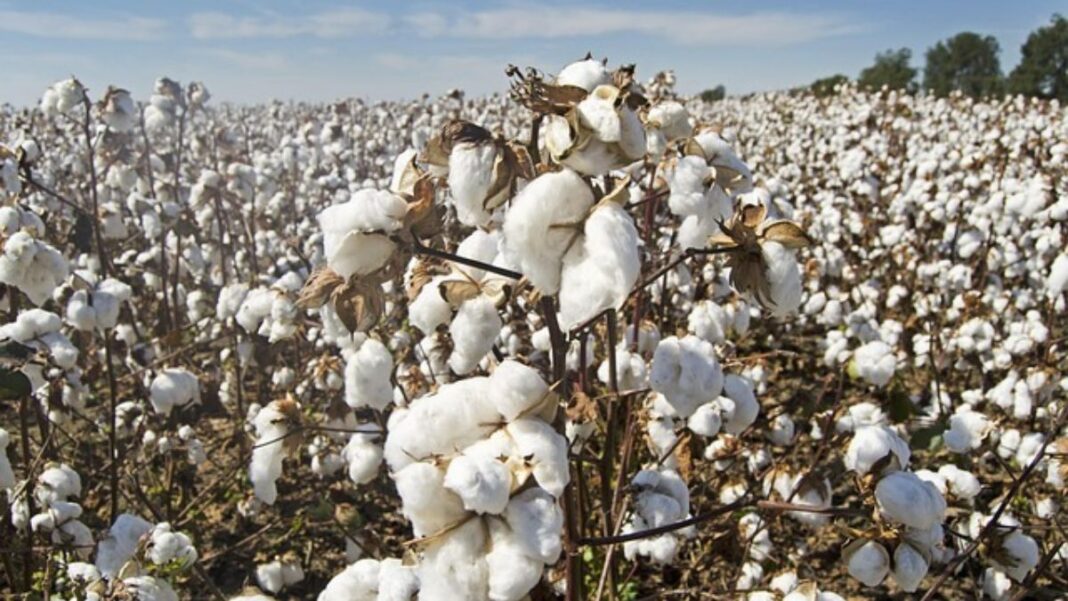

Sodecoton wants to make history this year.
If it hits its target, Cameroon will harvest more than 400,000 tonnes of seed cotton for the first time ever.
But here’s the catch: last season, the same company expected 400,000 tonnes and delivered 286,000.
So which number should you believe? And what does a farmer in the North or Far North actually earn per kilo, when world prices, fertilizer costs and yields are all moving against each other?
In this guide, you’ll learn:
Advertisement
- How much cotton Cameroon produces, and why output has been slipping
- What farmers are paid per kilo of seed cotton
- Where world cotton prices stand (as of 22 October 2026) and what they mean in FCFA
- The cost pressures squeezing producers
- 7 practical ways to read the cotton market like an insider
Let’s dive in.
Summary: Cameroon Cotton in Numbers
- Seed cotton price at the farm gate: around 300 FCFA/kg at the start of campaigns, according to one report (see data notes at the end).
- 2024/25 production: 286,000 tonnes, against a 400,000-tonne expectation.
- 2025/26 target: 440,000 tonnes (final result not found).
- Average yield: fell from 1,600 to about 1,300 kg/ha.
- World price (22 October 2026): about 81.7 US cents per lb on ICE futures, near the lowest level in about two months, but still about 27.5% above a year earlier.
- Fertilizer: up around 30%, hitting producers where it hurts.
- The catch: I couldn’t find an official 2026/27 purchase price for Cameroon or a final 2025/26 production figure. I flag this throughout.
How Much Cotton Does Cameroon Produce?
Cameroon is the leading cotton producer in Central Africa, and the crop is grown in the northern basin by farmers supervised by Sodecoton.
Here is the production history I could piece together:
| Season / year | Seed cotton output | Source note |
|---|---|---|
| 2022 | 330,000 t | CNPC-C / BEAC series |
| 2023 | 314,455 t | CNPC-C / BEAC series |
| 2023/24 | about 394,000 t (peak) | Sodecoton presentation |
| 2024/25 | 286,000 t | Sodecoton |
| 2024/25 | 284,613 t | PR-PICA regional data |
| 2025/26 | 440,000 t (target) | Sodecoton forecast |
The sources:
- Production fell to 314,455 tonnes in 2023 after reaching 330,000 tonnes in 2022, according to the producers’ confederation (CNPC-C).
- Sodecoton cites a peak of 394,000 tonnes in 2023/24.
- In 2024/25, output was 286,000 tonnes, a shortfall of 114,000 tonnes against the 400,000 tonnes expected.
- Regional data from PR-PICA put 2024/25 at 284,613 tonnes on 229,029 hectares, an average yield of 1,243 kg per hectare.
The 2025/26 target
Sodecoton aims for 440,000 tonnes at the end of the 2025/26 campaign, which was due to close in May 2026. That would be a 100,000-tonne jump and a record, taking Cameroon past 400,000 tonnes for the first time. The national strategy (SND30) targets 600,000 tonnes by 2030.
I searched for the final 2025/26 outcome and didn’t find one. Treat 440,000 tonnes as a goal, not a result.
Why Production Keeps Falling Short
Four forces explain most of the gap.
1. Falling yields
Average yields fell from 1,600 kg/ha to about 1,300 kg/ha, a productivity drop that Sodecoton says costs the sector more than 10 billion FCFA a year.
2. Shrinking area
Sodecoton’s March 2026 data shows cultivated area dropped from 234,000 hectares in 2023 to 197,000 in 2025. That’s a 16% fall. (Calculation is mine.)
3. Floods and pests
The record target is threatened by floods and jassids (leafhoppers), with about 11,000 hectares reported wiped out.
4. Expensive fertilizer
A World Bank report cited by the press points to a rise of about 30% in input prices, with urea, the fertilizer most used on cotton, the most affected.
Advertisement
The knock-on effect is financial. Arrears on the agricultural credits advanced to producers have reached 2 billion FCFA, and some growers are abandoning cotton altogether.
A reality check on the 440,000-tonne target
Here’s a calculation worth doing. (It’s mine, and it assumes the 197,000-hectare figure applies to the current season.)
- 440,000 tonnes on 197,000 hectares would require about 2,230 kg/ha, far above anything achieved recently.
- At the 1,600 kg/ha yield target, hitting 440,000 tonnes would need roughly 275,000 hectares.
In other words, the target depends on either a major yield jump, a major area expansion, or both.
The Seed Cotton Price: What Farmers Get Per Kilo
Producers deliver seed cotton to Sodecoton and are paid at a price set at the start of the campaign. That price is around 300 FCFA per kilo of seed cotton, according to a News du Cameroun report on the sector.
For comparison, Sodecoton’s price for the 2012/13 season was 265 FCFA/kg, described at the time as the highest ever in Cameroon and in Central and West Africa. That means a nominal increase of roughly 13% in about 13 years. (Calculation is mine, based on “around 300”.)
The same News du Cameroun article states that in 2023/24 the first-choice price was 310 FCFA/kg and the second-choice price 285 FCFA/kg. I couldn’t verify that independently. See the notes at the end.
Advertisement
What that means in cash per hectare
Using the roughly 300 FCFA/kg price, here is the gross revenue per hectare before input costs. (My calculation.)
| Yield | Gross revenue per hectare |
|---|---|
| 1,243 kg/ha (2024/25 actual) | about 373,000 FCFA |
| 1,300 kg/ha | 390,000 FCFA |
| 1,600 kg/ha (target) | 480,000 FCFA |
The gap between the current yield and the target is about 90,000 FCFA per hectare. That’s why yield is the central issue in the sector.
A thought on what 440,000 tonnes would pay
At 300 FCFA/kg, 286,000 tonnes is worth about 86 billion FCFA at the farm gate, and 440,000 tonnes would be worth about 132 billion. (My calculation, and approximate.)
Price protection
Cotton farmers face a structural risk: they’re paid a price set at the start of the season, while Sodecoton sells fibre at whatever the world market gives. As early as 2014, Sodecoton considered a price-risk fund, co-managed with the producers’ confederation, to guarantee a minimum seed cotton price if lint prices fell sharply. I didn’t find evidence of its current status.
The Fibre Price and the World Market
What Cameroon gets for fibre
This is where the pressure comes from. Sodecoton’s managing director said fibre had sold for about 890 FCFA per kilo for fifteen months, below the company’s cost price. Producer organisations at a meeting in Douala asked authorities to support the sector so small producers could still be paid the price set at the start of the season.
The world price today
Cotton is priced on ICE futures in New York in US cents per pound. Here are the latest readings:
- Cotton fell to 81.71 US cents per pound on 22 October 2026, down 1.43% over the past month but still 27.53% higher than a year ago.
- On 6 October, the December 2026 contract settled at 81.21 cents.
- The December contract fell from 93 cents at the end of August to 78 at the start of October, then recovered to near 80.
- The A Index (a benchmark for international fibre prices) was briefly above 100 cents/lb in early September, fell as low as 88, and was near 91 in October.
The bigger picture: with repeated moves above 90 cents followed by retreats below 80, it’s unclear whether the market can find a stable balance between prices and demand.
Advertisement
Translating the world price into FCFA
Let’s convert. I’ll use about 565 FCFA per US dollar, the rate implied by ONCC’s recent coffee and cocoa conversions. That’s an assumption, so update it with today’s rate.
- 81.7 cents per lb × 2.2046 = about $1.80 per kg
- $1.80 × 565 ≈ 1,017 FCFA per kg of lint
- At the A Index of about 91 cents: about 1,133 FCFA per kg
(All calculations are mine.)
Compare that with the 890 FCFA/kg Sodecoton reported for fibre. The timing differs (the 890 figure came from earlier in the year), so I’m not claiming a precise gap. But it shows why the world market matters: a few cents per pound translates into tens of FCFA per kilo of fibre and, ultimately, into what the company can afford to pay producers.
Credit, Inputs and the Financing Machine
Cotton in Cameroon runs on credit.
- The sector mobilises about 60 billion FCFA of input credits a year for 150,000 to 200,000 producers supervised by Sodecoton in the Adamaoua, North and Far North regions.
- The funds are distributed and recovered through the producers’ confederation (CNPC-Cameroun).
- For 2025/26, the confederation ordered 52,000 tonnes of inputs valued at 40 billion FCFA.
This system works only if harvests are decent. When yields drop, repayments suffer, which is why the 2 billion FCFA arrears matter so much.
Why Cotton Matters to Cameroon’s Economy
- Exports: Cotton represents 6% of the country’s non-oil exports and 14.1% of the GDP of the export agriculture branch.
- Livelihoods: Seed cotton buying mobilises close to 200,000 families, more than 2 million people.
- The company: Sodecoton reported revenue above 223 billion FCFA over 2022 to 2024, and more than 150,000 producers depend directly on the sector.
- Seeds as a side business: Sodecoton has exported 18,570 tonnes of seed to five African countries, including 1,000 tonnes to Kenya. It says its seed combines long fibre with yields of 1,500 to 1,600 kg/ha, against an average of about 1,200 for competing varieties.
The missing value chain
Nearly 99% of Sodecoton’s output is exported as raw fibre, while Cameroon imports around 100 billion FCFA of textiles and used clothing every year. Sodecoton is betting on a garment factory and training centre in Garoua by 2027.
What to Watch Next
- World prices. Futures have swung between roughly 78 and 93 cents in two months, and the market is sensitive to US weather, demand and the dollar.
- Fertilizer prices. They’re the biggest controllable risk for next season’s yields.
- The 2026/27 purchase price. Producers asked for a higher price and fertilizer subsidies. Watch for the official announcement.
- The 2025/26 final figure. It will show whether 440,000 tonnes was reachable.
- Yield and area data. Both need to improve for the 600,000-tonne goal.
7 Ways to Read the Cotton Market Like an Insider
1. Separate three prices.
Seed cotton (what farmers get), fibre (what Sodecoton sells) and the world price (the benchmark). Mixing them up is the most common mistake.
2. Track yield, not just price.
At around 300 FCFA/kg, going from 1,300 to 1,600 kg/ha adds about 90,000 FCFA per hectare. That beats any realistic price increase.
3. Convert world prices into FCFA per kilo.
Multiply cents per lb by 22.046, then by the exchange rate, and divide by 100. You can do this in under a minute.
4. Treat production targets with caution.
Targets of 400,000 tonnes in 2024/25 became 286,000. Check area and yield assumptions before trusting a headline.
5. Watch input costs.
A 30% rise in fertilizer can wipe out the benefit of a price increase.
6. Check credit health.
Arrears are an early warning sign of farmer distress and future input constraints.
7. Look for downstream opportunities.
With 99% of output leaving as raw fibre and a 100-billion-FCFA textile import bill, processing is where the value gap sits.
FAQ: Cameroon Cotton Prices and Production
What is the cotton price in Cameroon?
Seed cotton is bought from producers at around 300 FCFA per kg, according to one report. I couldn’t find an official 2026/27 announcement for Cameroon.
How much cotton does Cameroon produce?
2024/25 production was about 286,000 tonnes. The 2025/26 target was 440,000 tonnes, and a final figure wasn’t found.
Who buys Cameroon’s cotton?
Sodecoton buys seed cotton from producers, gins it, and exports around 99% as raw fibre.
Why is Cameroon’s cotton production falling?
Lower yields, a shrinking cultivated area, floods and pests, and expensive fertilizer are the main reasons.
What is the world cotton price?
About 81.7 US cents per lb on 22 October 2026, which is roughly 1,000 FCFA per kg of lint at an assumed exchange rate.
What is the 2030 production goal?
600,000 tonnes under the national strategy (SND30).
How many farmers grow cotton in Cameroon?
Between 150,000 and 200,000 producers are supervised by Sodecoton, and the sector supports close to 200,000 families.
Final Thoughts
The bottom line: Cameroon’s cotton farmers earn about 300 FCFA per kilo of seed cotton, but yields, area and input costs matter more to their income than price alone, and the 440,000-tonne record depends on turning those trends around.
If you remember one number, make it 1,300: the average yield in kilos per hectare. Move that figure, and almost everything else in the sector improves.
Sources
- Financial Afrik, “Cameroun : la Sodecoton table sur 440.000 tonnes en 2026” (May 2026) and “La filière coton pâtit de l’inflation des engrais” (Sept 2026)
- Agence Ecofin, “Cameroun : Sodecoton projette 440 000 tonnes de coton en 2026, en dépit des obstacles”
- Investir au Cameroun, “Coton : la Sodecoton vise un record de 440 000 tonnes en 2026” and “Semences : la Sodecoton exporte 18 570 tonnes vers cinq pays africains”
- Invest-Time, “Cameroun : le pari des 440 000 tonnes de coton fait émerger un marché de financement agricole”
- Africtelegraph, “Coton : la Sodecoton vise 440 000 tonnes au Cameroun en 2026”
- News du Cameroun, “Matières premières : au Cameroun, la chute des prix mondiaux fragilise la filière coton”; “Campagne cotonnière 2025/2026 : les producteurs cherchent 52 000 tonnes d’intrants”; “La campagne cotonnière 2025-2026 plombée par la hausse à 30 % du prix des intrants”; “Sodecoton : 223 milliards FCFA de chiffre d’affaires et 394 000 tonnes de coton”
- Actucameroun / Investir au Cameroun, “Coton : 60 milliards FCFA de crédits d’intrants distribués aux producteurs par an”
- Investir au Cameroun, “SODECOTON achètera le kilo à 265 FCFA” (2012)
- Agence Ecofin, “La Sodecoton envisage la création d’un Fonds de stabilisation des prix aux producteurs” (2014)
- Trading Economics, cotton commodity page (22 October 2026)
- Cotton Incorporated / CottonWorks, Monthly Economic Letter, October 2026
- Cotton Association of India, daily cotton news (6 October 2026)

