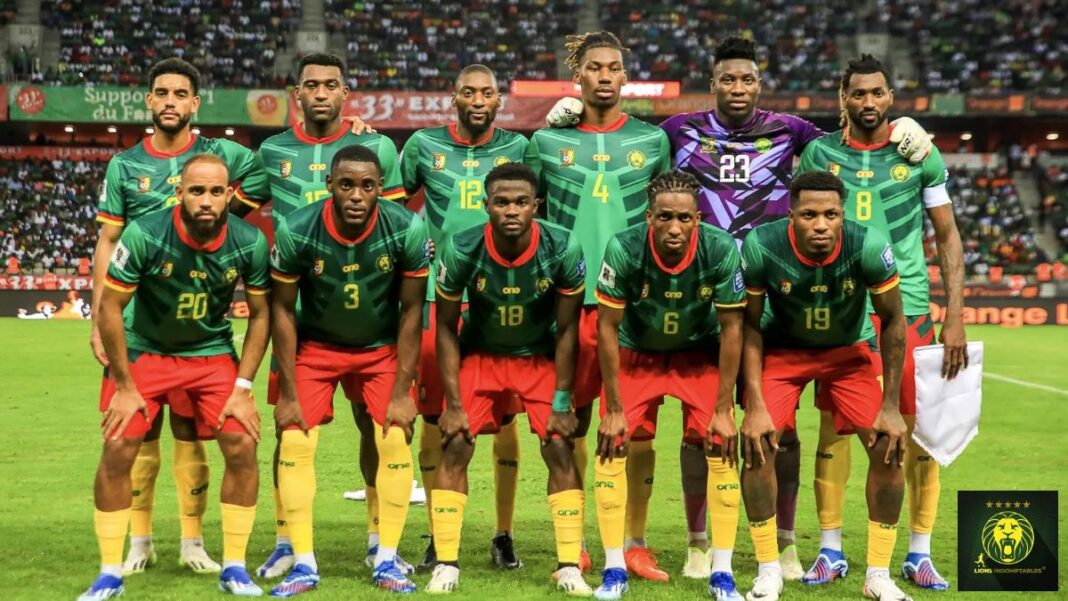

The political and administrative turmoil currently engulfing Cameroonian football has reached a critical boiling point, threatening to derail the national team’s aspirations just weeks before the much-anticipated Africa Cup of Nations (AFCON) 2025 in Morocco. Far from being a mere institutional squabble, the bitter ‘open war’ between the Cameroonian Football Federation (FECAFOOT) and the Ministry of Sports and Physical Education (MINSEP) is now directly impacting the players, with several key members of the Indomitable Lions reportedly contemplating a boycott of the upcoming tournament. This unprecedented internal crisis casts a significant shadow over Cameroon’s readiness and potential performance on the continental stage.
Player Discontent and the Threat of Boycott
Sources close to the national team have indicated that a significant number of players are deeply uncomfortable with the present climate of discord and ambiguity. They have allegedly taken the drastic step of formally contacting the Minister of Sports to express their profound malaise and concern. The core grievance stems from the perception that the ongoing institutional Cameroon football crisis, characterized by a debilitating power struggle between the governing bodies, is gravely damaging the image of the national team and, more pressingly, jeopardizing the team’s chances of success in Morocco.
The players, particularly the squad’s veterans and key players, are demanding an urgent, unequivocal clarification of the situation. Until the command structure and institutional conflicts are resolved, they are hesitant to join the preparatory camp for the AFCON. This ultimatum represents a severe escalation, turning a bureaucratic conflict into a potential player strike that could see Cameroon head to AFCON without some of its most crucial talents.
The Institutional Tug-of-War: FECAFOOT vs. MINSEP
The root of this crisis lies in the increasingly acrimonious relationship between FECAFOOT, headed by football legend Samuel Eto’o, and the Ministry of Sports. The conflict, which has simmered for some time, reignited fiercely following a contentious General Assembly held by FECAFOOT in Yaoundé on November 29th.
The Minister of Sports had explicitly ordered the suspension of this assembly. However, FECAFOOT chose to disregard the directive, proceeding with the meeting. During this unauthorized session, Samuel Eto’o was reportedly re-elected for a new four-year term, further solidifying his position and directly challenging the authority of the Ministry. This defiant act set the stage for the chaotic developments that followed.
Immediately after the disputed General Assembly, FECAFOOT announced the dismissal of the national team’s head coach, Marc Brys. This move was clearly intended to assert FECAFOOT’s control over the selection’s technical management.
The War of the Lists: Competing Coach Convocations
The administrative chaos soon translated into direct, operational dysfunction concerning the team’s preparation.
- Eto’o’s Camp Responds: In the wake of Brys’ announced dismissal, David Pagou, a figure reportedly close to Samuel Eto’o, published the first list of players officially called up for AFCON 2025. Tellingly, this list controversially omitted several long-standing key players, a move widely interpreted as an attempt to assert a new order and eliminate dissenting or resistant elements within the squad.
- Brys’ Counter-Strike: On the opposing side, Marc Brys, who remains officially contracted to the Cameroonian State until September 30, 2026, issued his own retaliatory list just days later. Brys’ list directly contradicted Pagou’s by reinstating many of the established pillars and veteran players who had been conspicuously absent from the initial, FECAFOOT-aligned selection.
This unprecedented situation leaves the players in an impossible bind: two competing, legitimate-sounding lists, two different technical structures, and an atmosphere of profound uncertainty. Which coach do they report to? Which list is official? This schism is precisely what has fueled the players’ alarm and led to the threat of a boycott, as they are being forced to navigate a toxic institutional mess just before a major tournament.
The Impending Peril for Cameroon in Morocco
The veteran players view the current situation as a “scabreuse” (scandalous or shady) state of affairs, asserting that this institutional Cameroon football crisis is primarily a “guerre d’ego institutionnel” (institutional ego war). Their core concern is that this self-inflicted drama is not merely distracting but fundamentally eroding the team’s cohesion and focus. For a team known globally as the Indomitable Lions—a symbol of African football pride—this level of public disarray is deeply embarrassing.
The consensus among the concerned players is clear: until the Ministry of Sports and FECAFOOT can establish a single, unified, and stable chain of command, the team’s preparation and, crucially, its performance at AFCON 2025 will be severely compromised. The players have made it known that they are unwilling to risk their careers and the nation’s honour in a situation where the administration cannot even agree on who the coach is, or who the players should be.
The clock is ticking. With the AFCON less than three weeks away, the Cameroonian government and the warring football factions must urgently set aside their differences. Failure to resolve this severe institutional Cameroon football crisis will not only result in a player boycott but could condemn one of Africa’s most successful footballing nations to a humiliating early exit in Morocco. The roar of the Lions Indomptables is currently a cry of distress, demanding clarity and stability before they can focus on roaring on the field.