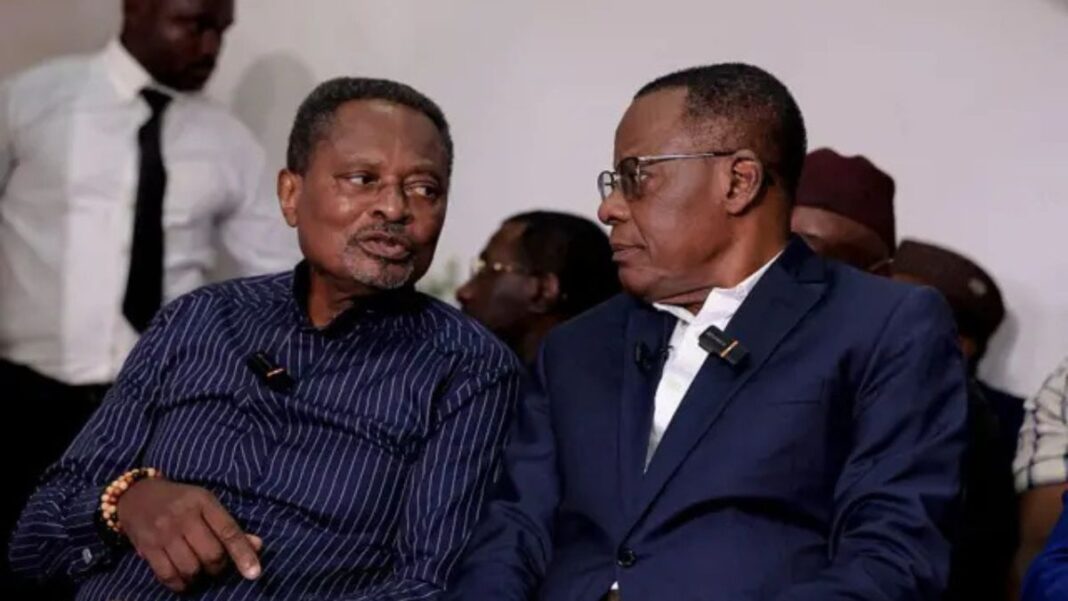

The recent death of prominent opposition leader Anicet Ekane in military detention has violently illuminated the deep political crisis gripping Cameroon in the wake of the disputed October 2025 Presidential Election. At 74, Ekane, the head of the African Movement for New Independence and Democracy (MANIDEM) party, died on December 1, 2025, at the State Defense Secretariat (SED) in Yaoundé, having been detained since late October on charges of “insurrection” and “incitement to rebellion.”
His death is not merely a tragedy; it serves as a stark metric of the country’s escalating Democratic Deficit. It confirms the fears of human rights groups who warn that, far from being an isolated incident, the case is a symbol of a systemic failure to protect the rights and dignity of critics and political opponents in Cameroon.
I. The Political Climate and the Precursors to Crisis
The detention and subsequent death of Ekane occurred within a highly volatile post-electoral landscape. On October 27, 2025, the Constitutional Council proclaimed President Paul Biya, 92, the winner with a declared 53.66% of the vote, securing an eighth term despite allegations of widespread electoral irregularities and a significant decline from his prior victory margins (e.g., 71% in 2018).
A Disputed Mandate and Public Mobilization
The official results were immediately disputed by the main opposition challenger, Issa Tchiroma Bakary, who claimed victory himself. This rejection galvanized widespread, largely peaceful protests in major cities like Douala, Yaoundé, Garoua, and Maroua. The government’s response was swift and heavy-handed.
- Lethal Force and Mass Arrests: Security forces—including the police, gendarmes, and military—were deployed. Reliable reports indicate they used tear gas, water cannons, and in some cases, live ammunition against demonstrators.
- The Death Toll: International media, citing UN sources, reported that security forces killed at least 48 people during protests across the country, while opposition sources placed the toll even higher, at 55 deaths.
- Arbitrary Detention: In the ensuing crackdown, hundreds of people were arbitrarily arrested, including opposition supporters and minors. Lawyers working on the ground estimate that as many as 2,000 people may have been detained, many of whom were held without being presented before a judge, raising serious concerns about due process and enforced disappearances (Source 3.2, 3.4).
II. The Circumstances of a Political Death
Anicet Ekane’s death encapsulates the risks associated with political dissent in Cameroon. His arrest was directly linked to his outspoken support for Tchiroma Bakary and his rejection of the official election outcome.
Denial of Care and Deteriorating Health
Ekane’s lawyers and family confirmed that he suffered from severe respiratory distress and chronic illnesses prior to his arrest on October 24. They alerted prison authorities to his critical condition but alleged that he was:
- Denied Transfer: He was neither transferred to a civilian hospital nor given the necessary specialist treatment.
- Confiscation of Medical Equipment: His lawyers stated that his vital oxygen concentrator was confiscated at the time of his arrest.
Despite government claims that he “died following an illness” and received proper medical attention, Human Rights Watch (HRW) stated unequivocally that Cameroon’s authorities bear responsibility for his death, as he was in their care.
A Systemic Failure of Detention and Justice
Ekane died at the State Defense Secretariat (SED), a detention facility in Yaoundé where human rights organizations have documented the routine use of torture and other inhuman and degrading treatment.
- No Judicial Oversight: Ekane was never taken before a judge, rendering his detention arbitrary. His charges—”insurrection” and “incitement to rebellion”—are widely viewed by his party as politically motivated.
- A Pattern of Impunity: HRW notes that Ekane’s death adds to “a long record of deaths in custody in Cameroon, a pattern marked by torture, denial of medical care, and pervasive impunity”. This pattern was highlighted earlier in 2025 with the death of Abdoul Wahabou Ndandjouma in police custody, which was allegedly preceded by torture, a case that remains uninvestigated. The UN Committee Against Torture (CAT) had already voiced concerns in 2024 regarding the “large number of deaths, including violent deaths, that reportedly occur in detention”.
III. The Deepening Democratic Deficit and International Reaction
The post-election crackdown and Ekane’s death have amplified Cameroon’s Democratic Deficit on the international stage, drawing sharp rebukes from human rights organizations and key international partners.
The Legal and Human Rights Breach
The incidents in late 2025 directly violate Cameroon’s legal obligation under international human rights law to prevent torture, ensure due process, and protect the right to freedom of expression and peaceful assembly. The World Organisation Against Torture (OMCT) had already placed Cameroon on its “high-risk” list in its Global Torture Index.
- The Erosion of Free Assembly: The deployment of the army and the excessive use of lethal force against largely peaceful demonstrators constitute a breach of both domestic and international law, systematically criminalizing political dissent.
Calls for Accountability
The African Commission on Human and Peoples’ Rights (ACHPR), the International Federation for Human Rights (FIDH), and others have called on the Cameroonian authorities to:
- Immediately cease the excessive and lethal use of force against protesters.
- Conduct independent and impartial investigations into all allegations of killings, torture, and ill-treatment.
- Ensure that all political detainees receive timely, adequate health care and full legal protections.
The government’s announcement of an investigation into Ekane’s death must, by international standards, be independent, transparent, and its findings must be made public to break the pervasive culture of impunity.
Conclusion: A Crisis of Legitimacy
The controversy surrounding the October 2025 election and the subsequent repression, culminating in the death of Anicet Ekane, is more than a momentary political tremor; it is a profound crisis of legitimacy.
The government’s actions—disregarding the opposition’s claims, violently suppressing public discontent, and failing to ensure the safety of political detainees—underscore a widening Democratic Deficit that jeopardizes long-term stability. Until the Cameroonian establishment demonstrates a genuine commitment to the rule of law, fair political competition, and the protection of basic human rights, the path to a peaceful and democratic transition will remain dangerously obstructed, casting a long, dark shadow over the nation’s future.
| Sources | URL |
|---|---|
| Human Rights Watch (HRW) Report: Details Ekane’s death, his arrest, the denial of medical care, and the SED facility’s history of torture. | https://www.hrw.org/news/2025/12/03/cameroon-prominent-opposition-leader-dies-in-custody |
| HRW Report on Killings, Mass Arrests: Details the use of lethal force, the Constitutional Council’s announcement of Biya’s win, the initial protest dates, and the estimated number of arrests. | https://www.hrw.org/news/2025/11/12/cameroon-killings-mass-arrests-follow-disputed-elections |
| ACLED (via ReliefWeb) Regional Overview: Confirms the 2025 election results, the widespread nature of protests, and cites UN sources for the 48 reported fatalities from state forces. | https://reliefweb.int/report/cameroon/acled-regional-overview-africa-november-2025 |
| FIDH/OMCT Statement: Denounces the excessive use of force, the deployment of the military, arbitrary arrests, and recalls the UN CAT review on torture and ill-treatment. | https://www.fidh.org/en/region/Africa/cameroon/cameroon-excessive-use-of-force-must-stop-amid-post-election-protests |
| UN Committee Against Torture (CAT) Review Summary: Documents concerns about overcrowding, arbitrary detentions, the use of military courts, and the “large number of deaths… in detention” during the 2024 review period. | https://www.ungeneva.org/en/news-media/meeting-summary/2024/11/examen-du-cameroun-au-comite-contre-la-torture-le-respect-des |