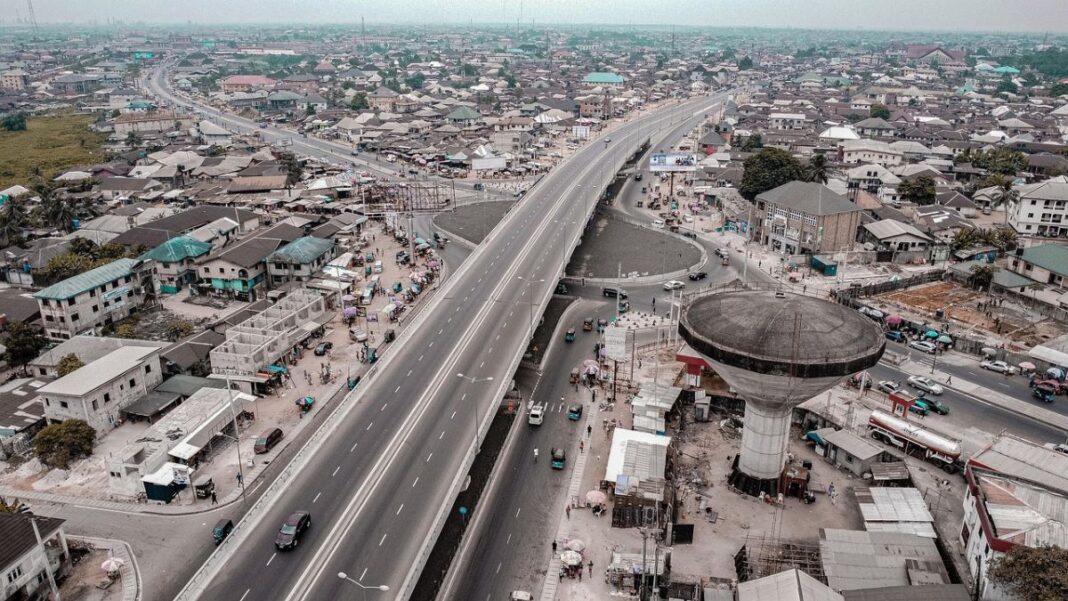

“Two regions, two paths—who’s winning the economic race?”
In the bustling landscape of Sub-Saharan Africa, two major economic powerhouses are vying for the lead: the Economic Community of West African States (ECOWAS) and the Central African Economic and Monetary Community (CEMAC). While both were founded on the dreams of regional integration, shared prosperity, and “borderless” trade, their trajectories in 2025 look remarkably different.
Is the oil-rich CEMAC region finally diversifying, or is the sprawling ECOWAS market—home to nearly 450 million people—simply too big to beat? To settle the CEMAC vs ECOWAS economy debate, we’ve analyzed the latest 2024–2025 data from the World Bank, IMF, and regional central banks.
1. GDP Growth: The Speed of Recovery
When it comes to raw growth, the West African bloc (ECOWAS) has historically outpaced its Central African counterpart. However, the gap is shifting as major West African economies face internal headwinds.
- ECOWAS: In 2024, ECOWAS maintained a respectable growth rate, largely buoyed by the WAEMU (West African Economic and Monetary Union) subset (e.g., Côte d’Ivoire and Senegal), which projected growth as high as 5.7%. However, the bloc’s overall performance is heavily weighted by Nigeria, which has struggled with currency devaluation and triple-digit inflation in some sectors.
- CEMAC: Long labeled the “stagnant” bloc, CEMAC is showing signs of life. Regional growth reached 3.0% in 2024, up from 2.0% the previous year. Cameroon and Chad are the current engines, growing at 3.5% and 3.7% respectively.
The Verdict: ECOWAS still holds the crown for the highest growth potential, but CEMAC is proving more stable in the face of global volatility.
Advertisement
2. Inflation and Monetary Stability: The “Eco” vs. the “CFA”
This is where the two regions diverge most sharply.
CEMAC: The Stability Play
CEMAC uses the Central African CFA franc, pegged to the Euro. This peg has acted as a “macroeconomic anchor.” While the world suffered from the post-pandemic price surge, CEMAC kept inflation relatively contained.
- Inflation (Dec 2024): 4.0%
- Convergence Goal: 3.0%
ECOWAS: The Volatility Trap
ECOWAS is a mix of fixed and floating currencies. While WAEMU members (using the West African CFA) saw low inflation (2.4%), the heavyweights like Nigeria and Ghana saw inflation soar above 25–30% due to massive currency depreciation.
3. Trade Integration: The Achilles’ Heel
Regional integration is the primary goal of these blocs, but the data reveals a “Wealth Paradox.”
| Metric | ECOWAS | CEMAC |
| Intra-regional Trade | ~10–12% | ~4% |
| Population Size | 424 Million+ | 65 Million |
| Primary Trade Partners | EU, China, Intra-Africa | EU, China, Russia |
CEMAC remains the least integrated economic bloc in Africa. Member states conduct over 80% of their trade with Europe and China, and only 4% with each other. In contrast, ECOWAS has made significant strides in the free movement of people, ranking 1st in Africa for regional mobility.
4. The Resource Curse vs. Market Power
The CEMAC vs ECOWAS economy debate is often a battle between “Extractive Wealth” and “Market Scale.”
- CEMAC’s Strength: It is the custodian of the Congo Basin, the world’s largest net carbon sink. The value of its carbon retention services is estimated at $209 billion—nearly 2.5 times the region’s GDP.
- ECOWAS’s Strength: Demographics. By 2050, the ECOWAS population is expected to reach 900 million. This creates an internal market that is increasingly attractive to FMCG (Fast-Moving Consumer Goods) and Tech investors.
5. Fiscal Health: The Debt Problem
Both regions are struggling with the “debt ceiling.”
- In CEMAC, countries like Congo (93.5%) and Gabon (72.5%) have surpassed the regional debt-to-GDP limit of 70%.
- In ECOWAS, the withdrawal of Mali, Burkina Faso, and Niger from the bloc has created a “political-economic” crisis that threatens the fiscal stability of the entire region.
Final Scorecard: Who is Winning?
| Category | Winner | Why? |
| Monetary Stability | CEMAC | Lower inflation and a stable (though controversial) currency peg. |
| Economic Growth | ECOWAS | Higher average growth rates, led by the WAEMU sub-region. |
| Integration | ECOWAS | Better free movement of people and higher internal trade. |
| Future Potential | ECOWAS | Massive population growth and a shift toward services/tech. |
Conclusion
If you value stability and low inflation, CEMAC is currently performing better. However, if you look at long-term scale, market integration, and agility, ECOWAS remains the dominant force in Sub-Saharan Africa. CEMAC’s reliance on oil (hydrocarbons represent 50%+ of revenue) remains its biggest risk, while ECOWAS’s biggest challenge is political unity and currency volatility.

