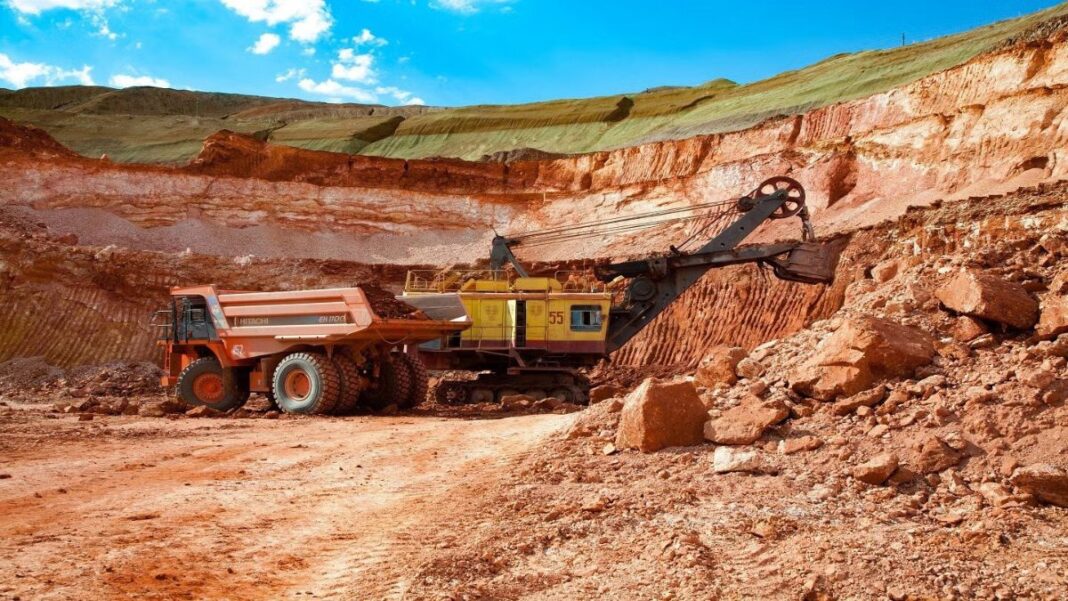

For decades, the “red earth” of the Adamawa Region was seen as a symbol of untapped potential. But as of February 2026, that potential has officially turned into production. The Minim Martap Bauxite Project, led by Canyon Resources and its local subsidiary Camalco SA, is no longer a boardroom plan—it is a live industrial engine reshaping the Cameroonian economy.
With the first surface miners now active on the Danielle plateau and a massive logistical chain stretching to the Port of Douala, 2026 marks the year Cameroon joins the elite club of global bauxite exporters.
1. The Numbers: Why “Tier-One” Matters
Minim Martap is not just another mine; it is ranked as one of the highest-grade bauxite deposits globally. The sheer scale of the data is staggering:
- 144 Million Tonnes: Current exploitable reserves under the 20-year permit.
- 51.2% Alumina Content: A “premium” grade that commands roughly $11 more per tonne than average global prices because it requires less energy to refine.
- $835 Million (510 Billion XAF): The estimated Net Present Value (NPV) of the project.
- $174 Million Annual Cash Flow: Expected once full-scale operations hit their stride.
By the end of 2026, the project aims to have exported its first trial shipments, ramping up to a capacity of 10 million tonnes per year by 2032.
2. The “Afriland” Factor: Local Ownership and Capital
In a significant shift from traditional African mining models—where foreign firms hold all the cards—2026 sees a deep “Cameroonization” of the project’s finances.
Advertisement
- The Investment: Afriland First Bank, through its investment arm Afriland Bourse & Investissement, has committed approximately 70 million AUD (approx. 27 billion XAF) to the project.
- The Stake: This move makes Afriland a 10.1% shareholder in Canyon Resources, ensuring that a portion of the “billionaire” profits stays within the national banking system.
- The State’s Share: The Republic of Cameroon holds a 10% free-carried interest in the local subsidiary, ensuring the public treasury benefits directly from every tonne of ore shipped.
3. Jobs: The 38,000 Opportunity
The Ministry of Mines, Industry, and Technological Development (MINMIDT) has projected that 2026 will be a “golden year” for employment.
- Direct & Indirect: Minister Fuh Calistus Gentry recently announced that the trio of major mining projects (Minim Martap, Grand Zambi, and Sino Steel) will generate up to 38,000 direct and indirect jobs this year.
- Local Impact: For Minim Martap specifically, estimates suggest 5,000 direct jobs and nearly 20,000 indirect opportunities in catering, security, maintenance, and logistics.
- Education to Industry: The University of Ngaoundéré (specifically the School of Geology and Mining) is now the primary pipeline for talent, turning Adamawa’s youth into the engineers of tomorrow.
4. Logistics: The Rail and Port Revolution
Moving millions of tonnes of rock from the heart of the country to the ocean is a massive feat of engineering.
- The Rail Link: Canyon Resources is increasing its stake in Camrail (from 9% to roughly 35%) to ensure priority for bauxite transport.
- Rolling Stock: New locomotives and wagons from China’s CRRC Ziyang are arriving in Q2 2026 to ferry ore from the Inland Rail Facility (IRF) at Makor.
- Douala Port Upgrades: A dedicated 6.5-hectare terminal is being finalized at the Port of Douala, including dredging of the Wouri River to allow larger bauxite barges to move freely.
5. Beyond Extraction: The Alumina Refinery
The real “billionaire” move isn’t just selling raw rocks; it’s processing them.
“Mining is one of the pillars of our economic vision, and we are committed to ensuring that Minim-Martap allows Cameroon to transform its bauxite right here at home.” — Prime Minister Joseph Dion Ngute
A feasibility study for a domestic alumina refinery is currently 45% complete and expected by Q3 2026. If successful, this would allow Cameroon to produce the refined powder used to make aluminum, tripling the value of the exports and potentially reviving the ALUCAM smelter in Edéa.
The Verdict: A New Era
The Minim Martap project is a test of Cameroon’s 2035 Emergence vision. If the 2026 milestones—the first shipment in Q3 and the full-scale operation in Q4—stay on track, the “Red Earth” will finally pay its dividends to the people of the Adamawa and the nation at large.
What do you think? Should the government focus more on local processing (refineries) or maximize raw exports to get cash flowing quickly?

