
For decades, the path to wealth in Cameroon was paved almost exclusively with real estate, agriculture, or small-scale trade. But as the digital landscape shifts and the Central African financial markets mature, a new frontier has opened for the average Cameroonian: the stock market. Whether you are a professional in Douala, an entrepreneur in Yaoundé, or a member of the diaspora looking to invest back home, the question is no longer if you should invest, but rather how to buy stocks in Cameroon effectively and safely.
The timing couldn’t be better. With the consolidation of the regional stock exchange into the Bourse des Valeurs Mobilières de l’Afrique Centrale (BVMAC), the barrier to entry has dropped, and transparency has increased. Investing in stocks allows you to move from being a mere consumer of products—like the palm oil from Socapalm or the water from SEMC—to becoming a partial owner of the companies that produce them.
However, the world of “shares” and “securities” can feel like a labyrinth of jargon and bureaucracy if you don’t have a map. Many potential investors hesitate because they believe the market is only for the elite or that the process is prohibitively complex.

Get The PDF of This Article
This article is over 3000 words long. Insert your email below and the download will begin immediately.
This guide is designed to demystify that process. We will break down everything from the legal requirements and the role of licensed brokers to the specific steps you need to take to place your first trade. By the end of this article, you will have a clear, actionable roadmap to navigate both the local BVMAC market and the global financial stage, ensuring your capital is working just as hard as you do.
Chapter 1: Understanding the Landscape
Before you dive into buying your first share, you must understand the architecture of the market. Investing in Cameroon involves navigating a regional ecosystem that has undergone significant modernization in recent years.
1.1 The Local Market: BVMAC
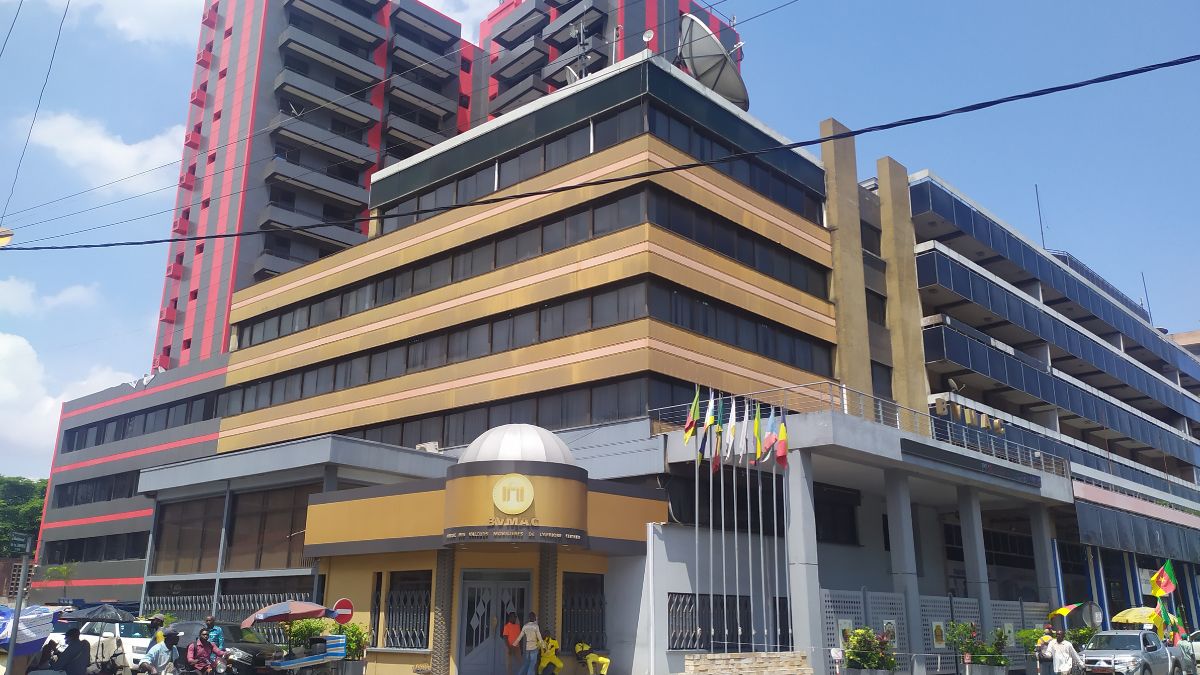
The primary gateway for stock trading in Cameroon is the Bourse des Valeurs Mobilières de l’Afrique Centrale (BVMAC). Headquartered in Douala, this is a regional stock exchange serving the six CEMAC nations (Cameroon, Gabon, Chad, Congo, Central African Republic, and Equatorial Guinea).
Following the 2019 merger with the former Douala Stock Exchange (DSX), the BVMAC has become the unified hub for capital in Central Africa.
- How it Works: The BVMAC acts as a marketplace where companies list their shares to raise capital. As an investor, you buy these shares, providing the company with funds in exchange for a claim on their future profits.
- Key Listed Companies: As of 2026, the equity market includes several Cameroonian “blue-chip” stocks that are household names:
- SEMC (Société des Eaux Minérales du Cameroun): The pioneers of bottled water (Source Tangui).
- SAFACAM & SOCAPALM: Leaders in the agro-industrial sector (palm oil and rubber).
- La Régionale & Bange Bank: Representing the growing financial services sector.
- BGFI Holding: Recently listed regional banking giant.
1.2 The Role of COSUMAF (The Watchdog)
You might wonder, “Who ensures my money doesn’t just disappear?” That role belongs to COSUMAF (Commission de Surveillance du Marché Financier de l’Afrique Centrale).
Based in Libreville, COSUMAF is the “police officer” of the market. Its primary missions include:
- Protection: Ensuring that small investors are not cheated by big corporations.
- Regulation: Licensing the brokers you use. If a broker isn’t COSUMAF-approved, they aren’t legal.
- Transparency: Forcing companies to publish their financial results so you can make informed decisions.
1.3 The International Market
While the BVMAC offers local familiarity, many Cameroonians also look toward international exchanges like the New York Stock Exchange (NYSE) or the NASDAQ.
- Global Access: Through international online brokers, investors in Cameroon can now buy shares in global giants like Apple, Google (Alphabet), or Tesla.
- The Difference: International markets are generally more “liquid,” meaning you can buy and sell shares instantly. In contrast, the BVMAC is a developing market where trades may take a few days to settle, and finding a buyer for your shares can sometimes take longer.
Key Takeaway: For local growth and dividends, look to the BVMAC. For high-tech growth and instant liquidity, look toward International Exchanges. A balanced Cameroonian investor often keeps a foot in both worlds.
Chapter 2: Essential Requirements for Investors
Opening a stock trading account in Cameroon is more structured than opening a regular savings account. Because you are participating in the regional financial market, there are specific legal and tax-related hurdles you must clear first.
2.1 The “Gold Standard” Checklist
To get started with a licensed broker (Société de Bourse), you will typically need to provide the following “Dossier”:
- Valid Identification: A National ID card for citizens or a valid Passport for expats and members of the diaspora.
- Proof of Residence: A utility bill (ENEO for electricity or Camwater) in your name, or a “Certificat de Domicile” signed by your local police station or district head.
- Passport Photographs: Usually 2 to 4 recent color photos.
- Bank Account Details (RIB): You must have an existing bank account. Your brokerage account will be linked to this for transfers and dividend payments.
2.2 The NIU: Your Financial Passport
The most critical document required today is the Numéro d’Identifiant fiscal Unique (NIU), also known as the Taxpayer Identification Number.
Since 2020, the NIU has been mandatory for all financial transactions in Cameroon, including opening a securities account. If you don’t have one, you can no longer legally trade stocks.
How to get your NIU (2026 Update):
- Visit the official portal: teledeclaration-dgi.cm.
- Select “Individual (non-professional)” if you are a private investor.
- Fill in your personal details and upload a scan of your ID.
- The system generates a PDF certificate which is valid permanently.
2.3 Financial Minimums
How much do you actually need to start?
- Account Opening Fees: Some brokers charge a one-time setup fee (ranging from 5,000 FCFA to 25,000 FCFA), while others offer free registration if you make an initial deposit.
- Investment Minimums: On the BVMAC, some stocks trade for as little as 10,000 FCFA per share. However, most brokers recommend starting with at least 100,000 FCFA to 500,000 FCFA to ensure that transaction commissions don’t eat too much of your potential profit.
2.4 Special Note for the Diaspora
If you are a Cameroonian living abroad, you are still eligible to invest in the BVMAC. You will need to provide:
- Your consular card or foreign residence permit.
- A certified copy of your passport.
- Proof of your foreign bank account for the repatriation of funds (governed by CEMAC exchange control regulations).
Chapter 3: Step-by-Step Guide to Buying Stocks
Now that your documents and NIU are ready, it is time to move from the preparation phase to actual execution. Buying stocks in Cameroon is a “mediated” process—you cannot simply walk into the BVMAC building and hand over cash. You must work through a licensed intermediary.
Step 1: Choose Your Licensed Stockbroker (Société de Bourse)
In Cameroon, your broker is your primary point of contact. They execute your trades, hold your shares in a digital vault (the Central Depository), and collect dividends on your behalf.
As of 2026, the major COSUMAF-licensed brokers operating in Cameroon include:
| Broker Name | Main Office | Best For… |
| Afriland Bourse & Investissement | Yaoundé/Douala | Accessibility and local expertise. |
| Société Générale Capital Securities | Douala (Bonanjo) | High-end service and international standards. |
| CBC Bourse | Douala | Integration for existing Commercial Bank customers. |
| EDC Investment Corp (Ecobank) | Douala | Regional reach across the CEMAC and UEMOA zones. |
| Financia Capital | Douala | Sophisticated investors and portfolio management. |
Step 2: Open and Fund Your Securities Account
Once you pick a broker, you will sign a Mandat de Gestion (Management Mandate). This document outlines how the broker will handle your orders.
- Deposit Initial Capital: Transfer your investment funds from your regular bank account to the broker’s dedicated client account.
- Verify the Credit: Ensure your “Securities Account” (Compte-Titres) reflects the balance before attempting to trade.
Step 3: Analyze the Market (Reading the BOC)
Before buying, check the Bulletin Officiel de la Cote (BOC). This is the daily report published by BVMAC that shows the current prices of stocks like:
- SEMC: ~49,000 FCFA
- SAFACAM: ~30,000 FCFA
- SOCAPALM: ~50,000 FCFA(Note: Prices fluctuate daily; always check the latest BOC on the BVMAC website).
Step 4: Placing the Order
You will send an “Order Note” (usually via email, a dedicated app, or a physical form) to your broker. You must specify:
- The Stock Name: (e.g., “SOCAPALM”)
- The Transaction Type: (Buy or Sell)
- Quantity: Number of shares.
- The Order Type:
- Market Order: Buy at the best available current price.
- Limit Order: Set a maximum price you are willing to pay (e.g., “Buy 10 shares of SEMC only if the price is 48,500 FCFA or less”).
Step 5: The “Fixing” and Settlement
The BVMAC operates on a “Fixing” schedule rather than a continuous 24/7 stream.
- Trading Window: Orders are typically collected in the morning and executed during the “Fixing” at 11:00 AM.
- Settlement (T+2): It takes two business days for the shares to officially move into your name and for the cash to leave your account.
Pro-Tip: If you prefer a more “hands-off” approach, ask your broker about OPCVMs (Mutual Funds). Instead of picking individual stocks, you can pool your money with other investors, and a professional manager will pick the stocks for you.
Chapter 4: The Digital Shift – Trading via Apps
In the past, buying stocks in Douala or Yaoundé required physical visits to a bank and stacks of paperwork. Today, the landscape is shifting. While the BVMAC (the local exchange) is still in the early stages of full mobile integration, digital tools have made it easier than ever to monitor your wealth and access global markets.
4.1 Monitoring the Local Market (BVMAC)
Currently, most local brokers in Cameroon use digital platforms to provide statements and daily updates rather than real-time “one-click” trading apps. However, you can stay digitally connected to your local portfolio through:
- Broker Portals: Firms like Afriland Bourse and Société Générale offer web portals where you can log in to view your Compte-Titres (Securities Account) balance and transaction history.
- The SARA App: While primarily a banking app, Afriland First Bank’s SARA platform is a prime example of how local institutions are moving toward “all-in-one” financial management for their clients.
- Official BVMAC Website: For real-time price tracking, investors use bvm-ac.org. Here, you can download the daily Bulletin Officiel de la Cote (BOC) to see if your shares in SOCAPALM or SAFACAM have gained value.
4.2 Trading Global Stocks via International Apps
If you want to buy international stocks (like Apple, Microsoft, or Netflix), Cameroonian investors now have access to several world-class mobile platforms. These apps allow you to trade from your smartphone with ease.
| App | Best For | Key Feature for Cameroonians |
| XM | Beginners | Extensive educational webinars and low minimum deposits. |
| Exness | Fast Withdrawals | Integrated with Mobile Money (MTN/Orange) for easy funding. |
| AvaTrade | Security | Offers “AvaProtect” to help insure your trades against losses. |
| Vantage | Professional Tools | High-speed execution and advanced charting (MT4/MT5). |
4.3 The Role of Mobile Money
The true “game-changer” for the Cameroonian investor is the integration of MTN Mobile Money and Orange Money. Many international brokers now allow you to deposit and withdraw funds directly through your MoMo wallet. This bypasses the need for expensive international wire transfers and allows you to start investing with as little as 5,000 FCFA on some platforms.
A Warning on “Get Rich Quick” Apps:
Not every app in the Play Store is legitimate. Always verify that a broker is regulated by a major authority (like COSUMAF for local trades or FCA/ASIC for international trades). If an app promises “100% guaranteed returns,” it is likely a scam.
Chapter 5: Investment Strategies for Cameroonians
Buying a stock is easy; choosing the right stock and knowing when to hold it is where the skill lies. In the Cameroonian context, where the market is still developing, your strategy should focus on stability and long-term yield.
5.1 The “Dividend King” Strategy
For many local investors, the primary goal is to generate “passive income”—money that comes in while you sleep. On the BVMAC, the agro-industrial sector is the champion of this strategy.
- How it Works: You buy shares in profitable companies that regularly distribute a portion of their earnings to shareholders.
- Top Picks for 2026:
- SOCAPALM: Historically one of the most consistent dividend payers in the region.
- SAFACAM: Known for its resilience and commitment to rewarding shareholders, even when global rubber prices fluctuate.
- La Régionale: A newer favorite for those looking at the financial services sector’s growth.
Pro-Tip: Dividends on the BVMAC are typically paid once a year, usually between July and September, following the Annual General Meeting (AGM) where the company’s performance is approved.
5.2 The “Buy and Hold” (Growth) Strategy
If you are younger and don’t need immediate cash, you might focus on Capital Gains. This means buying a stock at a low price and waiting for the company’s value to grow over several years.
- The Target: Companies reinvesting their profits into expansion rather than paying them all out as dividends.
- Example: Investing in a recently listed bank or a utility company that is expanding its infrastructure across the CEMAC zone.
5.3 Diversification: The 60/40 Rule
A balanced portfolio for a Cameroonian investor shouldn’t just be stocks. To protect your wealth from market volatility, consider the Balanced Portfolio model:
- 60% Stocks: Spread across agriculture, finance, and consumer goods.
- 40% Bonds: These are loans you give to the State of Cameroon (Treasury Bonds) or private companies.
- The Advantage: Bonds pay a fixed interest rate (often 5% to 6.5%) and are considered much safer than stocks.
5.4 Understanding “Liquidity” in Cameroon
Unlike the New York Stock Exchange, where you can sell a stock in a millisecond, the BVMAC is a lower-liquidity market.
- The Reality: If you want to sell 10,000 shares of a small company tomorrow, you might have to wait a few days for a buyer to match your price.
- The Strategy: Only invest money that you do not need for at least the next 3 to 5 years.
Chapter 6: Risks and Regulation
Investing is not a one-way street to wealth. Like any financial endeavor, buying stocks in Cameroon carries inherent risks. Understanding these risks—and knowing who protects you—is the difference between a successful investor and a victim of fraud.
6.1 Market Risks: What Can Go Wrong?
Even if you follow all the rules, the value of your investment can fluctuate. In the BVMAC market, there are two specific risks to watch:
- Volatility and Price Shifts: Stock prices change based on company performance and investor sentiment. For example, if a drought affects the harvest for SOCAPALM, its stock price might dip temporarily.
- Liquidity Risk: As discussed, the BVMAC is a “developing” market. Unlike the NYSE, where you can sell instantly, you might occasionally find that there are more sellers than buyers on a particular day, meaning you might have to wait to “cash out” at your desired price.
6.2 Avoiding Scams: The “Red Flag” Checklist
As the stock market becomes popular, so do “get-rich-quick” schemes. Scammers often impersonate legitimate officials or use social media to lure victims.
Warning Signs of a Scam:
- Unrealistic Returns: If someone promises you “20% profit every week,” it is almost certainly a Ponzi scheme.
- Pressure to Act Now: Scammers create a false sense of urgency (“Only 5 spots left!”).
- Unlicensed “Brokers”: If a person or app is not on the COSUMAF approved list, do not give them your money.
- Identity Theft: Be wary of Telegram or WhatsApp groups where people claim to be the “Director of BVMAC” or a “COSUMAF Agent.” Official bodies do not solicit investments via chat apps.
6.3 Who Protects You? (The COSUMAF Shield)
The Commission de Surveillance du Marché Financier de l’Afrique Centrale (COSUMAF) is your legal safeguard. In 2026, they have intensified their crackdown on illegal “Public Offerings” (Appel public à l’épargne).
- Verification: Before investing, visit cosumaf.org to check the “Alerts” section. They regularly publish names of fraudulent companies (e.g., past alerts on “BMI Investissement” or “High-Yield” crypto programs).
- Complaints: If you have a dispute with your licensed broker (e.g., they refuse to execute your sell order or delay your dividends), you have the right to file a formal claim directly with the COSUMAF mediator.
6.4 The “Smart Investor” Golden Rules
- Never invest money you can’t afford to lose (e.g., school fees or rent).
- Diversify: Don’t put your entire life savings into a single company.
- Verify the Source: Always cross-check “hot tips” against the official Bulletin Officiel de la Cote (BOC).
Chapter 7: Tax Implications in Cameroon
Investing isn’t just about what you make; it’s about what you keep. In Cameroon, the tax system is designed to encourage long-term investment in the stock market through reduced rates compared to other forms of income.
As of 2026, here is how the tax landscape looks for the individual investor:
7.1 The IRCM: Tax on Dividends
When a company like Safacam or SEMC pays you a dividend, it is subject to the Impôt sur le Revenu des Capitaux Mobiliers (IRCM).
- Standard Rate: Historically 16.5%.
- The Stock Market Advantage: For companies listed on the BVMAC, the Cameroonian government has reduced this rate to 10% to encourage citizens to buy shares.
- How it is Paid: You don’t usually need to do anything. This tax is withheld at the source. This means if a company declares a dividend of 1,000 FCFA per share, you will receive 900 FCFA in your account, and the company handles the 100 FCFA payment to the tax authorities.
7.2 Capital Gains Tax (Selling for Profit)
If you buy a share at 30,000 FCFA and sell it later for 45,000 FCFA, that 15,000 FCFA profit is your “Capital Gain.”
- The Incentive: To stimulate the regional financial market, net capital gains realized by individuals on the BVMAC are currently exempt from tax in Cameroon. This is a massive advantage over real estate or general business income, where taxes are much higher.
7.3 Exemption on Government Bonds
If you choose to diversify your portfolio by buying State Treasury Bonds (Bons du Trésor):
- Total Exemption: Interest earned on bonds issued by the State of Cameroon and (as of the 2026 Finance Law) bonds issued by other CEMAC member states is exempt from the IRCM. This makes government bonds one of the most tax-efficient ways to save money in the country.
7.4 Registration Duties
In many transactions in Cameroon, you have to pay a “stamp duty” or registration fee. However, transactions involving listed securities on the BVMAC are exempt from these registration duties, further lowering the cost for retail investors.
Summary Table: Taxation for Individual Investors (2026)
| Investment Type | Tax Rate | Collection Method |
| BVMAC Listed Dividends | 10% | Withheld at source |
| BVMAC Capital Gains | 0% (Exempt) | N/A |
| State Bonds (Cameroon/CEMAC) | 0% (Exempt) | N/A |
| International Stocks | Variable | Self-Declared (Personal Income Tax) |
Note on International Stocks: If you trade on the US or European markets using an app, your profits may be subject to a different tax regime (Personal Income Tax) ranging from 11% to 38.5% depending on your total annual income.
Conclusion
Building a stock portfolio in Cameroon is no longer a privilege reserved for the high-net-worth elite in Douala’s Akwa district. As we have explored throughout this guide, the path to becoming a shareholder is now clearer, more regulated, and increasingly digital. By securing your NIU, choosing a COSUMAF-licensed broker, and understanding the tax advantages of the BVMAC, you are positioning yourself to benefit from the regional growth of Central Africa.
The Road Ahead: 2026 and Beyond
The Cameroonian financial landscape is entering a transformative phase. With the government’s 2026 Finance Law extending tax exemptions to bonds across the entire CEMAC zone and the BVMAC launching its ESPro incubator to bring more private companies to the exchange, the market is set to become deeper and more liquid. The goal of reaching 100,000 active securities accounts by the end of this year is a testament to the rising financial consciousness of our nation.
Final Words of Advice
- Think Decades, Not Days: The stock market rewards the patient. Whether you are investing in “Dividend Kings” like Socapalm or growth stocks like La Régionale, give your capital time to compound.
- Stay Educated: Use tools like the Bulletin Officiel de la Cote (BOC) and attend the investor workshops often hosted by brokers in Douala and Yaoundé.
- Start Small, But Start Now: You don’t need millions to begin. In the world of investing, the “cost of waiting” is often higher than the “cost of making a mistake.”
Investing in stocks is more than just a financial decision; it is a vote of confidence in the future of the Cameroonian economy. As you take these steps, you are not just growing your personal wealth—you are providing the capital that builds our industries, creates jobs, and strengthens our sub-region.