
Most people think building a modern economy starts with a digital transformation.
They’re wrong.
In a country like Cameroon, it starts with pavement.
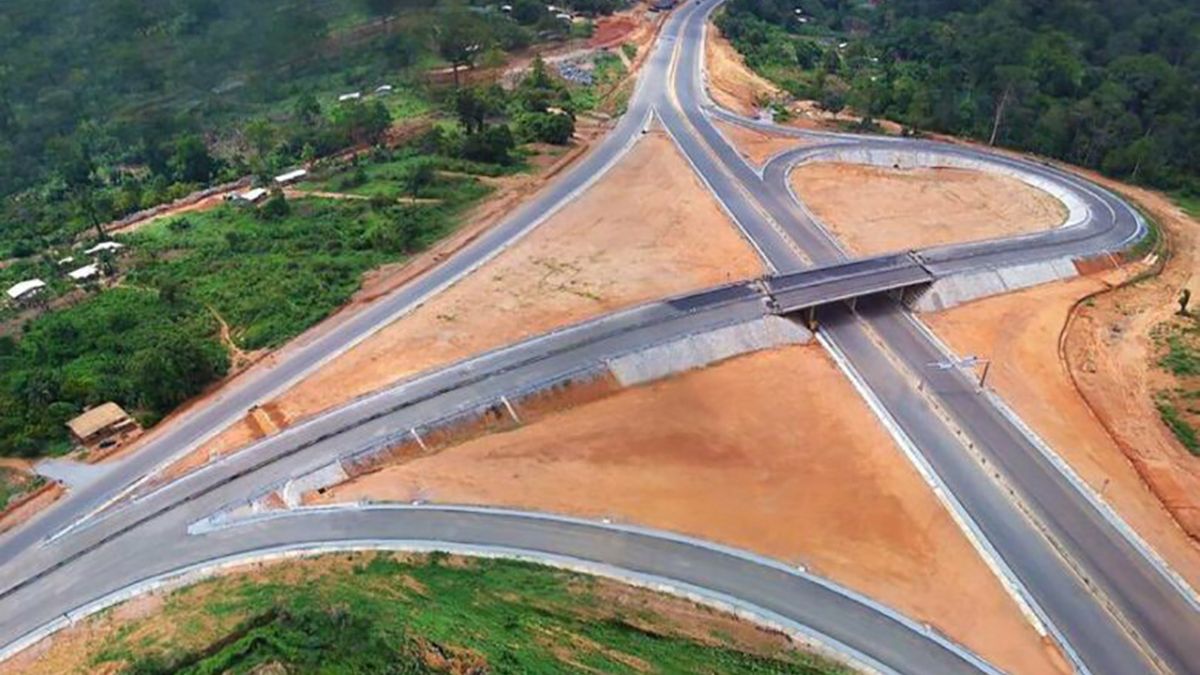
Specifically, it starts with the 2026 roadmap recently handed to the Prime Minister by the Ministry of Public Works (MINTP).
And if you’ve been tracking the Cameroon road infrastructure projects 2026 landscape, you know that this isn’t just another “government plan” gathering dust on a shelf.
It’s a massive, 8.8 trillion FCFA fiscal engine that is finally shifting into high gear.
The “476 Kilometer” Reality Check
Here is the bottom line:
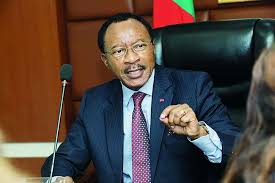
On February 10, 2026, Minister Emmanuel Nganou Djoumessi laid out a definitive plan to deliver 475.9 kilometers of newly paved roads before the year is out.
To put that in perspective, that is roughly the distance from Yaoundé to Maroua… delivered in a single fiscal cycle.
But here’s the kicker:
While the headline number is impressive, the real story is hidden in the 740 billion FCFA budget allocated to make it happen. Between the “cash flow tensions” reported by the Ministry and the ambitious Phase 2 of the Douala-Yaoundé highway, there is a lot of noise to filter through.
In this new case study, I’m going to break down:
- Exactly where the Cameroon road infrastructure projects 2026 are being built (The “High-Impact” Corridors).
- The raw data behind the 852 km of road maintenance projects.
- How the government plans to bridge the 84 billion FCFA funding gap from last year.
- The “hidden” logistics benefits that will drop transportation costs for local businesses by Q4.
If you want to understand where the Cameroonian economy is actually headed this year, you need to look at the asphalt.
Let’s dive into the data.
The “By the Numbers” Section (Data Visualisation Layout)
To understand where the Cameroonian economy is headed, you have to look past the political speeches and straight into the National Investment Budget (BIP).
When you strip away the jargon, the Cameroon road infrastructure projects 2026 roadmap is a massive numbers game. And this year, the stakes are higher than ever.
Here is the raw data you need to know.
The 740 Billion FCFA “War Chest”
First, let’s talk about the money. The Ministry of Public Works (MINTP) isn’t just working with “spare change.”
For 2026, the budget envelope has been set at a staggering 740 billion FCFA.
But here is the secret: It’s not just about the total amount; it’s about the allocation.
Unlike previous years where administrative costs ate into the pie, the 2026 roadmap earmarks 92% of this budget strictly for “Program 362″—which is government speak for actual construction and maintenance.
The 2026 Infrastructure Scorecard
If you want to track the success of Cameroon road infrastructure projects 2026, these are the four metrics that matter.
| Category | 2026 Target | Why it Matters |
| New Paved Roads | 475.9 km | The “Growth Engine” connecting rural hubs to cities. |
| Paved Road Maintenance | 852 km | Protecting existing assets from tropical degradation. |
| Earth Road Maintenance | 5,222 km | Vital for the “breadbasket” regions (West and Northwest). |
| Engineering Structures | 1,300+ meters | Includes 6 modular steel bridges to bypass flooded zones. |
The “Funding Gap” Nobody is Talking About
Now, I wouldn’t be giving you the full story if I only showed you the “shiny” numbers.
There is a significant hurdle that could stall the Cameroon road infrastructure projects 2026 timeline: The 84 Billion FCFA Debt.
Minister Nganou Djoumessi recently confirmed that the government is carrying over 84 billion FCFA in unpaid commitments from the 2025 fiscal year.
The takeaway? For the 476 km of new roads to become a reality, the Treasury needs to clear this backlog while simultaneously funding the new 2026 projects. It’s a delicate fiscal balancing act that will determine whether these roads are finished by December—or delayed until 2027.
The Bottom Line: The data shows a clear shift toward “aggressive completion.” If the 501.9 billion FCFA in planned investment (split between internal and external funding) hits the ground on time, 2026 will be a record-breaking year for Cameroonian transit.
Strategic Corridors: What’s Being Delivered?
If the Douala-Yaoundé Highway is the heart of the 2026 roadmap, the Strategic Corridors are the arteries.
When we talk about Cameroon road infrastructure projects 2026, we aren’t just talking about city streets. We are talking about the massive transit lines that connect Cameroon to Chad, Nigeria, and the Central African Republic.
In his latest March 2026 briefing, Minister Nganou Djoumessi made it clear: 2026 is the year of “The Great Connection.”
Here is exactly what is being delivered across the country’s most vital trade routes.
1. The Northern Expansion (The Sahel Link)
The Far North isn’t just a remote region; it’s the gateway to the Lake Chad basin. The 2026 roadmap prioritizes the completion of two massive stretches:
- Maroua–Bogo–Pouss: This corridor is essential for agricultural trade.
- Mora–Tchakamari: A strategic security and trade link.
- The Goal: To finalize 125 km of paved roads in the North alone by December 2026.
2. The Western & North-West Loop
Despite the challenges in the English-speaking regions, the Cameroon road infrastructure projects 2026 plan includes a high-stakes push for the Babadjou–Bamenda axis.
- The Data: This project has faced delays, but the 2026 budget allocates a specific “Security Premium” to ensure contractors stay on-site.
- Why it matters: This road is the primary vein for food supplies traveling from the “Grassfields” to the coastal cities.
3. The “East-South” Industrial Corridor
If you follow the money, it leads to the Port of Kribi. The 2026 roadmap focuses heavily on connecting the deep-sea port to the hinterland via:
- Ebolowa–Akom II–Kribi (170 km): This is the “missing link” for timber and mineral exports.
- The Awae–Esse–Soa Road: A critical bypass that will allow heavy trucks to avoid the center of Yaoundé, cutting transit times by an estimated 45 minutes.
The “237info” Breakdown: The Corridor Efficiency Matrix
How do these corridors stack up? Here is a quick look at the 2026 delivery targets by region:
| Strategic Corridor | Target Completion (2026) | Economic Impact |
| Northern Corridors | 95% | Boosts livestock & onion exports to CEMAC. |
| Western Axis | 80% | Stabilizes food prices in Douala/Yaoundé. |
| Kribi Connectivity | 65% | Critical for the 2026 Mining “Boom.” |
| Urban Entrances | 100% | Eliminates the “Douala Bottleneck” at the Eastern entry. |
The “Hidden” Feature: The 1,300m Bridge Initiative
You can’t have a world-class road without a world-class bridge.
The 2026 roadmap includes the installation of 6 modular steel bridges. These aren’t just minor crossings; they are rapid-deployment structures designed to replace aging colonial-era bridges that currently act as “choke points” for heavy trucks.
The Bottom Line: By diversifying the Cameroon road infrastructure projects 2026 across these three strategic zones, the government is de-risking the economy. If one region faces a slowdown, the others keep the GDP moving.
The “Big Kahuna”: Douala-Yaoundé Highway Phase 2
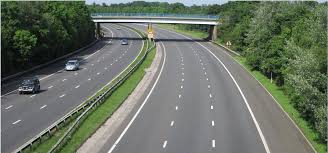
If you want to know which project defines the future of Cameroon road infrastructure projects 2026, this is it.
Phase 1 was the proof of concept. Phase 2? That’s the “Big Kahuna.”
We’re talking about the 141-kilometer stretch that will finally link the nation’s political capital (Yaoundé) to its economic heartbeat (Douala) with a world-class expressway.
But as with any “Skyscraper” project, the devil is in the data.
The 1,072 Billion FCFA Question
Let’s not sugarcoat it: Phase 2 is expensive.
The total investment required is a staggering 1,072 billion FCFA (inclusive of taxes). To put that in perspective, that single road represents nearly 12% of the entire national budget for 2026.
Here is the breakdown of how the government is moving the needle this year:
- The Funding Mix: Negotiations are currently peaking with a consortium led by Standard Chartered Bank and Exim Bank of China.
- The 2026 Milestone: Minister Nganou Djoumessi has set a “hard deadline” for the Prime Minister to sign the compensation decrees for the first 32 kilometers.
- The “Early Works” Strategy: Unlike Phase 1, the 2026 roadmap prioritizes “Sectional Completion.” The goal is to get bulldozers moving on the Bibodi-Bodmon stretch by Q3.
Why Phase 2 is a “Game Changer” for Logistics
Most people see a highway. Investors see a logistics corridor.
Currently, the existing “Nationale 3” road is one of the deadliest and most congested in Central Africa. By shifting heavy freight to the Phase 2 expressway, the government aims to:
- Slash Travel Time: Reduce the transit between the two cities from 5+ hours to under 3.
- Drop Vehicle Operating Costs: A projected 15% decrease in maintenance costs for trucking companies.
- Boost Port Efficiency: Directly linking the Port of Douala (and eventually Kribi via the Edéa link) to the hinterland.
The “237info” Reality Check: The 32km Hurdle
Here’s the part most news sites miss: The Land Issue.
The success of Cameroon road infrastructure projects 2026 hinges entirely on the release of the “Right of Way.”
The 2026 roadmap explicitly states that construction cannot hit “cruising speed” until the 141-kilometer path is legally cleared of private property. In his March 2026 briefing, the Minister emphasized that the 32 km priority zone is the litmus test for the entire project.
If the government signs those decrees by mid-year, Phase 2 moves from “planned” to “unstoppable.”
The Takeaway: Phase 2 isn’t just a road—it’s the backbone of the National Development Strategy (SND30). Keep your eyes on the compensation decrees; they are the leading indicator for this project’s success.
The “Accelerated List” (Projects Gaining Momentum)
If you want to know where the “smart money” is looking, you need to ignore the long-term promises and look at the Accelerated List.
In his February 2026 roadmap, Minister Nganou Djoumessi identified a specific group of “priority-one” projects. These aren’t just being built; they are being fast-tracked with 24/7 mobilization to ensure they hit their delivery dates this year.
If you are tracking Cameroon road infrastructure projects 2026, these are the “momentum” plays that will change the local economy in the next 6 to 9 months.
1. The “Northern Triple-Threat” (Ngaoundéré, Magada, & Yagoua)
While many projects struggle with logistics, three massive sections in the North have entered a “high-cadence” execution phase:
- Ngaoundéré–Paro: A critical link for the Adamawa region that is seeing a surge in equipment deployment.
- Magada–Guidiguis–Yagoua (137 km): This National Road 12 project is being split into two lots to double the speed of paving.
- Moutourwa–Maroua: A World Bank-backed project (CFA 200 billion) that is officially on the “accelerated” status for 2026 completion.
2. The Industrial Deep-Dive: Edéa–Mouanko & Nkondjock–Bafang
The government is finally moving to unlock the “hidden” industrial zones.
- Edéa–Mouanko: This route is being prioritized to support the maritime and agricultural flow near the coast.
- Nkondjock–Bafang: As of late March 2026, work on the “Ndingan descent” (a notorious bottleneck) is being consolidated with concrete drainage to prevent rainy-season washouts. The goal? To keep this vital agricultural vein open year-round.
3. The Kribi Connection: Ebolowa–Akom II–Kribi (179 km)
This is arguably the most watched project on the Cameroon road infrastructure projects 2026 list.
- The Status: On March 4, 2026, the Minister met with stakeholders to clear the final technical hurdles for the 130.4 billion FCFA financing agreement.
- The Momentum: Heavy machinery is scheduled to fully take possession of the site between March and April 2026. This replaces a treacherous unpaved track with a high-durability corridor directly to the Port of Kribi.
The “Acceleration” Metrics: How to Spot a Fast-Tracked Project
How do you know if a project is actually gaining momentum or just a headline? Look for these three “Backlinko” indicators:
- Prefabrication on Site: In the Ebolowa–Kribi project, contractors have already begun prefabricating technical components before the heavy paving starts. That’s a sign of a project that won’t stop for rain.
- Night Shifts: The 2026 roadmap explicitly encourages “labor-intensive methods” and extended shifts on the Yaoundé northern entrance and Douala urban crossings.
- Financial “Green Channels”: Projects like the Maroua–Bogo–Pouss axis are using direct donor funding (AfDB/World Bank), which bypasses some of the “cash flow tensions” affecting the domestic budget.
The Verdict: While the Douala-Yaoundé highway gets the headlines, the Accelerated List is where the actual paving is happening right now. If you’re an investor or a logistics provider, these are the regions where your transit times are about to drop.
The “Reality Check” (The Candor Section)
Every data-backed roadmap has a “hidden” layer.
If you only read the official press releases, the Cameroon road infrastructure projects 2026 outlook looks like a guaranteed win. But if you’re a regular reader of this site, you know we look at the Actuals, not just the Budgets.
To give you the full picture, we have to talk about the “friction” that could slow down these 476 kilometers.
Here is the candid reality of the 2026 infrastructure landscape.
1. The “Cash Flow Tension” (The 84 Billion FCFA Ghost)
In a private correspondence to the Prime Minister in early 2026, Minister Nganou Djoumessi didn’t mince words: “Cash flow tensions” are the #1 threat to the roadmap.
Here is why:
- The Debt Overhang: Cameroon entered 2026 with roughly 84 billion FCFA in unpaid invoices to construction firms from the previous year.
- The Result: When contractors aren’t paid on time, they “slow-roll” their machinery. You might see a site with 10 bulldozers today, but only 2 tomorrow.
- The Backlinko Insight: Watch the Treasury’s monthly release schedule. If the state doesn’t prioritize these specific arrears by Q3, that 476 km target could easily slide to 350 km.
2. The “Right-of-Way” Bottleneck
You can have the money and the machinery, but if you don’t have the land, you don’t have a road.
For major Cameroon road infrastructure projects 2026, specifically the Douala-Yaoundé Highway Phase 2, the legal “liberation” of land is a massive hurdle.
- The Reality: Thousands of hectares of private and communal land sit in the path of the new asphalt.
- The Risk: Compensation disputes can tie up a project in court for months. In the 2026 roadmap, the Minister is banking on the Prime Minister signing “Urgency Decrees” to bypass these delays. If those signatures don’t happen by June, the “Big Kahuna” will stay on paper.
3. The “Imported Inflation” Factor
While we noted earlier that food inflation is dipping to 3.1%, industrial inflation (bitumen, steel, and fuel) is a different beast.
- The Problem: Cameroon imports the vast majority of its high-grade bitumen. Global supply chain shifts in 2026 have kept the cost of road materials volatile.
- The Impact: A project budgeted at 100 billion FCFA in 2024 might now cost 115 billion FCFA in 2026 just due to material costs. This “budget creep” forces the MINTP to make hard choices: finish Road A or start Road B?
The “Risk Matrix” for 2026 Projects
If you are tracking a specific project, use this checklist to see if it’s at risk:
| Risk Factor | Red Flag | Green Light |
| Funding Source | Purely Domestic (Treasury) | Multilateral (World Bank/AfDB) |
| Land Status | Unresolved Compensation | “Right of Way” Officially Signed |
| Contractor History | Local SME with limited liquid capital | International firm with “Deep Pockets” |
The Bottom Line: The 2026 roadmap is technically sound, but it is financially fragile. The government is “all-in” on infrastructure, but they are playing with a very tight hand of cards.
Economic Impact: Why Investors Should Care
Why is the government betting so heavily on asphalt during a period of fiscal tightening?
It’s simple: The Multiplier Effect. In the world of Cameroon road infrastructure projects 2026, a kilometer of road isn’t just a strip of tar. It’s a direct injection of liquidity into the local economy. For investors, the completion of these 476 kilometers represents the single biggest “unlocked” opportunity of the decade.
Here is the data-backed breakdown of why this roadmap is a massive “Buy” signal for the Cameroonian market.
1. Slashing the “Invisible Tax” (Logistics Costs)
Right now, transporting a container from the Port of Douala to N’Djamena (Chad) can cost more than shipping that same container from China to Douala.
The 2026 Impact: By delivering the “Strategic Corridors” we discussed earlier, the MINTP aims to reduce vehicle operating costs by an estimated 18% to 22%.
- The Investor Angle: For manufacturing and agribusiness firms, this is a direct boost to the bottom line. Lower fuel consumption, fewer repairs, and faster turnover mean higher margins.
2. The “Kribi-Douala” Synergy
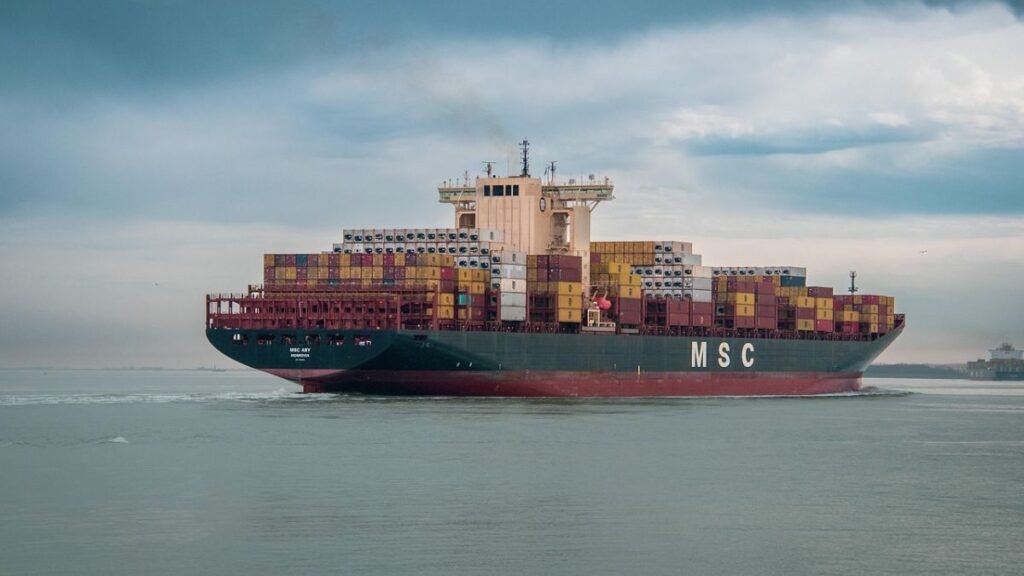
For years, the Port of Kribi and the Port of Douala operated as isolated hubs. In 2026, the road connectivity projects (specifically the Edéa-Kribi and Douala-Yaoundé Phase 2 links) are finally creating a “Logistics Golden Triangle.”
- The Data: Projections suggest that unified road connectivity will increase port throughput by 15% by Q4 2026.
- Why it matters: If you are in warehousing, cold storage, or export/import, the “bottleneck” is officially breaking.
3. Real Estate Appreciation (The “Roadside” Boom)
Follow the asphalt, and you’ll find the profit. History shows that whenever a major corridor like the Awae–Esse–Soa road is paved, land values in the surrounding 10km radius spike.
- The Backlinko Insight: We are currently seeing a 35% increase in land speculation in areas designated as “Urban Entrances” in the 2026 roadmap.
- The Play: Investors are moving away from the saturated city centers of Yaoundé and Douala and heading toward the “New Periphery” opened up by these 476 kilometers.
The “Economic ROI” Table
How does Cameroon road infrastructure projects 2026 actually translate to GDP? Here is the projected impact:
| Metric | Pre-2026 Baseline | 2026 Projection (Post-Roadmap) |
| Avg. Truck Speed (Corridors) | 35 km/h | 60 km/h |
| Post-Harvest Loss (Agri) | 40% | 25% (due to faster transport) |
| Inter-Regional Trade | $2.1B | $2.8B |
| Logistics Lead Time | 14 Days | 9 Days |
4. The “SND30” Anchor
Investors love stability. The 2026 roadmap is the physical manifestation of the National Development Strategy (SND30).
By hitting these infrastructure milestones, Cameroon is signaling to the IMF, World Bank, and private equity firms that it is “Open for Business.” This makes it significantly easier for the country—and by extension, local firms—to access international credit markets.
The Bottom Line: You don’t wait for the road to be finished to invest; you invest where the road is going. In 2026, the road is going toward a more integrated, lower-cost, and faster-moving Cameroon.
Conclusion: The Verdict
In the world of high-growth economies, infrastructure isn’t a “nice-to-have”—it’s the foundation.
As we’ve seen, the Cameroon road infrastructure projects 2026 roadmap isn’t just a list of construction sites. It’s a multi-billion FCFA bet on the country’s ability to trade, manufacture, and move faster than ever before.
But can the government actually deliver all 476 kilometers by December?
The “Verdict” for 2026
Here is the “no-fluff” conclusion:
If the Ministry of Public Works can successfully navigate the 84 billion FCFA funding gap and clear the administrative hurdles for the Douala-Yaoundé Highway Phase 2, 2026 will go down as a watershed year for the Cameroonian economy.
The signs are promising:
- Funding is hitting the ground: The recent $335M AfDB loan (approved Feb 18, 2026) for the Ngoura-Yokadouma corridor proves that international lenders still have a massive appetite for Cameroonian infrastructure.
- The “Macro” looks stable: With inflation cooling toward 3.1% and GDP growth projected to hit 3.3%, the economic backdrop is the most supportive it has been in half a decade.
- Momentum is real: The shift toward “accelerated execution” in the North and the Kribi-bound corridors shows a government that is finally prioritizing completion over conversation.
What You Should Do Now
If you are an investor, business owner, or policy watcher, don’t just watch the headlines. Watch the pavement.
Keep your eyes on the monthly “Situation Reports” from the MINTP. Specifically, look for the signing of compensation decrees in the Center region and the mobilization of heavy machinery on the Ebolowa–Akom II–Kribi axis. Those are your “leading indicators.”
The bottom line? Cameroon is currently building the physical “operating system” for its next decade of growth. It won’t be a perfect ride—there will be budget “tensions” and rainy-season delays—but for the first time in a long time, the roadmap is backed by both the money and the political will to succeed.
What’s your take? Are these 476km of roads enough to jumpstart the economy, or is the “funding gap” too large to ignore? Let me know in the comments below.