
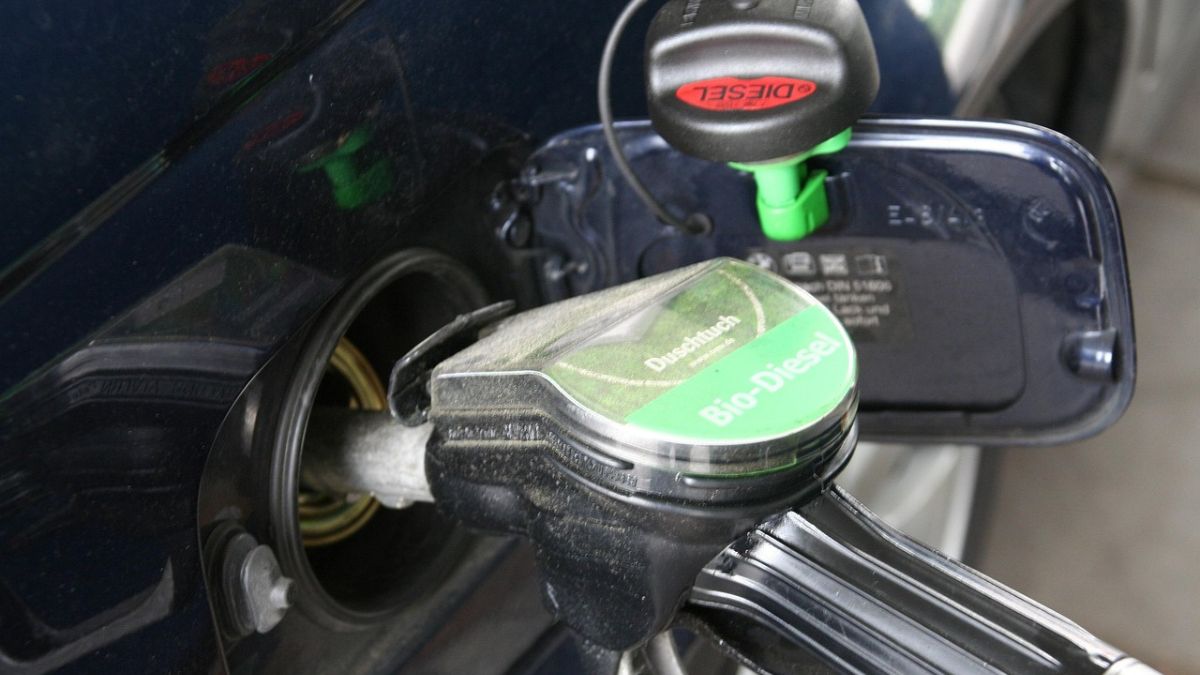

“Cheap fuel, expensive consequences.”
For decades, the pump price in Cameroon has been a sacred cow of domestic policy. Whether you are a civil servant, a cocoa farmer, or a business owner, the price of “Super” and “Gasoil” dictates the rhythm of your wallet. But as the global economy shifts and the Cameroonian government aggressively slashes these subsidies in its 2025 budget, a difficult question emerges: Who was this “gift” actually helping?
While fuel subsidies are often framed as a shield for the poor, the data suggests a different story—one of fiscal strain, regressive benefits, and missed opportunities for national development.
The Massive Cost of “Cheap” Fuel
To understand the scale of the issue, we have to look at the numbers. Fuel subsidies in Cameroon are not just a line item; they have historically been a budgetary behemoth.
In 2022, at the height of global energy price spikes, Cameroon spent over XAF 1,000 billion (approx. $1.6 billion) on fuel subsidies. To put that in perspective, that single year of subsidies accounted for nearly 25% of the state’s total budget resources.
According to World Bank and IMF reports, the opportunity cost of these subsidies is staggering. In recent years, the amount spent on keeping fuel prices low has been:
- 6 times the budget allocated to Agriculture.
- 4 times the budget for Health.
- 3 times the budget for Water and Energy infrastructure.
The government’s realization that this path was “virtually unsustainable” led to a series of sharp corrections. After a 21% price increase in 2023 and another 15% hike in February 2024, the subsidy bill dropped to XAF 263 billion. In the 2025 Finance Law, the government has made its boldest move yet, slashing the subsidy envelope to just XAF 15 billion—a 94% reduction from the previous year.
The Paradox: Who Really Benefits?
The primary argument for subsidies is that they protect the purchasing power of the “common man.” However, economic data reveals a “regressive” reality: the wealthiest households benefit the most.
1. The Consumption Gap
Subsidies apply to every liter of fuel sold. Naturally, those who own private vehicles, run large air-conditioned homes on generators, or manage industrial fleets consume significantly more fuel than a rural family. Research consistently shows that the top 20% of earners capture a disproportionately large share of subsidy benefits compared to the bottom 20%, who may not own a vehicle at all.
2. The Smuggling Factor
Artificially low prices in Cameroon historically fueled a massive “informal export” market. Cheap, subsidized fuel was frequently smuggled across borders to neighboring countries where prices were higher. In effect, the Cameroonian taxpayer was subsidizing the fuel tanks of drivers in neighboring nations.
3. The Middlemen and Industry
Large industrial players often benefited from subsidized diesel (Gasoil) to power operations. While this can support economic activity, it often does so at the expense of the state’s ability to invest in a more reliable, permanent solution: the national power grid.
The Real Impact on the Poor: A Double-Edged Sword
If the rich benefit more, does that mean the poor don’t benefit at all? Not exactly. This is where the “expensive consequences” hit home.
When subsidies are removed, the impact is felt through secondary inflation:
- Transport Costs: In August 2024, the National Institute of Statistics (INS) noted that transport costs had risen by 10.7% year-over-year.
- Food Security: Because food must be transported from rural farms to urban markets, fuel hikes directly translate to higher prices for staples. Food inflation hovered around 6.2% in late 2024.
For a family living on the minimum wage, a 100-CFA increase in a taxi fare or a 200-CFA jump in the price of a bag of rice is a localized crisis.
Moving Forward: From Subsidies to Support
The government’s pivot in 2025—moving from a XAF 263 billion subsidy to just XAF 15 billion—is a signal that the era of “blanket” subsidies is over. The challenge now is reallocation.
The IMF and World Bank have urged Cameroon to use the “savings” from these cuts to fund targeted social safety nets. Instead of subsidizing the fuel in a luxury SUV, the goal is to:
- Invest in Public Transit: Reducing the reliance on individual taxis and “benskins” (motorcycle taxis).
- Subsidize Inputs, Not Outputs: Providing direct support to farmers for fertilizers and seeds to keep food prices stable.
- Infrastructure: Completing projects like the Nachtigal Dam to provide cheaper, more reliable electricity, reducing the need for diesel generators.
Conclusion
Fuel subsidies in Cameroon were a blunt instrument—an expensive “Band-Aid” that drained the national treasury while rewarding those who needed help the least. As we move through 2026, the transition will be painful. The “expensive consequences” of removing subsidies are visible at every market stall and taxi park.
However, if the billions of CFA francs saved are truly redirected into health, education, and infrastructure, the long-term benefit for the average Cameroonian could finally outweigh the cost of a cheaper liter of fuel.