
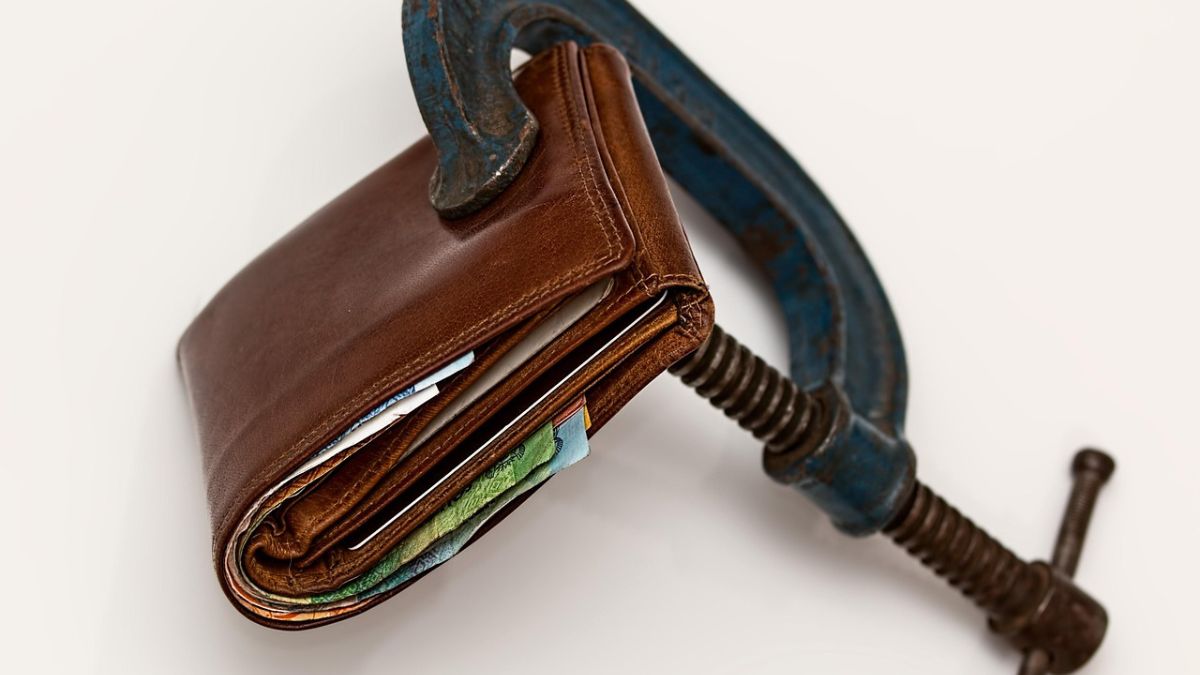

“Saving alone is no longer enough.”
For decades, the standard advice in Cameroon—from our parents, our credit unions (Njangis), and our elders—has been simple: “Work hard, spend less, and keep the change in your account.” We were taught that a fat bank balance was the ultimate sign of financial security.
But in 2026, that old wisdom is becoming a dangerous trap. While your bank balance might stay the same, the purchasing power of those CFA francs is leaking away like water from a cracked clay pot.
In this post, we’ll dive into how inflation specifically impacts the Anglophone Cameroonian context and, more importantly, how you can build a fence around your wealth.
The Silent Thief: What is Inflation?
Inflation is the rate at which the general level of prices for goods and services rises. When inflation occurs, every 1,000 FCFA you own buys a smaller percentage of a bag of rice or a liter of fuel than it did the month before.
The Cameroonian Reality (Data-Backed)
According to recent economic indicators from the National Institute of Statistics (INS), the inflation rate in Cameroon has frequently breached the 3% convergence threshold set by CEMAC. For the average resident in Bamenda, Buea, or Limbe, the “official” numbers often feel lower than reality.
- Food Inflation: Items like refined oils, soap, and imported rice have seen fluctuations ranging from 10% to 25% over the last few years due to supply chain disruptions and local insecurity.
- The “Njangi” Problem: If you contribute 50,000 FCFA monthly to a Njangi and receive 600,000 FCFA at the end of the year, but the price of cement has risen by 15% in that same year, you can no longer buy the same number of bags you planned for your construction project.
How Inflation Destroys Savings
Many Cameroonians prefer “Liquid Cash” or standard savings accounts. However, most commercial banks in the CEMAC zone offer interest rates on savings (around 2.45% to 3.5%) that are often lower than the inflation rate.
1. Negative Real Interest Rates
If your bank gives you 3% interest but inflation is at 6%, you are effectively losing 3% of your wealth every year. You aren’t getting “richer”; you are simply losing money more slowly than if it were under your mattress.
2. The Cost of “Sitting on Cash”
Imagine you saved 5,000,000 FCFA in 2021 to buy a plot of land in Mutengene. In 2026, that same 5,000,000 FCFA might only cover the cost of the foundation and the documents, as land appreciation and material costs have outpaced your savings growth.
How to Protect Yourself: Strategies for the Anglophone Cameroonian
To beat inflation, you must move from being a saver to being an investor. Here is how to hedge your wealth in our specific economic climate:
1. Real Estate and Land (The “Old Reliable”)
In Cameroon, land is the ultimate hedge. Unlike paper currency, the supply of land in developing hubs like Limbe, Tiko, or the outskirts of Bamenda is limited.
- Why it works: Land values in Cameroon historically outpace inflation. Even if the CFA franc loses value, the “value” of a hectare remains tied to its utility and location.
2. Diversify into “Hard Currencies” or Stable Assets
If you have the means, holding a portion of your wealth in stronger currencies (USD or EUR) can protect you against the devaluation of local currency. Additionally, some Cameroonians are turning to digital assets or “stablecoins” pegged to the Dollar to avoid the friction of traditional forex bureaus.
3. Move from Savings to Treasury Bonds (BTA/OTA)
The Cameroonian government frequently issues Treasury Bills (BTA) and Treasury Bonds (OTA).
- The Advantage: These often offer higher interest rates than standard savings accounts and are considered relatively low-risk. You can access these through most major commercial banks (SCB, Afriland, Ecobank).
4. Invest in Agriculture (Value Addition)
Don’t just save money; put it into “productive assets.” Cameroon’s Fertile soil is a goldmine. Investing in poultry, fish farming, or palm oil storage allows you to own a commodity. If inflation goes up, the price of the chicken or oil you are selling goes up too, protecting your profit margins.
5. Education and Skills
The only asset inflation cannot touch is your ability to earn. Investing in a high-value skill (IT, specialized engineering, or modern agribusiness) ensures that your income-earning potential rises alongside the cost of living.
Summary Table: Saving vs. Investing
| Asset Type | Risk Level | Inflation Protection | Recommendation |
| Cash in Bank | Low | Very Low | Keep only 3-6 months of expenses. |
| Njangi (Traditional) | Medium | Low | Use for short-term liquidity, not long-term wealth. |
| Real Estate | Low/Medium | High | Best for long-term (5+ years) protection. |
| Agriculture/Business | High | High | Best for active income growth. |
Final Thoughts
Inflation is a hidden tax on the uninformed. While the 10,000 FCFA note in your pocket looks the same as it did five years ago, its power is fading. To survive the current economic climate in Cameroon, you must stop “parking” your money and start “planting” it.