

If you’ve been looking for a way to protect yourself against inflation or facilitate your international payments in Cameroon, you’ve probably heard the buzz about Bitcoin.
And if you’re like most people in Douala or Buea, you’ve likely been met with a wall of confusion: Is it legal? How do I use Mobile Money to actually buy it? And how do I avoid the scams that seem to be everywhere?
Here’s the deal: In 2026, Bitcoin is no longer just a trend for tech enthusiasts. It has quietly become a practical, everyday tool for thousands of Cameroonians. Whether you’re a freelancer getting paid by international clients or someone looking for a better way to save, Bitcoin is shifting the financial landscape of the +237.
But there is a catch.
Because the regulatory environment is still evolving and traditional banks remain cautious, the way you buy and store your Bitcoin matters. One wrong move, and you could fall for a phishing scam or get your Mobile Money account flagged.
What’s the bottom line?
You don’t need to be a blockchain expert to start investing. You just need a proven, step-by-step roadmap that cuts through the noise.
In this guide, I’m going to show you exactly how to buy, store, and trade Bitcoin in Cameroon—using the payment methods you already have in your pocket.
Ready to get started? Let’s dive in.
I. Understanding the Legal & Regulatory Environment
Navigating the legalities of Bitcoin in Cameroon requires understanding a “dual-track” system. While the central government has shown interest in digital transformation, regional monetary authorities maintain a cautious, often restrictive, stance. As of 2026, here is the current breakdown of what is allowed, what is banned, and where the “gray areas” lie.
The Role of BEAC and COBAC
Cameroon is a member of the CEMAC zone, meaning its monetary policy is governed by the Bank of Central African States (BEAC) and its banking activities are supervised by the Central African Banking Commission (COBAC).
- The Banking Ban: Since May 2022, COBAC has maintained a strict directive prohibiting all regulated financial institutions (banks and microfinances) from facilitating cryptocurrency transactions.
- What this means for you: You cannot walk into a bank in Douala and ask to wire money to a crypto exchange. If a bank detects that a transfer is related to “crypto-assets,” they are legally obligated to block the transaction and report it to the National Agency for Financial Investigation (ANIF).
“Legal but Unregulated”: Personal Ownership
Despite the restrictions on banks, owning Bitcoin as an individual is not illegal in Cameroon. There is currently no national law that criminalizes the holding or private exchange of digital assets.
- The Legal Vacuum: Because there is no specific “Crypto Law,” Bitcoin exists in a state of legal neutrality. You are free to hold it in a private wallet, but you have no “consumer protection” if you are defrauded by a private individual.
- P2P as the Loophole: Because banks are blocked, the market has moved entirely to Peer-to-Peer (P2P). Since you are sending Mobile Money to another individual (who then releases the Bitcoin), the bank/provider only sees a standard person-to-person transfer, which remains perfectly legal.
The 2026 Regulatory Shift: Toward “Digital Assets”
In early 2026, the landscape began to shift. High-level seminars held in Yaoundé involving the IMF and BEAC have signaled a move toward a “Harmonized Framework for Digital Assets.”
The authorities are currently working on:
- VASP Registration: A plan to require “Virtual Asset Service Providers” (like local exchanges) to register with the COSUMAF (The Central African Financial Market Supervisory Commission).
- Central Bank Digital Currency (CBDC): Research into a “Digital CFA” which may eventually provide a legal bridge between traditional cash and the crypto world.
Taxation in 2026: The Finance Law
The 2026 Finance Law in Cameroon introduced significant changes for the digital economy. While it primarily targets “Significant Economic Presence” for foreign digital platforms (taxing them at a minimum of 3% of local revenue), individual crypto traders should take note of the following:
| Category | Tax Treatment (2026) |
| Personal Holding | No tax on “unrealized gains” (simply holding BTC in your wallet). |
| P2P Trading (Occasional) | Generally untaxed, as it is treated as a private exchange of value. |
| Commercial Trading | If you run an exchange business or “buy/sell” as a professional service, you are liable for Non-Commercial Profits (BNC) tax. |
| Withdrawals | The 1% tax on mobile money transfers/withdrawals applies to the CFA side of your transaction. |
Pro-Tip: Always keep a record of your purchase price and sale price. As Cameroon’s tax office (DGI) becomes more digitally proficient, having a clear “paper trail” will be essential for proving that your funds came from legitimate trading rather than unexplained income.
II. Choosing the Right Platform: Where to Buy

Selecting the right platform in Cameroon is a balance between convenience and security. While global giants offer massive liquidity, local startups provide the smoothest integration with the payment systems Cameroonians use every day. As of 2026, the following platforms are the market leaders.
1. Global P2P Giants: Binance & Noones
Peer-to-Peer (P2P) trading remains the primary way to buy Bitcoin in Cameroon because it bypasses the banking restrictions mentioned in Section II.
- Binance P2P: The undisputed heavyweight. It offers the highest security through its escrow service and features a massive directory of Cameroonian merchants.
- Best for: Finding the most competitive exchange rates for XAF.
- Payment Methods: MTN Mobile Money, Orange Money, and Bank Transfers (UBA, Afriland, etc.).
- Noones: Launched as the spiritual successor to Paxful, Noones has quickly become a favorite in Cameroon. It is less rigid than Binance and often features merchants who accept a wider variety of “off-beat” payment methods.
- Best for: Flexibility and a user-friendly interface designed for the African market.
2. Local & Pan-African Innovators: Ejara & Yellow Card
If you prefer a more “corporate” and streamlined experience where you buy directly from a company rather than a stranger, these apps are your best bet.
- Ejara: A Cameroonian-born success story. Ejara is uniquely designed for the Francophone market. It allows you to buy Bitcoin and other assets starting with as little as 1,000 CFA.
- Key Advantage: It offers a non-custodial approach, meaning you have more control over your keys from the start.
- Ease of Use: Fully integrated with MTN and Orange Money via a simple “Buy” button—no need to chat with sellers.
- Yellow Card: A Pan-African exchange with a strong presence in Douala and Yaoundé. They focus on “financial inclusion” and offer some of the most transparent pricing in the region.
- Key Advantage: Zero trading fees (they make money on the “spread”). It’s incredibly fast and perfect for beginners who want a “one-click” buy experience.
3. Bitcoin ATMs (Physical Access)
While still rare, physical Bitcoin ATMs have begun appearing in major urban centers like Douala (often near major malls or tech hubs).
- How they work: You feed CFA banknotes into the machine, scan your wallet QR code, and receive Bitcoin instantly.
- Pros: Instant and anonymous (for small amounts).
- Cons: Significantly higher fees (often 5%–10% above market rate) compared to online platforms.
Pro-Tip for 2026: Always check if the platform requires Tier 1 or Tier 2 KYC (Know Your Customer). Most will let you buy small amounts with just a phone number, but for larger investments, you’ll need your CNI (National ID Card) or Passport ready for verification.
III. Payment Methods: CFA Francs (XAF) to Bitcoin
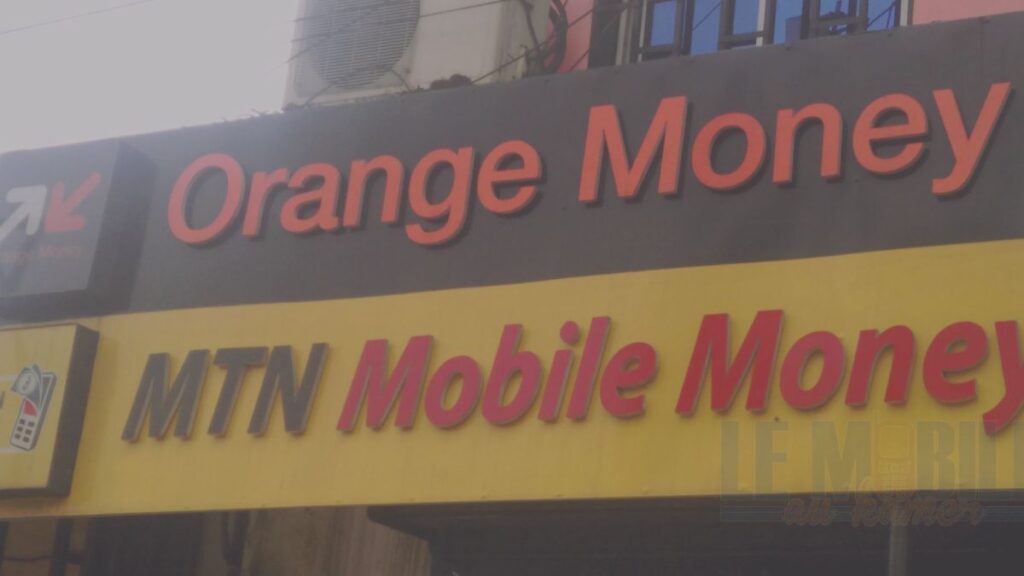
In Cameroon, the bridge between your physical cash and digital Bitcoin is almost exclusively built on Mobile Money. While traditional banking exists, the speed and accessibility of “MoMo” make it the primary engine of the crypto economy. Here is how to navigate these payment channels in 2026.
1. Mobile Money: MTN MoMo & Orange Money
Mobile Money is the “King of Payments” in the +237. Most P2P platforms (Binance, Noones) and local apps (Ejara) are optimized for these two providers.
- How it works: When buying on a P2P marketplace, you send XAF from your phone to the seller’s phone number. Once they receive the “Success” SMS, they release the Bitcoin from escrow to your wallet.
- Transaction Limits (2026): * Regulatory standards generally cap daily transfers around 1,500,000 XAF and monthly volumes at 10,000,000 XAF.
- If you are planning a large purchase, you may need to spread it over several days or use multiple SIM cards.
- Fees to Watch: * The “Withdrawal Tax”: Remember that Cameroon applies a 0.2% tax on mobile money transfers.
- Sending Fees: MTN and Orange charge a tiered fee for sending money. For example, sending 500,000 XAF typically costs a flat fee of around 1,000 XAF to 1,004 XAF via modern apps like Max it or MoMo App.
2. Bank Transfers (Direct & GIMAC)
For larger sums that exceed Mobile Money limits, bank transfers are the next best option.
- Intra-Bank Transfers: Using UBA, Afriland First Bank, or Société Générale. These are fastest if both you and the seller use the same bank.
- GIMAC (Inter-bank): In 2026, the GIMAC network allows for smoother transfers between different banks and even between a bank account and a mobile wallet.
- Security Note: Never write “Bitcoin” or “Crypto” in the bank transfer memo/reference field. Banks are legally required to flag these transactions. Use generic terms like “Service Payment” or “Family Support.”
3. Physical Cash (P2P In-Person)
In cities like Douala (Akwa) or Yaoundé (Bastos), some traders prefer physical cash for high-volume trades to avoid the 0.2% digital tax and daily limits.
- The Process: You meet at a secure public location (like a busy café or a bank lobby), give the seller the cash, and they release the BTC to your wallet on the spot.
- The Risk: This is the highest-risk method. Only do this with highly-rated “Pro” merchants or people you have established long-term trust with.
Critical Safety Rule: On P2P platforms, never click “Payment Received” or “Confirm Payment” until you have checked your own balance. Scammers often send fake “Transaction Received” SMS messages that look exactly like official MTN or Orange alerts. *Always check your actual balance via 126# or #150#!
IV. Step-by-Step: Buying Your First Bitcoin (Tutorial)

In 2026, buying Bitcoin in Cameroon is more streamlined than ever, but it still requires attention to detail—especially regarding identity verification and transaction security. Here is the definitive step-by-step guide using the most popular method: Binance P2P.
Step 1: Account Creation and Security
Before you can trade, you need a secure “base of operations.”
- Sign Up: Download the Binance app or visit the website. Register using a secure email or your Cameroonian phone number (+237).
- Enable 2FA: This is non-negotiable. Go to Security and enable Google Authenticator. Avoid relying solely on SMS, as “SIM swapping” is a known risk in the region.
- Anti-Phishing Code: Set an Anti-Phishing code in your settings. This ensures every official email from the exchange includes a code only you know, helping you spot fake “scam” emails.
Step 2: Complete KYC (Identity Verification)
Due to 2026 global compliance standards, you cannot buy Bitcoin without verifying your identity.
- Documents Needed: Your National ID Card (CNI), a valid Passport, or a Driver’s License.
- The Process: You will be asked to take a clear photo of the document and a “liveness” selfie (where you might have to blink or turn your head).
- Approval Time: In 2026, AI-driven verification typically approves Cameroonian IDs within 15 minutes to 2 hours.
Step 3: Accessing the P2P Marketplace
- On the Binance home screen, tap “P2P Trading.”
- Ensure your currency is set to XAF (CFA Franc BEAC).
- Select the “Buy” tab and filter by “BTC”.
- The Filter Trick: Use the filter icon to select your preferred payment method—MTN Mobile Money or Orange Money. This will show you only sellers active in Cameroon.
Step 4: Choosing a Trusted Seller
Don’t just pick the lowest price. Look for these three green flags:
- Completion Rate: Aim for sellers with a 95% completion rate or higher.
- Trades: Look for merchants who have completed at least 100+ trades.
- Verified Badge: Look for the yellow checkmark next to their name, indicating a “Verified Merchant.”
Step 5: Executing the Trade
- Enter the amount of XAF you want to spend (e.g., 50,000 CFA).
- The Bitcoin will immediately be moved into Binance’s Escrow (a digital safe) so the seller cannot run away with it.
- Open the Chat: Most Cameroonian sellers will send a quick greeting or specific instructions in the chat box.
- Make the Transfer: Minimize the app, go to your MoMo menu (*126# or #150#), and send the exact amount to the phone number provided by the seller.
Step 6: Confirming and Receiving
- Once you get the “Success” SMS from MTN or Orange, go back to the Binance app.
- Tap “Transferred, Notify Seller.”
- Crucial: Do not click this button before you have actually sent the money.
- The seller will verify the receipt on their end and release the Bitcoin. It will appear in your “Funding Wallet” within minutes.
Quick Troubleshooting for 2026
- “The seller isn’t responding”: If 15 minutes pass after you’ve paid and clicked the button, use the “Appeal” button. Binance support will step in and use your proof of payment (screenshot of the MoMo SMS) to release the Bitcoin to you manually.
- “The seller asked me to pay a different number”: Stop. Only pay the number listed on the Binance order page. If they ask for a “direct transfer” outside the system, cancel the trade and report them.
V. Wallet Management: Keeping Your BTC Safe
In the world of Bitcoin, there is a famous saying: “Not your keys, not your coins.” If you keep your Bitcoin on an exchange like Binance or Ejara, they technically control your money. To truly “own” your Bitcoin in Cameroon, you must move it to a private, non-custodial wallet.
As of 2026, here is how to manage your digital assets safely, specifically adapted for the local infrastructure.
1. Hot Wallets (Mobile & Daily Use)
Hot wallets are apps on your smartphone. They are convenient for daily transactions but are connected to the internet, making them slightly less secure than “cold” storage.
- Trust Wallet / MetaMask: Excellent for those who want to hold multiple coins (BTC, USDT, ETH) and interact with decentralized apps.
- BlueWallet (Recommended for Bitcoin-Only): In 2026, BlueWallet remains the gold standard for Cameroonians. It is simple, supports the Lightning Network (for nearly free, instant transfers), and allows you to create “plausible deniability” wallets for extra security.
- Zengo: A great option for beginners who are afraid of losing their “Seed Phrase.” It uses MPC (Multi-Party Computation) technology, replacing the traditional 12-word phrase with facial biometrics and cloud backups.
2. Cold Wallets (Hardware Security)
For large amounts of money (anything over 500,000 XAF), a hardware wallet is essential. These are physical devices that keep your “private keys” offline.
- Top Choices for 2026:
- Ledger Nano Flex / Nano X: High security with a sleek interface.
- Trezor Safe 7: Newly released in late 2025, it features “quantum-ready” security and a touchscreen.
- The Cameroon Shipping Challenge: Ordering a Ledger or Trezor to Cameroon can be tricky.
- Customs: As of January 2026, Cameroon mandates the Tresor Pay platform for customs duties. Expect to pay roughly 20%–30% of the device’s value in import taxes and fees.
- Direct Shipping: Always buy directly from the official website (ledger.com or trezor.io). Never buy a hardware wallet from a random seller at Marché Central or on Facebook, as they may have been tampered with to steal your funds.
3. The “Golden Rule” of the Seed Phrase
When you set up a private wallet, you will be given 12 or 24 random words. This is your “Recovery Seed.”
- If you lose these words, your money is gone forever. No one—not even the app creator—can help you.
- If someone else sees these words, they can steal your money instantly.
- DO NOT take a screenshot or save them in your Google Drive/WhatsApp.
- DO write them on paper and hide them in two different secure locations (e.g., inside a physical safe or a hidden spot in your family home).
4. Lightning Network: The Micro-payment Game Changer
In 2026, the Lightning Network has matured in Cameroon. It allows you to pay for small items (like a coffee in Bastos or a taxi ride) with Bitcoin for a fee of practically zero.
- How to use it: Download a Lightning-enabled wallet like Phoenix or BlueWallet. You can “refill” these wallets by sending a standard Bitcoin transaction to them, which then converts your balance for instant spending.
Security Tip for Cameroonians: Given the rise in “phone snatching” in major cities, always use the “App Lock” feature on your wallet. Furthermore, many 2026 wallets allow you to set a “Dummy PIN”—a code that opens a wallet with only a small amount of money in it, keeping your main savings hidden if you are ever forced to unlock your phone.
VI. Security & Scam Prevention
In Cameroon’s rapidly growing crypto market, your greatest asset isn’t just your Bitcoin—it’s your vigilance. As of 2026, scammers have moved away from basic tricks and are now using sophisticated tools to target your Mobile Money and crypto wallets. Protecting your digital wealth requires a specialized “defense-in-depth” approach.
1. Common Scams in the +237 (2026 Edition)
- The “Minister’s Program” Deepfakes: Watch out for viral videos on WhatsApp or Facebook featuring high-ranking officials (like the Minister of Finance) or popular celebrities “announcing” a new national crypto investment platform. These are AI-generated deepfakes. If it promises a “guaranteed return” or “doubling your money,” it is 100% a scam.
- The “Fake Screenshot” P2P Scams: When selling Bitcoin on P2P platforms, scammers often send a fake SMS that looks exactly like an MTN MoMo or Orange Money transaction alert.
- The Defense: Never trust an SMS notification. Always dial your carrier’s shortcode (*126# or #150#) to verify your actual balance before releasing any Bitcoin.
- The “WhatsApp Support” Impersonators: Scammers join local crypto Telegram and WhatsApp groups, pretending to be “Binance Support” or “Ejara Staff.” They will message you privately to “help” with an account issue and ask for your 12-word seed phrase or a “small fee” in crypto to unlock your account.
- Reality: Official support will never message you first or ask for your recovery words.
2. Red Flags: If you see these, RUN.
- Unrealistic Returns: Anything promising “2% daily profit” or “fixed returns” is a Ponzi scheme. Bitcoin’s price is volatile; no one can guarantee profit.
- Secrecy: If a “trader” or “group leader” tells you to keep the investment a secret from your family or bank, they are isolating you so you can be manipulated.
- Urgency: Scammers use “limited-time offers” to stop you from thinking clearly. A legitimate investment will still be there tomorrow.
3. Professional Security Checklist
To keep your coins safe in 2026, follow these non-negotiable rules:
- Hardware 2FA: Switch from SMS-based 2FA to Google Authenticator or a physical Yubikey. Mobile numbers in Cameroon can be “swapped” or intercepted, but an app-based code stays on your physical phone.
- Use Private Wallets: As discussed in Section VI, keep only what you are actively trading on an exchange. The bulk of your savings should be in a wallet where you hold the keys.
- App Locks: Enable biometric (face/fingerprint) locks for your crypto apps. If your phone is snatched in a busy area like Marché Central, the thief won’t be able to open your wallet instantly.
4. What to do if you are scammed
If the worst happens, acting quickly is vital:
- Report the Phone Number: Immediately report the scammer’s phone number to ANTIC (National Agency for Information and Communication Technologies) via their toll-free numbers: 8202 or 8206.
- Contact ANIF: For large financial losses, file a report with the National Agency for Financial Investigation (ANIF).
- Exchange Blacklisting: If you used an exchange like Binance or Noones, open a support ticket immediately so they can freeze the scammer’s account and prevent them from withdrawing your stolen funds.
Pro-Tip: Join a reputable community like the “Cameroon Crypto Users” group to stay updated on the latest scam tactics. Knowing what a scam looks like before it hits your inbox is your best defense.
VII. Cashing Out: Turning Bitcoin back to XAF
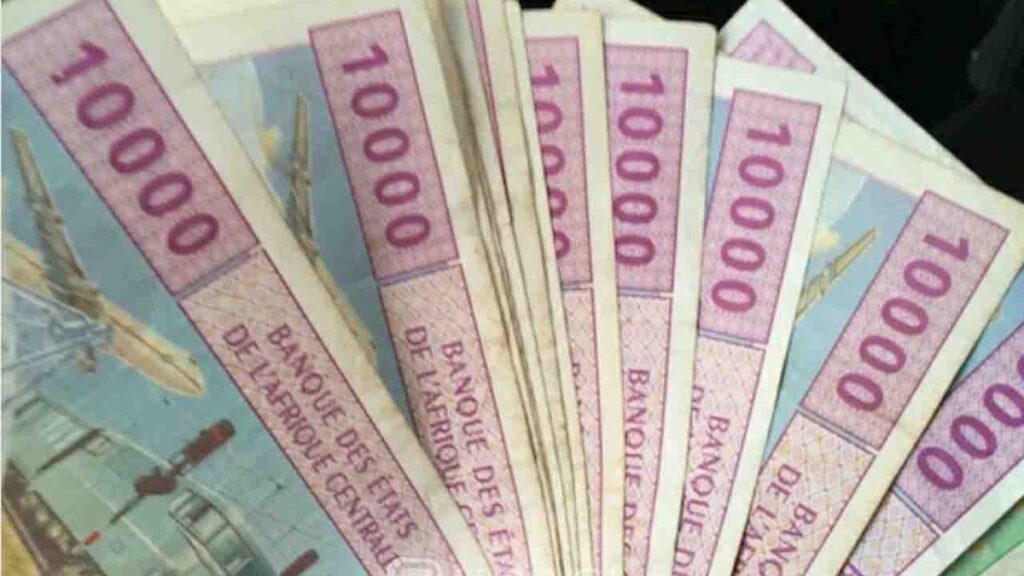
The “off-ramp”—the process of converting your Bitcoin back into CFA Francs—is arguably the most critical part of the journey. In 2026, the options for cashing out in Cameroon have become highly efficient, with most transactions landing in your mobile wallet in under 10 minutes.
1. The P2P Method (Highest Rates)
Just as you used P2P to buy, you can use it to sell. This is usually the best way to get the maximum value for your Bitcoin.
- The Process: On Binance or Noones, you post an “Ad” to sell or select an existing “Buy” offer from a merchant.
- Safety Lock: The platform will hold your Bitcoin in escrow. You must wait until you see the MTN or Orange Money SMS and verify the balance via *126# or #150#. Only then should you click “Payment Received.”
- 2026 Limit Alert: Be mindful of the daily receipt limits on Mobile Money (typically capped around 1.5M XAF for standard accounts). For larger amounts, you may need to split the sale across multiple days or use a bank transfer.
2. Instant Off-Ramp Apps: Ejara, Yellow Card & ZendWallet
If you want to avoid the “chatting and waiting” of P2P, specialized apps offer one-click liquidations.
- Ejara: Allows you to sell your BTC directly to the app. The XAF is then sent to your linked MoMo account or can be picked up at various partner cash points.
- Yellow Card: Known for its “Yellow Pay” feature, it allows for instant conversion to XAF with some of the lowest spreads in the CEMAC region.
- ZendWallet: A rising favorite in 2026 for its speed. It specializes in “Off-ramping,” allowing users to send BTC to a specific address and receive Mobile Money automatically once the transaction is confirmed on the blockchain.
3. Strategic Cashing Out: Timing and Fees
Cashing out isn’t just about the exchange rate; it’s about the “hidden” costs.
- The 2026 Exchange Rate: As of March 8, 2026, Bitcoin is trading at approximately 38,143,654 XAF. However, P2P buyers often buy at a slight discount (1%–2% below market) to cover their own risks.
- Withdrawal Fees: When you move money from an app to your MoMo wallet, there is often a flat fee or a small percentage (usually around 0.5% to 1.5%).
- The “Tax” Factor: Don’t forget the 0.2% state tax on mobile money transfers which is automatically deducted by the service provider.
Pro-Tip: If you are cashing out a large amount (e.g., from a successful freelance project or trade), do not send it all to one Mobile Money number at once. High-volume incoming transfers can sometimes trigger “Security Freezes” on your SIM card, requiring a trip to an MTN or Orange agency to unlock.
VIII. The Future: Bitcoin’s Role in Cameroon’s Economy
As we look toward the latter half of 2026 and beyond, Bitcoin is transitioning from a speculative asset for the youth to a cornerstone of Cameroon’s digital infrastructure. The “Orange Economy” (the creative and tech sectors) is no longer waiting for traditional banking reforms; it is building on top of the blockchain.
1. The Lightning Network & Local Commerce
The biggest shift in 2026 is the mainstreaming of the Lightning Network. In neighborhoods like Bastos (Yaoundé) and Bonapriso (Douala), forward-thinking merchants—from coffee shops to tech retailers—have begun displaying “Bitcoin Accepted Here” QR codes.
- Micro-payments: Because Lightning allows for near-zero fees, paying for a 1,000 XAF plate of poulet DG with Bitcoin is now technically and economically viable.
- Merchant Adoption: Local payment processors are developing “Point of Sale” (PoS) apps that allow merchants to receive Bitcoin but instantly convert a portion into XAF to manage their local expenses.
2. Empowerment for the “Silicon Mountain” Generation
Buea’s Silicon Mountain and the growing tech hubs in the capital are using Bitcoin to solve the “Payment Gateway Problem.”
- Global Freelancing: Cameroonian developers and designers are no longer limited by the hurdles of receiving international bank wires. By accepting Bitcoin, they are participating in the global economy on equal footing with peers in Europe or America.
- Capital for Startups: We are seeing the early stages of Bitcoin-backed lending in the region, where entrepreneurs use their BTC as collateral to secure micro-loans for their businesses, bypassing the rigid requirements of local commercial banks.
3. Remittances and “Circular Economies”
The diaspora in France, Canada, and the USA is increasingly choosing Bitcoin over traditional money transfer operators.
- The “Zero-Fee” Bridge: Instead of paying 5-10% in fees to send money home, families are receiving Bitcoin and cashing it out via Ejara or P2P, keeping more wealth within the Cameroonian household.
- Circular Flow: We are seeing the rise of “Circular Economies” in rural areas, where remittances are sent in BTC, held in BTC, and used to pay for local services (like school fees or solar power subscriptions) without ever converting back to XAF.
4. Institutional and Government Evolution
While the BEAC remains cautious, the pressure for a formal “Digital Asset Framework” is mounting.
- The “Digital CFA” vs. Bitcoin: There is ongoing debate about a Central Bank Digital Currency (CBDC). However, many experts believe Bitcoin will coexist as the “Reserve Asset” (Digital Gold), while a Digital CFA handles government-regulated daily transactions.
- Energy Sovereignty: With Cameroon’s vast hydroelectric potential (such as the Nachtigal Dam), there is growing discussion about using “stranded” or excess energy for Green Bitcoin Mining, which could provide a new revenue stream for the national grid.
Conclusion: A New Chapter for the +237
Bitcoin in Cameroon has evolved from a tool of “financial rebellion” to a tool of financial resilience. As the 2026 landscape continues to mature, those who take the time to learn the technology—not just the price—will be the best positioned to lead Cameroon into the next era of digital prosperity.
Final Thought: The future of Bitcoin in Cameroon isn’t just about “getting rich”—it’s about “staying connected” to a global financial system that finally has a seat at the table for everyone.