
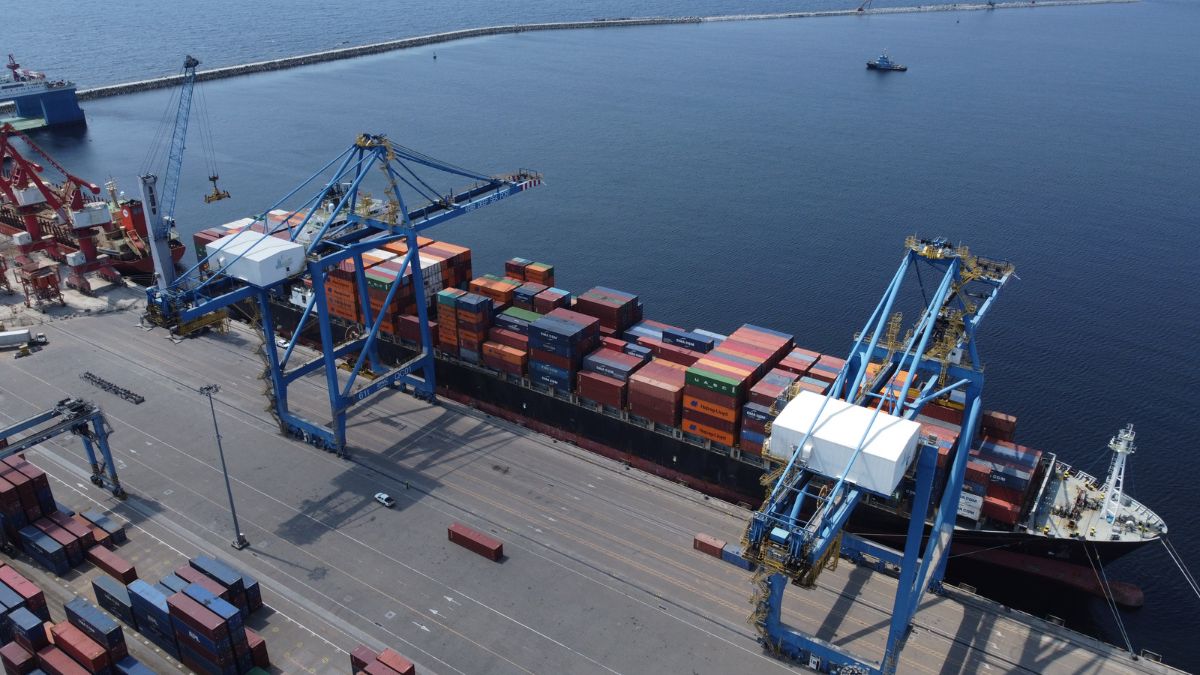

For decades, the bustling, often chaotic, port of Douala has been the undisputed gateway to Cameroon and the landlocked nations of Central Africa. A critical artery for trade, it has, however, struggled under the weight of its own success, plagued by congestion, limited draft, and an aging infrastructure. Enter the Kribi Deep-Water Port: a modern marvel promising to revolutionize maritime logistics in the region. But is it a successor or a complement? This in-depth analysis delves into the strategic imperatives, operational realities, and economic implications of The Kribi Deep-Water Port vs Douala, using recent data to project their respective futures and impact on Central Africa’s trade landscape.
Douala: The Indispensable Legacy with Persistent Headaches
Douala Port, located on the Wouri Estuary, has historically been Cameroon’s commercial nerve center. Its strategic position connecting the industrial heartland to the Atlantic has made it indispensable for imports and exports, serving not just Cameroon but also Chad, the Central African Republic (CAR), and even parts of Congo and Equatorial Guinea.
Operational Challenges of Douala:
Despite its historical significance, Douala faces inherent geographical and infrastructural limitations:
- Shallow Draft: The most significant challenge is its natural shallow draft, requiring constant dredging to accommodate larger vessels. Even with regular maintenance, the port struggles to handle ships exceeding 15,000 DWT (Deadweight Tonnage) or those with drafts greater than 7 meters, often necessitating costly transshipment via smaller feeder vessels. This restriction inherently limits its capacity for direct calls from mega-ships, increasing shipping times and costs.
- Congestion: Chronic vessel queuing, slow cargo evacuation, and inadequate storage facilities lead to severe congestion, escalating demurrage charges and delaying supply chains. Turnaround times for vessels can be significantly longer than at more modern ports.
- Aging Infrastructure: While investments have been made, much of the port’s infrastructure, including berths and equipment, is aging and requires substantial modernization to meet contemporary demands for efficiency and speed.
- Urban Integration: Being an older port, Douala is deeply integrated into the city, limiting its physical expansion capabilities and exacerbating traffic bottlenecks for cargo transit.
Data Snapshot (Pre-Kribi full operation):
- Cargo Volume: Douala consistently handles the vast majority of Cameroon’s trade. In 2021, the Port Autonome de Douala (PAD) reported handling over 12 million tonnes of cargo, including approximately 550,000 TEUs (Twenty-foot Equivalent Units).
- Economic Impact: It directly and indirectly supports thousands of jobs and generates substantial customs revenue, underpinning a significant portion of Cameroon’s GDP.
Kribi Deep-Water Port: The Modern Challenger Emerges
Located approximately 170 km south of Douala, the Kribi Deep-Water Port is a purpose-built facility designed to overcome every limitation faced by its older counterpart. Inaugurated in 2018 (with its first phase), Kribi represents a bold leap into modern maritime logistics for Cameroon and the sub-region.
Strategic Advantages of Kribi:
- Deep Draft: This is Kribi’s crown jewel. With a natural draft of 16 meters (and expandable to 20 meters in future phases), Kribi can accommodate the largest vessels currently sailing the world’s oceans (e.g., Post-Panamax and Capesize bulk carriers). This eliminates transshipment needs, reducing costs and transit times significantly for international trade.
- Modern Infrastructure: Kribi boasts state-of-the-art container terminals (operated by a consortium including CMA CGM, Bolloré, and CHEC), bulk terminals, and specialized berths for hydrocarbon and mineral exports. Its layout is designed for optimal flow and rapid cargo handling.
- Expansive Land Area: Situated in a relatively undeveloped area, Kribi has vast potential for expansion, including the development of an industrial-port complex and a logistics zone, attracting manufacturing and processing industries.
- Connectivity: Kribi is strategically linked to key regional corridors via newly constructed highways (e.g., the Kribi-Edea and Kribi-Lolabé highways), facilitating smoother and faster evacuation of cargo to Chad, CAR, and beyond. Future rail connections are also planned.
- Efficiency: With modern equipment (e.g., Ship-to-Shore cranes, Rubber Tyred Gantry cranes) and streamlined processes, Kribi aims for rapid vessel turnaround times, significantly reducing waiting periods.
Data Snapshot (Recent Operations):
- Phase 1 Operations: The first phase of Kribi includes a 350-meter container terminal, a multi-purpose terminal, and an aluminum terminal.
- Growing Volumes: While still scaling up, Kribi’s cargo volumes have shown steady growth. In 2022, Kribi Port handled approximately 7.2 million tonnes of cargo, a substantial increase from previous years. Its container throughput reached around 180,000 TEUs in the same year.
- Attracting Major Lines: Its deep draft has already attracted direct calls from major international shipping lines that previously avoided Douala, signaling a shift in regional shipping patterns.
- Mineral Exports: Kribi is becoming crucial for the export of Cameroon’s mineral resources, particularly bauxite and iron ore, due to its specialized bulk handling capabilities. The port is integral to projects like the Minim Martap bauxite export plans.
The Kribi Deep-Water Port vs. Douala: Complementary or Competitive?
The central question remains: will Kribi replace Douala, or will they co-exist, each serving distinct market segments? The current trajectory suggests a more nuanced dynamic of both competition and complementarity.
Competitive Aspects:
- Container Traffic: Kribi is directly challenging Douala for high-volume container traffic, particularly for international shipments that benefit from direct calls by larger vessels. Major importers and exporters are increasingly routing their cargo through Kribi to capitalize on efficiency and cost savings.
- Transit Cargo to Landlocked Nations: Kribi aims to capture a significant share of transit cargo destined for Chad and CAR. Its superior infrastructure and road connections offer a more reliable and efficient route, potentially diverting business away from Douala.
- Specialized Bulk Cargo: For large-scale mineral exports, Kribi is the undisputed leader, as Douala simply cannot accommodate the necessary vessel sizes or specialized handling requirements.
Complementary Aspects:
- Coastal Trade and Regional Distribution: Douala is likely to retain its role as a hub for regional coastal trade and feeder services, distributing cargo to smaller ports along the West African coast. Its established logistics network and proximity to Cameroon’s largest urban and industrial center will remain an advantage.
- Domestic Market for Douala-based Industries: For industries directly located in or around Douala, using the local port may still be more cost-effective due to shorter inland transport distances.
- Synergy in Port Network: Together, the two ports offer Cameroon a robust, diversified maritime network. Douala can focus on optimizing its existing capacity and serving its immediate hinterland, while Kribi drives growth in large-scale international trade and industrial development.
- Capacity Relief: Kribi effectively relieves the immense pressure on Douala, allowing the latter to operate more efficiently within its inherent limitations.
Economic and Regional Implications
The emergence of Kribi significantly alters the economic landscape of Cameroon and Central Africa:
- Reduced Logistics Costs: For the entire sub-region, the ability to use larger vessels and benefit from faster turnaround times at Kribi means lower overall shipping costs, improved competitiveness for exports, and cheaper imports. This translates to potential consumer savings and boosted trade volumes.
- Industrialization Catalyst: The Kribi industrial-port complex is envisioned as a major engine for industrialization. The availability of reliable power (from nearby hydroelectric projects like Memve’ele) and raw materials, coupled with efficient logistics, is designed to attract manufacturing, processing plants, and value-added industries.
- Job Creation: Both ports are significant employers. Kribi’s development phase created thousands of jobs, and its operational and industrial zones are expected to generate long-term employment across various sectors.
- Diversification of the Economy: By facilitating mineral exports and attracting new industries, Kribi contributes to diversifying Cameroon’s economy beyond oil and gas.
- Regional Integration: Kribi strengthens Cameroon’s position as a gateway to Central Africa, solidifying its role in regional economic integration and trade corridors. This is a critical factor for landlocked countries like Chad and CAR, whose economies are heavily reliant on access to the sea.
Challenges and Future Outlook
Despite its promise, Kribi faces its own set of challenges:
- Full Operationalization of Hinterland Connections: While roads are improving, robust and efficient multimodal transport (especially rail) is crucial for Kribi to fully realize its potential for transit cargo.
- Attracting and Retaining Human Capital: The development of the surrounding Kribi area needs to keep pace with the port’s growth to provide adequate housing, services, and skilled labor.
- Competition from Neighboring Countries: While leading the sub-region, Kribi must remain competitive against other developing deep-water ports in West and Central Africa.
- Douala’s Adaptation: Douala must continue to invest in modernization, streamline customs processes, and focus on niche markets where its location offers an advantage to remain relevant.
Conclusion
The narrative of The Kribi Deep-Water Port vs. Douala is not one of simple replacement, but rather of strategic evolution. Douala, with its rich history and established networks, will continue to play a vital role, albeit with a focus on optimizing efficiency within its constraints. Kribi, on the other hand, represents Cameroon’s bold embrace of 21st-century maritime trade, designed to be the primary engine for large-scale international shipping, industrial growth, and regional economic integration.
Together, these two ports offer Cameroon a dual advantage, making it a pivotal player in Central African trade and logistics. The ongoing development of Kribi, coupled with necessary improvements at Douala, will undoubtedly reshape the region’s economic destiny for decades to come, bringing both opportunities and the imperative for continuous adaptation and strategic planning. The future of maritime trade in Central Africa is undeniably brighter and more dynamic with the ascendancy of Kribi.