

“High returns don’t come without danger.”
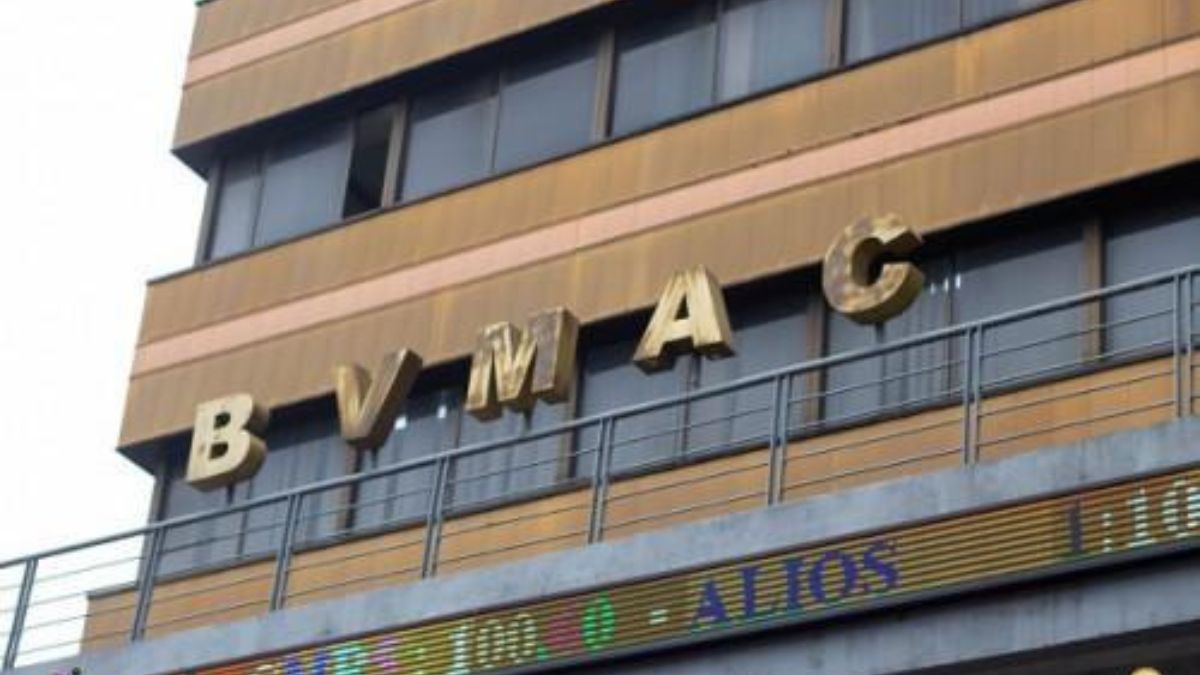
For many Cameroonians, the dream of “making it” has shifted from the traditional tontine (njangi) and real estate to the modern floor of the Bourse des Valeurs Mobilières de l’Afrique Centrale (BVMAC). With recent high-profile listings like La Régionale and the steady performance of giants like SOCAPALM, the stock market in Douala is no longer just for the “elite” in suits. It is now a playground for the middle-class civil servant in Bamenda, the trader in Douala, and the tech-savvy youth in Buea.
However, as the BVMAC gains popularity, a dangerous trend is emerging: investing without understanding risk. In the excitement of 10% annual dividends, many overlook the fact that the stock market is not a savings account.
As of early 2026, the market is showing a mix of incredible resilience and worrying volatility. If you are looking to put your hard-earned CFA Francs into the BVMAC, here is the data-backed reality of the risks you must navigate.
1. Market Liquidity Risk: The “Easy to Buy, Hard to Sell” Trap
In a mature market like the NYSE, you can sell a stock in seconds. On the BVMAC, liquidity remains the “Achilles’ heel.”
The Data: Recent reports from 2024 and 2025 show that the BVMAC often experiences periods of “low-cost entry windows” but high “exit friction.” For instance, in Q1 2025, the BVMAC recorded a staggering 98% drop in transaction volume compared to the previous quarter. Much of the market is dominated by institutional “buy-and-hold” players who secure shares and never let them go.
- What this means for you: If you invest your emergency fund into stocks like Safacam or Socapalm, you might find that when you need the cash urgently, there are no buyers at your price. You could be “stuck” with a profitable stock that you can’t turn into cash.
2. Information Asymmetry and Transparency Gaps
In the English-speaking regions of Cameroon, we value “knowing the ground” before we plant. Unfortunately, the BVMAC “ground” can sometimes be foggy.
The Data:
A 2025 assessment by the Cameroon Economic Policy Institute (CEPI) highlighted that several listed companies, including Société des Eaux Minérales du Cameroun (SEMC), have faced challenges in publishing timely, audited financial statements. While larger companies are improving, the lack of a centralized, real-time digital platform makes it difficult for individual investors to track daily performance accurately.
- Risk Factor: Without regular, legible financial reports, you are essentially “gambling” on a company’s past reputation rather than its current health.
3. Concentration Risk: The “Heavyweights” Problem
The BVMAC is still a small market. As of late 2025, there are fewer than 10 major companies listed on the equity (stock) side.
Market Breakdown:
| Sector | Key Players | Risk Profile |
|---|---|---|
| Agro-Industry | Socapalm, Safacam | High (Linked to global palm oil prices) |
| Banking/Finance | Bange Bank, La Régionale | Moderate (Regulatory & Credit risk) |
| Consumer Goods | SEMC (Tangui) | Moderate (Competition/Operational) |
If one sector—like palm oil—takes a hit due to global price fluctuations or local unrest, a huge chunk of the BVMAC’s value can vanish. Because the market is so small, you cannot easily diversify your risk.
4. Macroeconomic and Political “Vibrations”
Investing in Cameroon requires an eye on the wider CEMAC region.
- Fiscal Pressures: The 2025 IMF reviews indicated that several CEMAC countries are struggling with public debt and tightening financial conditions. This has led to “market saturation,” where governments (like Cameroon’s planned 150 billion CFA bond for 2026) compete with private companies for your money, often pushing interest rates up but making the market more volatile.
- Inflation: While inflation in Cameroon is expected to decline to roughly 3.5% in 2026, it still eats into your real returns. If your stock yields a 5% dividend but inflation is 4%, your “real” profit is only 1%.
How to Invest Wisely (The “Cameroonian Strategy”)
Knowing the risks doesn’t mean you shouldn’t invest. It means you should invest smart.
- Prioritize Bonds for Stability: In 2024, 96% of BVMAC transactions were in bonds, not stocks. Bonds from the State of Cameroon or institutions like Alios Finance offer more predictable returns (coupons) and are generally safer for beginners.
- Use Licensed Intermediaries (SGI): Never give your money to “online gurus.” Only use registered Sociétés de Gestion et d’Intermédiation (SGI) based in Douala or Yaoundé.
- The “Long-Term” Rule: Do not invest money you will need in the next 3 to 5 years. The BVMAC rewards those who wait for dividends, not those trying to “day trade.”
Conclusion
The BVMAC is a powerful engine for wealth creation in Central Africa, but every engine can overheat. By understanding that liquidity is low, transparency is a work in progress, and the market is highly concentrated, you can position yourself to benefit from the 4.4% GDP growth projected for Cameroon in the coming year.