
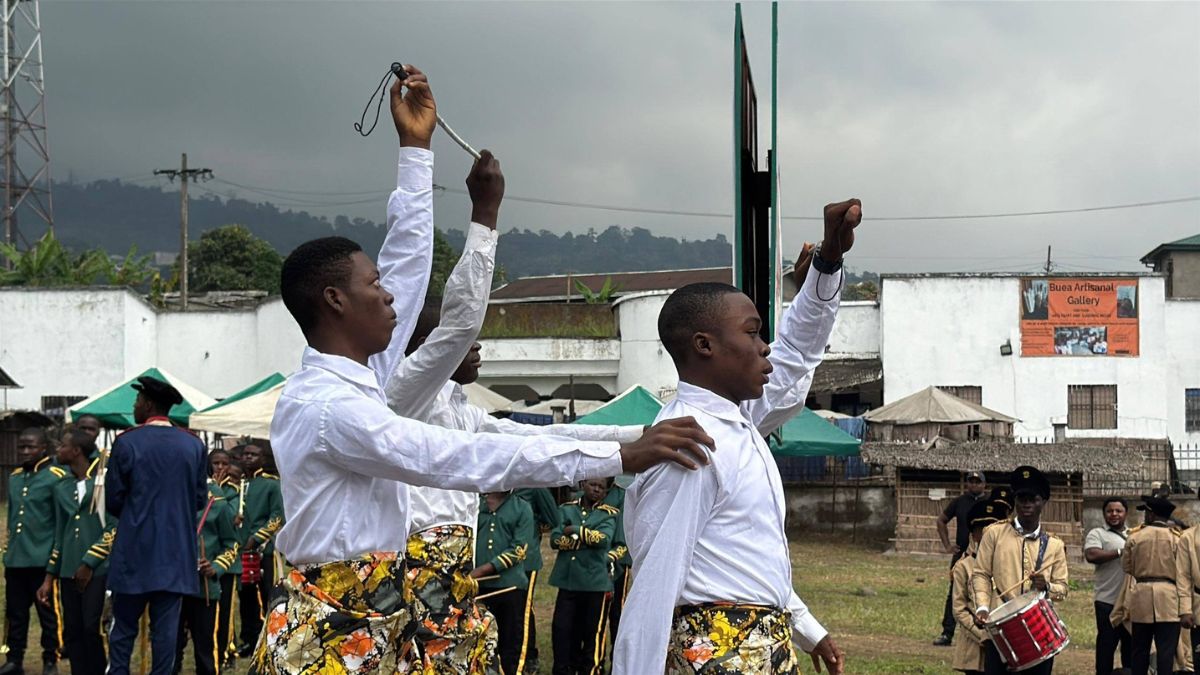

Every year on February 11, the streets of Cameroon turn into a sea of school uniforms, rhythmic marching, and patriotic songs. But as the dust settles on the 60th anniversary of National Youth Day in 2026, a pressing question remains: Is the “Youth Onzaine” (the 11-day youth festival) merely a performance of loyalty, or is it a genuine launchpad for the country’s 15 million young people?
With a 2026 theme of “Youth at the Heart of Great Hopes, for a United, Stable and Prosperous Cameroon,” the government and the youth are at a crossroads between tradition and the urgent need for economic transformation.
The Presidential Promise: 50 Billion XAF for Entrepreneurship
In his eve-of-celebration address on February 10, 2026, President Paul Biya framed the new seven-year term as a mandate of “great hopes.” Beyond the rhetoric, the 2026 Finance Law has backed these words with a significant financial commitment:
- 50 Billion XAF Budget: Allocated specifically to promote youth entrepreneurship and startup growth.
- Special Youth Employment Plan: A newly announced initiative targeting the integration of graduates into the labor market.
- Tax Exemptions: 2026 introduces aggressive tax breaks for private businesses that recruit young graduates for their first jobs.
This shift marks a move from “assistance” to “investment,” signaling that the government recognizes that parades don’t pay bills.
The Employment Gap: Breaking Down the 2026 Data
Despite the festivities, the economic reality for young Cameroonians remains challenging. According to the Africa Youth Employment Clock and World Bank estimates for early 2026:
- Underemployment: While the “official” youth unemployment rate (ages 15-24) sits around 6.2%, this figure is deceptive. Over 75% of active youth are trapped in the “informal sector” or “underemployment”—working jobs for which they are overqualified or that offer no social security.
- The Poverty Line: Recent INS (National Institute of Statistics) data shows that nearly 2 out of every 5 Cameroonians live below the poverty line (estimated at 813 XAF per day).
- The “JEME” Initiative: To combat this, the Ministry of Employment launched the “Un Jeune, Un Métier, Un Employ” (JEME) program with a 17.7 billion XAF budget, focusing on “Import-Substitution” skills in agriculture and fisheries.
The 60th Anniversary Parade: A Symbolic Milestone
The 2026 parade was uniquely significant as it marked six decades since the holiday was nationalized in 1966.
- The “Youth Village”: In Yaoundé and Douala, the traditional march-past was supplemented by “Youth Villages” where digital start-ups and agricultural innovators showcased products, moving the focus from marching to “making.”
- Civic Engagement: Over 500 volunteers participated in national “Blue Economy” clean-ups and civic service leading up to the 11th, a sign that the “Onzaine” is becoming more action-oriented.
Challenges: Migration and the “Jando” Phenomenon
A major theme of the 2026 National Youth Day was the “brain drain.” With the ongoing crisis in the North West and South West regions, and economic pressure in urban centers, many youths still see migration—often through dangerous routes—as their only option.
- The “Moral Citizenship” Call: In 2026, the Ministry of Youth (MINJEC) intensified its “re-armament” campaign, urging youth to shun “destructive behaviors” and the “excessive and abusive use of social media” to focus on national building.
- The Diaspora Link: For the first time, government messaging in 2026 heavily courted the “Diaspora Youth,” offering simplified land acquisition and business permits for those wishing to invest back home.
Verdict: Is the Parade Enough?
For the 237 generation, 2026 is a year of cautious optimism. The transition from a purely “ceremonial” holiday to one focused on the 50 billion XAF entrepreneurship fund and the JEME vocational training shows a government responding to the “depth of frustrations” acknowledged by the President.
However, the success of Youth Day 2026 won’t be measured by the straightness of the marching lines on the 20th May Boulevard, but by the number of young people who find themselves in stable, dignified employment by February 11, 2027.