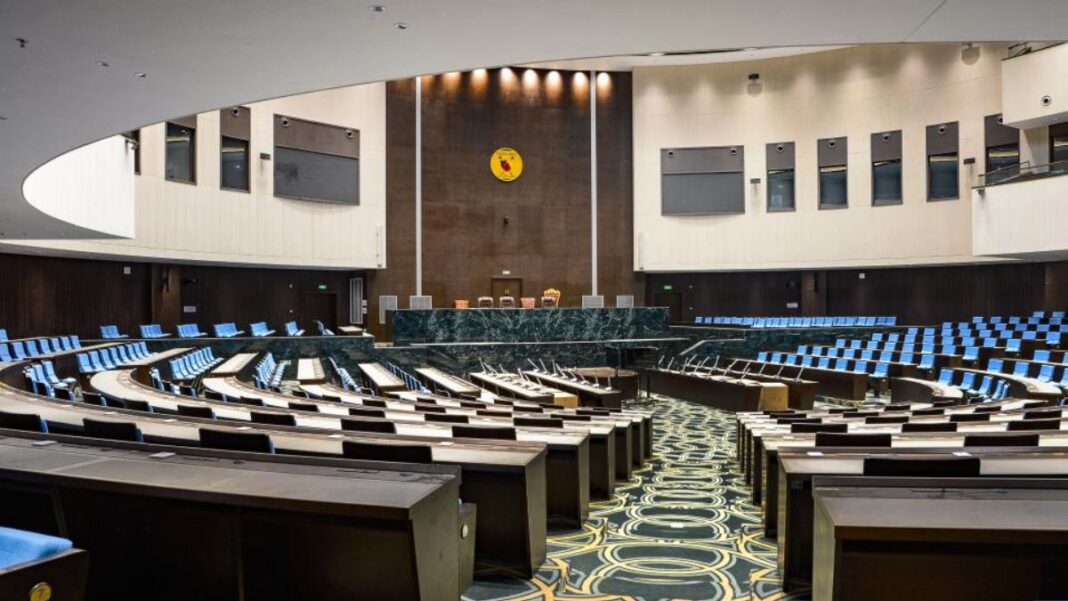

The adoption of Cameroon’s 2026 budget by the National Assembly signals a bold shift in public spending, underscoring an ambitious drive towards structural transformation and social inclusion. With a significant expansion in size and a clear reorientation of priorities, the fiscal year 2026 is poised to be a pivotal year in the country’s pursuit of its National Development Strategy 2020–2030 (SND30).
This post dives deep into the data, examining the key figures, the major allocations, and the economic outlook underpinning the financial roadmap for the coming year.
The Big Picture: A Historic Increase in Spending
The newly approved Finance Bill for 2026 sets the budget—balanced in both revenue and expenditure—at a record high.
Key Financial Data Points
| Component | 2026 Figure (FCFA Billion) | Change from 2025 | Notes |
| Total Budget | 8,816.4 | +14% | A major leap from the 2025 budget (estimated at FCFA 7,735.9 billion). |
| General State Budget | 8,683.9 | +13% | The bulk of the expenditure. |
| Special Appropriation Accounts (CAS) | 132.5 | +98.1% (Nearly Double) | Driven by new, targeted social funds. |
| Domestic Revenue Target | 5,887.0 | +8.3% | Goal to boost non-oil revenue collection. |
| Public Investment Expenditure (PIB) | 2,026.3 | N/A | Focus on structural projects (Roads, Energy, Agriculture). |
| Projected Budget Deficit | 631.0 | Up from 309.9 billion FCFA in 2025 | Signals increased financing needs. |
| Total Financing Requirement | 3,104.2 | Up from 2,326.5 billion FCFA in 2025 | The amount to be covered by domestic and external borrowing. |
The 14% increase in the overall budget size, equivalent to over FCFA 1,000 billion, is the most salient data point. It illustrates the government’s commitment to injecting substantial resources into the economy, even in a complex global context marked by geopolitical uncertainties.
Sectoral Allocation: A Focus on Infrastructure and Human Capital
The spending priorities of Cameroon’s 2026 budget are a clear translation of the SND30 objectives, emphasizing the physical and social infrastructure necessary for long-term growth.
Advertisement
Infrastructure Takes Center Stage
Infrastructure, particularly road connectivity, has received a massive boost, signifying its role as the engine for economic activity:
- Ministry of Public Works (MINTP): Plans to dedicate over 92% of its 2026 budget to the construction, rehabilitation, and maintenance of the national road network.
- Targeted Outputs: The plan includes the construction of approximately 650 km of new paved roads and over 1,300 meters of engineering structures (bridges, overpasses).
- Local Impact: Resources for local road maintenance are set to rise by 38.5%, reflecting a push for decentralization and improved rural accessibility.
The Youth and Women Dividend: A New Special Fund
One of the most significant social innovations in this budget is the creation of a new, substantial Special Appropriation Account:
- Special Fund for Women’s Economic Empowerment and Youth Employment: Endowed with FCFA 50 billion.
- Objective: This fund aims to promote social inclusion, reduce unemployment, and support entrepreneurial initiatives among these vulnerable groups, aligning with recent presidential directives.
Agriculture and Import Substitution
The budget reaffirms the commitment to the Integrated Agropastoral and Fisheries Import-Substitution Plan (PIISAH), aiming to reduce the trade deficit and create jobs:
- Key Targets: Plans to achieve additional production targets for key commodities, including 66,000 tonnes of rice, 20,500 tonnes of crude palm oil, and 331,000 tonnes of maize.
- Support: Significant investment is planned for opening new production areas and developing hydro-agricultural land.
Economic Outlook and the Debt Challenge
The budget is anchored in an optimistic, yet cautious, macroeconomic forecast for 2026.
Macroeconomic Projections
| Indicator | 2025 Estimate | 2026 Projection | Key Driver |
| GDP Growth Rate | 3.9% | 4.3% | Non-oil sector (industry, agriculture, telecommunications). |
| Inflation Rate | 3.2% | 3.0% | Expected stabilization of consumer prices. |
| Oil Sector Growth | N/A | -0.1% (Contraction) | Diversification efforts remain critical as the oil sector shrinks. |
The High-Risk Debt Dynamic
The expansive budget and the corresponding deficit necessitate a significant recourse to borrowing, raising concerns about the national debt profile:
- Total Financing Requirement: At FCFA 3,104.2 billion, the government plans to cover this need through a mix of project loans, external borrowing, public securities, and bank financing.
- Debt Risk: Despite government assurances that the debt-to-GDP ratio will remain below the CEMAC ceiling of 70%, international financial institutions like the IMF and African Development Bank (AfDB) currently classify Cameroon as facing a high risk of debt distress. The sustainable management and deployment of this new borrowing will be the ultimate test of the 2026 fiscal policy.
Reforms for Better Governance and Execution
Beyond the figures, the 2026 Finance Law introduces structural and governance reforms aimed at improving the efficiency and transparency of public finance management:
- Budgetary Restructuring: Elimination of old common budget chapters, replaced by three specific allocations for contingency expenses, enhancing clarity in expenditure tracking.
- Decentralization: Acceleration of the decentralization process through the transfer of powers and increased resources for Regional and Local Authorities (RLAs).
- Digitalization: Continued efforts to modernize the Public Treasury through the dematerialization of procedures (like PROBMIS and PATRIMONY) to strengthen oversight and combat corruption.
Conclusion
Cameroon’s 2026 budget is a clear statement of national intent: a strategy of expansionary spending, prioritizing infrastructure to unlock economic potential and making direct investments in human capital through dedicated funds for women and youth. The success of this ambitious plan will hinge on the government’s ability to execute projects efficiently, mobilize the targeted domestic and external revenues in a sustainable manner, and manage the growing public debt in a high-risk environment. The coming year will be a crucial test of Cameroon’s commitment to transforming its economic structure as outlined in the SND30.

