
Let’s be honest.
When most people look at African growth stories, they look at the “Big Three”: Nigeria, Kenya, and South Africa.
But there’s a quiet giant in Central Africa that everyone is missing.
I’m talking about Cameroon.
It is often called “Africa in Miniature.” Why? Because it has everything: oil, minerals, fertile soil, and a strategic coastline.
Advertisement
Yet, if you look at the raw data, there is a massive paradox.
In this guide, I’m going to have Cameroon’s Economy explained with the kind of data-heavy detail you won’t find anywhere else.
Jump to
The $48 Billion Paradox
Here is the situation:
Cameroon represents nearly 40% of the entire money supply in the CEMAC (Central African Economic and Monetary Community) zone. It is the undisputed industrial engine of the region.
But despite that power, the economy has hit a “3% ceiling.”
In 2025, while some neighbors saw double-digit shifts, Cameroon’s GDP growth cooled to approximately 3.1%.
Why? Because the country is currently caught in a high-stakes tug-of-war between its fading oil reserves and a burgeoning non-oil sector.
What You’ll Discover in This Guide
To have Cameroon’s Economy explained properly, we have to look past the surface-level government reports. We are going deep into the “no-fluff” reality of:
- The Oil Cliff: Why production is dropping by 8% annually and what’s replacing it.
- The NDS30 Strategy: The government’s $100 billion blueprint to reach “Emerging Nation” status by 2035.
- The Debt Reality: A breakdown of the FCFA 14,591 billion debt stock and whether the IMF is worried (Hint: They are, but not for the reasons you think).
- The Agriculture Pivot: How record-high cocoa prices in 2024 changed the game for rural liquidity.
Why This Matters Right Now
We are entering a pivotal window.
With the Nachtigal Hydroelectric Project finally coming online to solve the energy deficit and the Kribi Deep Sea Port entering Phase II, the “infrastructure super-cycle” is hitting its peak.
If you want to understand where the money is flowing—and where the bottlenecks remain—you’re in the right place.
Advertisement
Let’s dive into the data.
What is the real “engine” behind the numbers? To get Cameroon’s Economy explained, we first have to look at the Macro View.
Chapter 1: The Macro View – Understanding the Numbers
To get Cameroon’s Economy explained, you have to stop looking at it as a single entity and start looking at it as the “Regional Anchor.”
If Cameroon’s economy catches a cold, the rest of Central Africa gets pneumonia.
Here is the data-driven breakdown of where the macro numbers stand as of early 2026.
1. The Growth Paradox: Resilience vs. Reality
In 2024, Cameroon showed remarkable resilience, with real GDP growth hitting 3.5%. This was largely driven by a spike in international cocoa prices and a stabilizing power supply (thanks to the first turbines at Nachtigal).
Advertisement
However, 2025 brought a cooling period.
Growth slowed to an estimated 3.1%. Why the dip? Two main factors:
- Election Uncertainty: Post-election unrest toward the end of 2025 disrupted internal trade routes and dampened domestic demand.
- The Oil Drag: Crude production continued its natural decline, falling by over 7% year-on-year.
The 2026 Forecast: The IMF projects a recovery to 3.3% this year as public investment ramps back up and the political dust settles.
2. Taming the Inflation Beast
If you lived in Douala or Yaoundé in 2023, you felt the sting of 7.4% inflation. It was brutal.
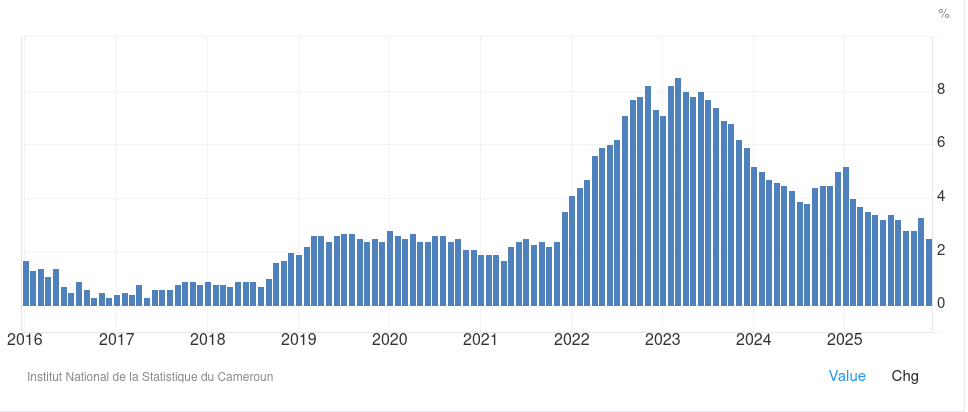
But the regional central bank (BEAC) played hardball with interest rates, and the government’s “Import Substitution” policy started to show teeth.
- 2024: 4.5%
- 2025: 3.4%
- 2026 (Projected): 2.9%
This puts Cameroon right back within the CEMAC convergence criteria of 3%. For the average consumer, this means the price of bread and fuel is finally stabilizing, even if it isn’t “cheap” yet.
3. The CEMAC Powerhouse
You cannot have Cameroon’s Economy explained without mentioning its regional dominance.
Advertisement
Cameroon currently accounts for nearly 40% of the CEMAC zone’s GDP. While nations like Gabon and Equatorial Guinea are more “oil-rich” per capita, Cameroon has the most diversified industrial base.
Data Point: Cameroon contributes roughly 38% of the regional international reserves. When the regional currency (FCFA) stays stable, it’s usually because Cameroon’s non-oil exports are performing.
4. Key Economic Indicators (2024–2027)
| Indicator | 2024 (Actual) | 2025 (Est.) | 2026 (Proj.) | 2027 (Proj.) |
| Real GDP Growth | 3.5% | 3.1% | 3.3% | 3.8% |
| Inflation (Avg) | 4.5% | 3.4% | 2.9% | 2.6% |
| Fiscal Deficit (% of GDP) | -1.5% | -2.0% | -1.7% | -1.4% |
| Current Account Deficit | -3.3% | -3.9% | -5.3% | -4.0% |
5. The “Business Ready” Reality Check
The World Bank recently transitioned from “Doing Business” to a more rigorous B-READY (Business Ready) framework.
In the 2025 report, Cameroon scored a 36/100 for Public Services but showed a much stronger 58/100 for its Regulatory Framework.
The takeaway? The laws on the books are actually quite good. The problem is the “boots on the ground”—the speed of getting a permit, the efficiency of the grid, and the transparency of the courts.
Chapter 2: The Oil vs. Non-Oil Tug of War
If you want Cameroon’s Economy explained in a single sentence, it’s this: The country is desperately trying to build a new house while the old one is still shrinking.
For decades, oil was the undisputed king. But in 2026, the data shows a radical shift. The “Black Gold” era isn’t over, but it’s no longer the engine in the driver’s seat.
1. The Crude Reality: Maturing Fields and Declining Rents
Let’s look at the numbers. Cameroon’s oil production has been on a downward slide for years. In 2024, oil GDP contracted by a staggering 9.7%.
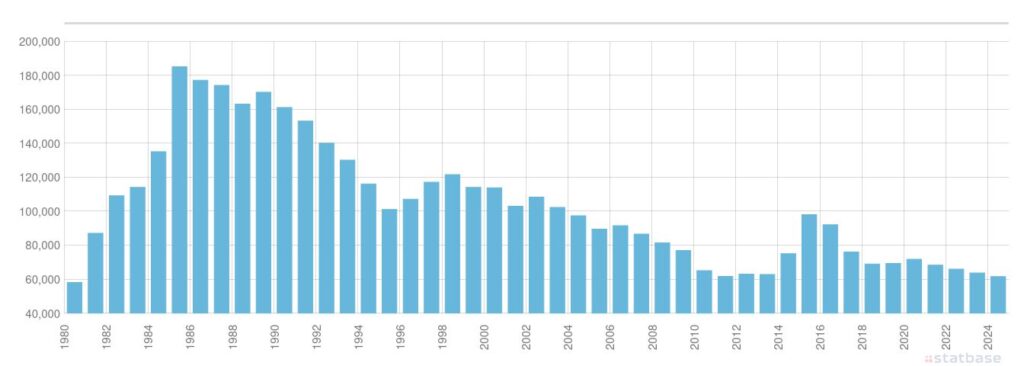
- 2025 Status: Production averaged around 58,000 barrels per day (bpd).
- The Revenue Hit: Crude oil earnings dropped by nearly 30% in 2025.
- The “Maturation” Problem: Most of Cameroon’s active wells in the Rio del Rey basin are decades old. As these fields dry up, the cost of extraction goes up, and the profit for the state goes down.
However, there is a glimmer of hope. The National Hydrocarbons Corporation (SNH) projects a slight rebound to 20.8 million barrels in 2026 as new “field optimization” programs—essentially giving old wells a high-tech tune-up—come online.
2. The Gas Pivot: The New “Blue” Economy
While oil is fading, Natural Gas is stepping into the spotlight.
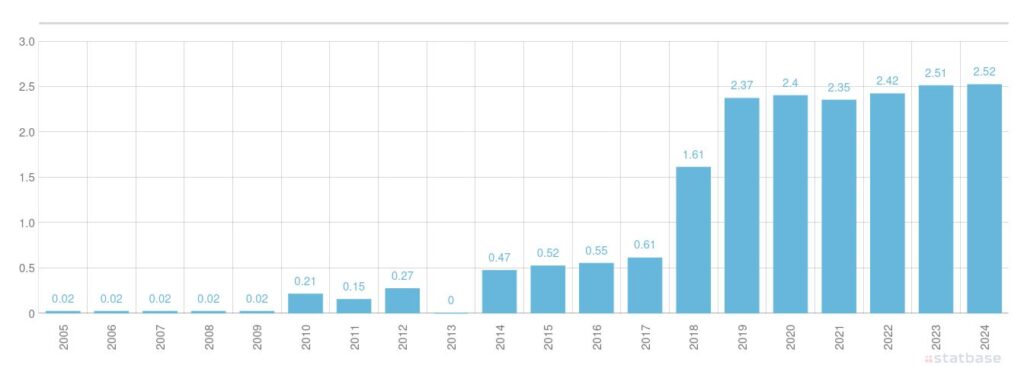
Cameroon has proven reserves of approximately 4.7 trillion cubic feet. The game-changer? The Hilli Episeyo floating LNG unit off the coast of Kribi.
- The Export Factor: LNG now accounts for roughly 11-12% of all export revenue (CFAF 350 billion in 2025).
- The Yoyo-Yolanda Project: In February 2026, Cameroon and Equatorial Guinea signed a massive “unitization” agreement for this transboundary gas field. This is arguably the most significant energy deal in the region this decade, paving the way for billions in new investment.
3. The Rise of the Non-Oil Hero
Here is where the “no-fluff” analysis gets interesting. While the oil sector is shrinking, the Non-Oil Sector is actually the one keeping the lights on.
In 2025, while Oil GDP was falling, Non-Oil GDP grew by 3.3%.
What’s driving the non-oil side?
- Construction: Massive public works (roads, dams, and ports).
- Manufacturing: Local processing of cotton and timber.
- Agriculture: Specifically the “Cocoa Surge” (which we will cover in the next chapter).
4. The “Import Substitution” Battle
To have Cameroon’s Economy explained fully, you must understand the government’s war on imports.
Cameroon spends too much foreign currency on things it can produce itself. In 2025, the trade deficit narrowed significantly, but not just because of exports—it was because the government started cutting the “Cereal Bill.”
- The Goal: Reduce the import of wheat and rice by 20% by 2027.
- The Strategy: Taxing imported finished goods while giving tax breaks to companies like CSTAR, which is building a $620 million refinery in Kribi to process 30,000 barrels of oil per day locally.
5. Why the “Tug of War” Matters to You
If you are an investor or a policy analyst, this transition is the only metric that matters.
If the non-oil sector grows at 4% or higher, it can absorb the decline in oil. If it stays at 3%, the country’s debt-to-GDP ratio will start to look much uglier.
The 2026 Takeaway: Hydrocarbons now contribute less than 10% to the national budget. The “Oil State” is officially becoming a “Productive State.”
But there is one specific sector that is single-handedly saving the trade balance right now. It’s not gas. It’s not oil. It’s Cocoa.
Chapter 3: Agriculture – The Giant with “Unfinished Business”
If you want Cameroon’s Economy explained through its most volatile and high-potential sector, look no further than the soil.
Agriculture is the backbone of the Cameroonian identity, employing over 60% of the workforce. But in 2026, the story isn’t just about farming—it’s about a massive, high-stakes transition from “exporting raw materials” to “industrial processing.”
1. The “Brown Gold” Rollercoaster (2024–2026)
Cocoa is Cameroon’s leading non-oil export, and the last 24 months have been a wild ride for farmers.
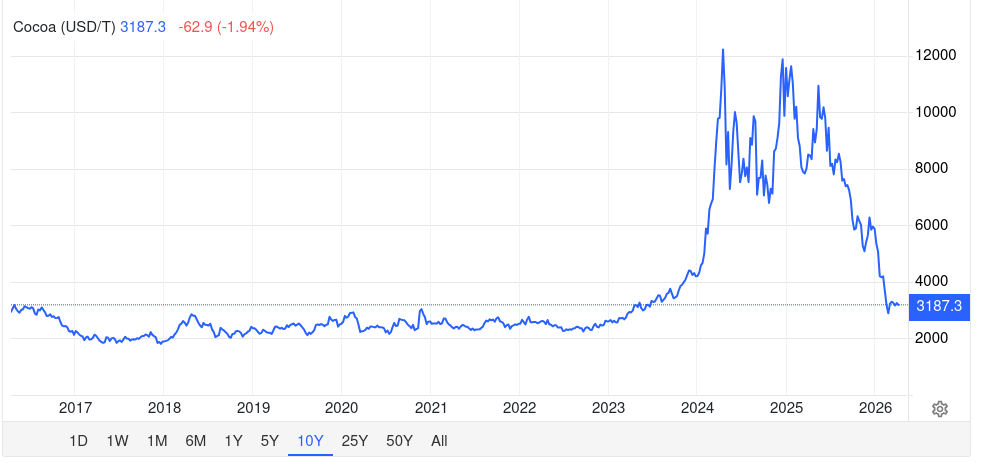
- The 2024 Peak: Due to supply deficits in Côte d’Ivoire and Ghana, Cameroon’s liberalized market saw farm-gate prices skyrocket to a record CFAF 6,000/kg. This injected unprecedented liquidity into rural areas.
- The 2025/2026 Correction: As of March 2026, the global market has entered a surplus. Prices have “normalized” to between CFAF 1,200 and CFAF 1,500/kg.
- The Production Win: Despite the price drop, Cameroon produced a solid 309,000 tonnes in the 2024-2025 season.
Why this matters: Unlike its neighbors, Cameroon’s cocoa market is fully deregulated. This means when global prices rise, farmers get the cash immediately. When they fall, they feel the sting directly.
2. The Local Transformation Revolution
The most significant data point in Cameroon’s Economy explained for 2026 is the 80% Processing Milestone.
For decades, Cameroon shipped its beans to Europe and bought back chocolate at a 1,000% markup. That era is ending.
- Installed Capacity: With the groundbreaking of the new 32,000-tonne plant in Baré-Bakem in February 2026, Cameroon’s total processing capacity now exceeds 250,000 tonnes.
- The Shift: The country now has the infrastructure to process over 80% of its national cocoa output into butter, powder, and liquor right at home.
3. The War on “Imported Inflation”: Rice and Wheat
Cameroon has a “cereal problem.” The country spends over CFAF 1,000 billion annually on food imports—mostly rice and wheat.
In 2026, the government’s Import Substitution Policy moved from theory to reality:
- The Wheat Revival: In January 2026, the IRAD (Institute of Agricultural Research for Development) launched a major seed campaign in Wassandé, aiming to produce 1,600 tons of basic wheat seeds. The goal? To stop relying on Polish and Russian wheat and start baking “Made in Cameroon” bread.
- Rice Sovereignty: The government has allocated CFAF 611.4 billion for 2026 to support the “National Rice Development Strategy.” The target is to produce 750,000 tons of paddy rice annually to slash the trade deficit.
4. The Challenges: The “Invisible Ceiling”
Despite the wins, two major hurdles remain:
- Post-Harvest Losses: Due to poor rural roads, nearly 25% of perishable crops (tomatoes, plantains) never reach the urban markets of Douala or Yaoundé.
- The “Red Cocoa” Quality Fight: While Cameroon recently won a Gold Medal at the 2026 Cocoa of Excellence Awards in Amsterdam, ensuring that all 300,000+ tonnes meet these “premium” standards is a massive logistical task.
Key Takeaway: Agriculture contributes roughly 17% to the GDP, but with the shift to local processing, its “Value Added” contribution is expected to jump to 22% by 2028.
Chapter 4: The Infrastructure Super-Cycle (2020–2030)
If you’ve ever tried to run a factory in Douala, you know the “Cameroon Tax.” It isn’t a government fee—it’s the cost of running a diesel generator because the grid failed.
To have Cameroon’s Economy explained for 2026, you have to look at the massive “Infrastructure Super-Cycle” currently attempting to break that tax. We are talking about over $5 billion in active projects.
1. Nachtigal: The 420MW Game-Changer
For a decade, the Nachtigal Hydroelectric Project was the “unicorn” of Cameroonian energy—everyone talked about it, but no one saw the results.
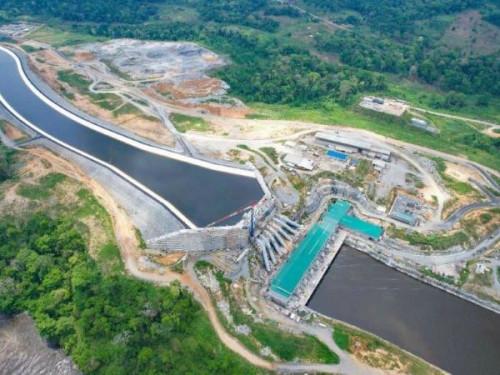
That changed in May 2025.
- The Milestone: Nachtigal reached full commercial operations, injecting 420MW of clean, renewable energy into the Southern Interconnected Grid (RIS).
- The Impact: This project alone increased Cameroon’s total generation capacity by 25%.
- The Result: For the first time in recent history, the industrial sector has a surplus of energy during off-peak hours.
2. The Kribi Deep Sea Port: More Than Just a Dock
Kribi isn’t just a port; it’s an economic magnet. While Douala (the older port) struggles with shallow waters and silt, Kribi can handle the world’s largest “Post-Panamax” vessels.
- Phase II Expansion: As of early 2026, Phase II is fully operational, doubling the container terminal’s capacity.
- The KPIZ Launch: On February 26, 2026, the government inaugurated the Kribi Port Industrial Zone (KPIZ).
- The Vision: A 4,000-hectare hub designed to host 150,000 jobs by 2040. It’s already attracting “early movers” in timber processing and metallurgy who want to be five minutes away from a ship heading to China.
3. The 2026 Road Map: 476 Kilometers of Asphalt
The Ministry of Public Works has one of the largest budgets in the 2026 finance law (CFAF 740 billion). Why? Because the “missing link” in Cameroon’s Economy is the high cost of transport.
The 2026 Deliverables:
- The Douala Eastern Access: Finally easing the bottleneck into the economic capital.
- The Yaoundé-Douala Expressway (Phase 2): Construction has officially accelerated to connect the political and economic lungs of the country with a modern 2×2 lane highway.
- The Northern Corridors: 475.9 km of new roads are slated for completion this year, specifically targeting the Maroua-Bogo-Pouss axis to boost trade with Chad and Nigeria.
4. Electricity Access: The 74% Threshold
The data shows a quiet revolution in rural electrification.
In late 2025, the Minister of Water and Energy confirmed that the national electricity access rate hit 74%, up from just 72% a year prior.
- The 2026 Goal: Under the “Electricity Sector Recovery Plan” (PRSEC), the state is targeting 50,000 new connections by Q3 2026.
- The Strategy: Replacing 11,600 unreliable wooden poles with concrete ones and migrating 1.5 million meters to prepaid units to fix the sector’s “liquidity crisis.”
5. The Bottleneck: Cash Flow Tensions
Here is the “no-fluff” truth. While the projects are massive, the execution is hampered by payment delays.
The Minister of Public Works recently warned that “cash flow tensions” are the #1 threat to these timelines. The government owes billions to construction firms, leading to “stop-and-go” progress on major highways.
Key Takeaway: Cameroon has the hardware (dams and ports) ready. In 2026, the focus shifts to the software—the transmission lines and maintenance schedules that ensure this $5 billion investment actually reaches the end consumer.
But all this building costs money. Where is it coming from? And is Cameroon spending more than it can afford? We’re tackling the “Debt Monster” in Chapter 5.
Chapter 5: Debt, Deficits, and the IMF
When people hear “national debt,” they usually think of a country going broke.
Related: You may like to read our article on Cameroon’s debt explained.
But for Cameroon’s Economy in 2026, the debt story isn’t about the amount—it’s about the rhythm of repayment.

Cameroon is currently walking a tightrope. It is funding a massive infrastructure surge (Chapter 4) while trying to keep the IMF and international bondholders happy. Let’s look at the cold, hard numbers.
1. The 40% Threshold: Safe or Sinking?
The most important metric in macroeconomics is the debt-to-GDP ratio. According to the March 2026 IMF Article IV consultation, Cameroon’s public debt stock is actually trending downward as a percentage of the economy.
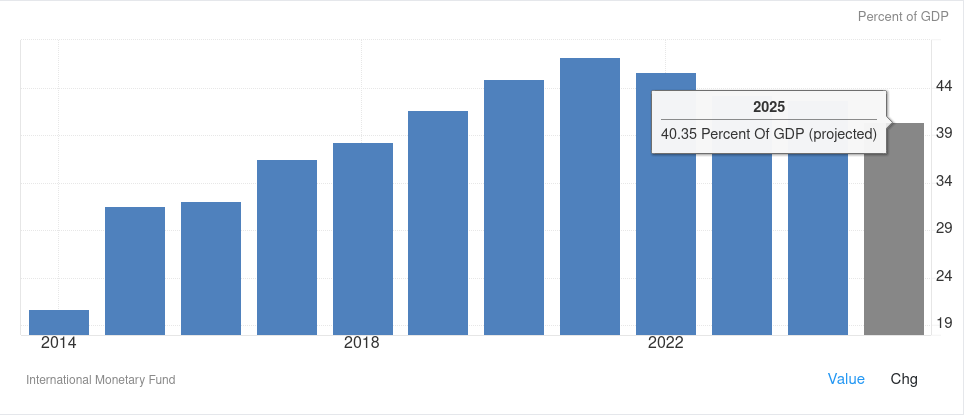
- 2024: 43.4% of GDP
- 2025: 40.3% of GDP
- 2026 (Projected): 39.6% of GDP
The Reality Check: While the percentage is dropping, the “Risk of Debt Distress” remains High.
Why? Because while the debt isn’t huge compared to the size of the economy, it is becoming expensive to “service” (pay the interest). As global interest rates stay high, Cameroon is spending a larger chunk of its tax revenue just to keep its creditors at bay.
2. The FCFA 14.5 Trillion Breakdown
To have Cameroon’s Economy explained, we need to see who the country owes. The total debt stock sits at approximately FCFA 14,591 billion.
- External Debt (62%): Mostly owed to China (the largest bilateral creditor), the World Bank, and Eurobond holders.
- Domestic Debt (38%): Owed to local banks and contractors. This is where the “liquidity crunch” happens. When the government doesn’t pay a local road builder on time, that builder can’t pay their workers, and the local economy stalls.
3. The IMF “Article IV” Verdict (2026)
In February 2026, an IMF mission led by Christine Dieterich visited Yaoundé. Their verdict was a mix of “good job” and “watch out.”
- The “Good”: The IMF praised the 2026 budget for tightening the fiscal stance, targeting a deficit of only 1.7% of GDP.
- The “Bad”: They warned about “extrabudgetary spending.” This is the “no-fluff” term for money spent that wasn’t in the official budget—often used for fuel subsidies or emergency security needs in the North and SW regions.
4. Financing the 2026 Budget: The CFAF 8.8 Trillion Goal
The 2026 Finance Law is the most ambitious in the country’s history, balanced at CFAF 8,816.4 billion—a 14% increase from 2025.
Where is the money coming from?
- Internal Revenue: CFAF 5,887 billion (mostly from taxes and customs).
- New Loans: The government plans to raise CFAF 1,000 billion in new external debt and CFAF 400 billion from the regional (BEAC) treasury market.
5. The “Liquidity Gap”
Here is the part most analysts miss. In 2026, Cameroon has “large amortizations” coming due.
This is like having a balloon payment on a mortgage. The country has to pay back significant portions of old loans this year. To do this, it is engaging in “External Commercial Borrowing”—basically taking out a new, sophisticated loan to pay off the old ones. It’s a delicate game of musical chairs.
Key Takeaway: Cameroon is not “broke,” but it is “cash-constrained.” The government is prioritizing paying back international lenders to keep its credit rating high, even if it means local contractors have to wait a little longer for their checks.
But who is doing the work on the ground while the government manages the debt? It’s the millions of entrepreneurs in the service sector. Let’s head to Chapter 6 to see how Fintech and Startups are thriving in the gaps.
Chapter 6: The Digital Economy & Service Sector
If you want Cameroon’s Economy explained in terms of where the most rapid change is happening, look away from the oil rigs and toward the smartphone in a Douala taxi driver’s hand.
While agriculture and industry are the traditional “muscles” of the country, the Service Sector has quietly become the brain and the heart. In 2025, the tertiary sector (services) hit a milestone: it now contributes 55% of Cameroon’s total GDP.
1. The 1 Trillion Franc Telecom Explosion
In December 2025, the Telecommunications Regulatory Agency (ART) released a report that sent shockwaves through the regional business community. Cameroon’s electronic communications market officially generated CFAF 1,022 billion in revenue in 2024—the first time it has crossed the trillion-franc mark.
- The Growth Rate: Total sector revenue jumped by 18% in a single year.
- The Players: Orange Cameroon currently leads the pack with a 50.08% market share, followed closely by MTN Cameroon at 47.2%.
- The User Base: Active mobile subscriptions rose to 31.5 million—meaning there are now more active SIM cards in Cameroon than there are people.
2. Mobile Money: The “Invisible” Banking System
The most disruptive force in Cameroon’s Economy is the death of the traditional bank branch. Only about 15% of Cameroonians have a standard bank account, but over 11.4 million are active mobile money users.
- The Revenue Pillar: In 2024/2025, mobile financial services (MTN MoMo and Orange Money) generated CFAF 135.8 billion, accounting for 13% of all telecom income.
- The Merchant Shift: The biggest trend for 2026 is “Merchant Payments.” Small shops (VSEs) that used to only take cash are now processing millions in digital transactions, bringing a huge portion of the “informal economy” into the light of data.
3. “Silicon Mountain” and the Startup Gap
If you travel to Buea, at the foot of Mount Cameroon, you’ll find “Silicon Mountain.” It is the hub of Cameroon’s tech talent, representing roughly 55% of all startups in Central Africa.
The Data on the Ground:
- Total Startups: Approximately 75-80 verified, high-growth tech companies.
- The Leaders: Fintechs like Diool and PaySika are raising millions to bridge the payment gap between local vendors and global markets.
- The Funding Gap: Despite the talent, Cameroon ranks #114 globally in the 2025 StartupBlink Index. Why? Because while the ideas are there, “Early Stage” venture capital is still scarce compared to Lagos or Nairobi.
4. The World Bank “Service Gap” Verdict
To have a “no-fluff” understanding of this sector, we have to look at the Business Ready (B-READY) 2025 report.
- The Score: Cameroon scored only 36.3/100 for Public Services.
- The Meaning: While private companies (like Orange and MTN) are incredibly efficient, government-led digital services (like online tax filing or permit applications) are lagging.
- The Opportunity: The government has launched a $2 billion fiber optic initiative to bridge this “Digital Divide.” If they can raise the public service score to match the private sector’s efficiency, analysts predict an automatic 1.5% boost to annual GDP.
5. Service Sector Breakdown (By Growth)
| Sub-Sector | 2024 Growth | 2025 Growth (Est) | Key Driver |
| Financial Services | 6.5% | 6.2% | Fintech & Microfinance |
| Telecommunications | 5.3% | 5.8% | 4G/5G Expansion |
| Transport/Logistics | 4.1% | 3.5% | Kribi Port Activity |
| Public Admin | 2.1% | 1.8% | Fiscal Tightening |
The 2026 Takeaway: The service sector is no longer just “support” for the economy—it is the economy. For every 1% growth in mobile internet penetration, Cameroon’s GDP per capita is estimated to rise by 0.4%.
The service sector is thriving on digital “software,” but the government’s long-term plan is to build the “hardware” of the nation. In Chapter 7, we’ll break down the NDS30 strategy—the master plan to turn Cameroon into an emerging powerhouse by 2035.
Chapter 7: The NDS30 Strategy – The Road to 2035
If the previous chapters were about the now, this chapter is about the future.
To have Cameroon’s Economy explained in its full context, you have to understand the National Development Strategy 2020-2030 (NDS30). This isn’t just a government PDF; it is the $100 billion blueprint for “Structural Transformation.”
The goal? Moving Cameroon from a “frontier market” to an “upper-middle-income country” by 2035.
1. The Four Pillars of the Strategy
NDS30 isn’t a scattergun approach. It is built on four very specific pillars that dictate where every franc of public investment goes in 2026.
- Structural Transformation: Shifting from low-productivity agriculture to high-tech manufacturing.
- Human Capital Development: Investing in technical schools to match the “Silicon Mountain” talent (Chapter 6).
- Employment and Economic Integration: Making sure the Kribi Port benefits local SMEs, not just multinationals.
- Governance and Decentralization: Moving power from Yaoundé to local councils to speed up project execution.
2. The Industrialization Target: The 25% Goal
Right now, manufacturing makes up roughly 14.5% of Cameroon’s GDP. The NDS30 goal is to push that to 25% by 2030.
How? The “Big Five” Priority Sectors:
- Agro-industry: Stopping the export of raw cocoa (already seeing 80% processing rates as of 2026).
- Energy: Transitioning from the “Nachtigal Era” to solar in the North.
- Digital Economy: Bridging the infrastructure gap to lower data costs.
- Mining: Finally tapping into the iron ore and bauxite belts (The Dja Mining Belt).
- Timber: Moving to “3rd and 4th stage” processing—exporting finished furniture instead of logs.
3. The “Blue Economy” – Cameroon’s Sleeping Giant
A major update in early 2026 was the official valuation of Cameroon’s “Blue Potential.”
According to data released in January 2026, the Blue Economy (maritime, aquatic, and coastal resources) already contributes 5.8% to the national GDP. However, the NDS30 strategy aims to double this by 2030 through:
- Sustainable industrial fishing.
- Coastal tourism expansion in Kribi and Limbe.
- Maritime logistics around the Kribi-Douala corridor.
Data Point: The ecosystem services provided by Cameroon’s coastlines are estimated to be worth CFAF 22.6 trillion. The strategy is to turn that “environmental value” into “economic cash flow.”
4. Progress Check: The 2026 Mid-Term Reality
We are past the halfway point of the NDS30 timeline. How are the numbers looking?
- Growth Target: The NDS30 hoped for 8% annual growth.
- Actual: We are hovering around 3.1% – 3.8%.
- The Gap: Why the miss? Mostly due to the global inflation shocks of 2022-2023 and the continued “Security Premium” (the cost of conflict in the NW/SW and North).
5. The “Import Substitution” Hammer
In 2026, NDS30 is being enforced through the tax code. To have Cameroon’s Economy explained properly, you need to see how the government is forcing industrialization:
- The Stick: Higher tariffs on imported furniture, wheat, and rice.
- The Carrot: Corporate tax holidays for companies that source 75% of their raw materials locally.
The result? In 2025, the trade deficit narrowed by roughly CFAF 150 billion as local cement and textile producers ramped up production to fill the gap left by expensive imports.
Key Takeaway: NDS30 is an ambitious, data-driven map. While the 8% growth target remains elusive, the structural shift—from logs to furniture and from cocoa beans to cocoa butter—is actually happening.
But even with a perfect plan, there are roadblocks. In Chapter 8, we’re going to get real about the “Invisible Ceiling”—the challenges that keep Cameroon from reaching its full potential.
Chapter 8: Challenges & “The Invisible Ceiling”
If everything we’ve discussed so far—the ports, the dams, and the cocoa—sounds like a guaranteed success, it’s time for a reality check.
To have Cameroon’s Economy explained accurately in 2026, we have to talk about the “friction.” Economists call these “headwinds,” but for the average business owner in Douala, they are the “invisible ceiling” that keeps growth at 3% instead of 7%.
1. The Security Premium: Paying for Peace
Cameroon is currently fighting a two-front struggle that bleeds the national treasury.
- The NW/SW Crisis: In the North-West and South-West regions, the “liberation tax” imposed by non-state armed groups and frequent “ghost towns” (forced lockdowns) continue to stifle the once-vibrant agribusiness sector. As of late 2025, over 3 million people were facing acute food insecurity in these regions.
- The Far North: Boko Haram activity in the Lake Chad basin remains a volatile threat.
- The Fiscal Hit: Security spending is a “black box” in the budget, but estimates suggest that maintaining internal stability consumes nearly 10-15% of the annual investment budget—money that could be building schools or fiber optic cables.
2. The Corruption Tax: 26/100
Let’s look at the data from the 2025 Corruption Perceptions Index (released in February 2026).
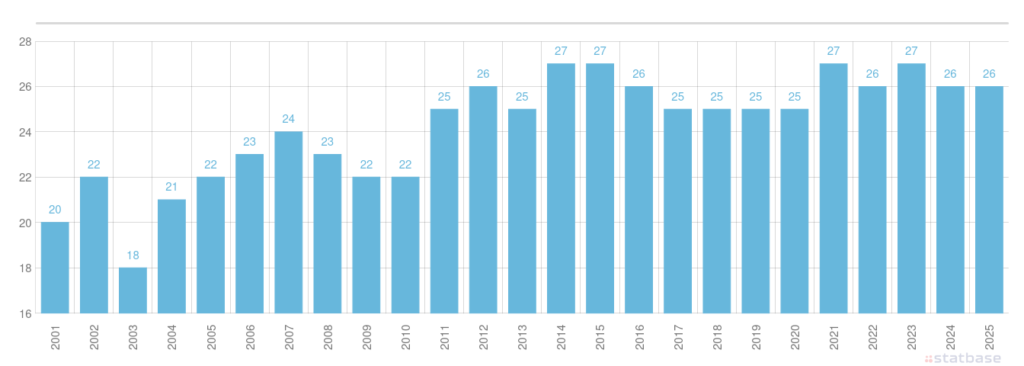
- The Score: Cameroon holds steady at 26/100.
- The Global Rank: 142nd out of 182 nations.
- The Economic Impact: According to the NGO Tax Justice Network, Cameroon loses approximately CFAF 78 billion annually to tax evasion and “informality.”
Corruption in the judicial system and public procurement increases “compliance costs.” For a foreign investor, this acts like an unwritten 10% tax on every transaction.
3. The “Service Gap” & Public Efficiency
As we noted earlier, the World Bank’s B-READY 2025 report gave Cameroon a low 36.3/100 for Public Services.
The bottleneck isn’t the laws; it’s the implementation.
- The 2026 Solution: The government has launched a “Real-Time Taxation” system. By mandating electronic devices that link every transaction directly to the tax office, they hope to recapture CFAF 4,605 billion in revenue this year.
- The Goal: Moving from a manual, cash-heavy system to a digital one to reduce “leakage.”
4. Climate Change: The Sahelian Threat
Cameroon’s Economy explained through geography shows a country split between the rainforest and the desert. That desert is moving south.
- GDP at Risk: Recent econometric studies (2026) show that climate change has caused an cumulative loss of 17.3% of average GDP over the last few decades due to temperature shocks.
- Agricultural Vulnerability: In the Far North, droughts now affect roughly 1.2 million head of livestock annually.
- The Worst Case: Projections suggest that without radical adaptation, Cameroon could lose 31% of its current GDP by 2050.
5. The Informal Trap
Depending on who you ask, between 80% and 90% of the workforce operates in the “informal economy.” These are the street vendors, the “benskin” (moto-taxi) drivers, and the small-scale farmers.
- The Revenue Problem: Because they aren’t registered, they don’t pay corporate tax. This leaves the tax burden on a tiny sliver of large companies.
- The Productivity Problem: Informal businesses struggle to get bank loans. Without credit, they can’t scale. They are “productive,” but they are “trapped.”
Key Takeaway: The “headwinds” are not insurmountable, but they are persistent. The 3% ceiling isn’t a lack of resources; it is the friction of security costs, corruption, and climate shocks.
If Cameroon can solve even one of these—specifically the digital “Service Gap”—the data suggests growth could easily pivot back to the 5% range.
But where should a smart investor look right now?
Chapter 9: Investment Opportunities in 2026 and Beyond
If you’ve followed Cameroon’s Economy explained this far, you know the risks. You know about the “3% ceiling” and the infrastructure gaps.
But here is the “237info” bottom line: Risk is where the alpha is.
While institutional investors often play it safe in Nairobi or Lagos, the savvy capital is moving into Cameroon’s specific high-growth niches. Based on the 2026 data, here are the three sectors where the “Structural Transformation” is creating massive entry points.
1. The Mining “Gold Rush” (Iron & Bauxite)
For fifty years, Cameroon’s mineral wealth was a myth. In 2026, it is a reality. The government has shifted from granting “exploration” licenses to “exploitation” licenses.
- The Mbalam-Nabeba Iron Ore Project: With the railway construction connecting the Dja mining belt to the Kribi Port, this project is set to export 35 million tonnes of high-grade iron ore annually.
- Bauxite in Minim-Martap: With reserves estimated at over 1 billion tonnes, Cameroon is positioned to become a top-5 global bauxite producer.
- The Opportunity: It’s not just the mining; it’s the ancillary services. Logistics, heavy equipment maintenance, and specialized labor housing in the East and Adamawa regions are currently underserved markets.
2. Agro-Processing: The “Finished Good” Gap
As we saw in Chapter 3, Cameroon is tired of exporting raw beans. The government now offers 10-year tax holidays for companies that set up processing plants in “Economic Zones.“
- The Cashew Frontier: While cocoa is saturated, the cashew sector in the North is wide open. Global demand for processed kernels is rising, and Cameroon’s northern climate is perfect for expansion.
- Cold Chain Logistics: 25% of crops rot before reaching the market. There is a massive opportunity for private investment in refrigerated transport and solar-powered silos.
- The Data: Returns on investment (ROI) in local fruit processing (juices, dried fruits) have averaged 18-22% in the 2024-2025 cycle.
3. Renewable Energy (The Solar North)
Nachtigal (Chapter 4) solved the base-load problem for the South, but the North remains energy-starved.
- The Solar Shift: The “Project 25” initiative aims to bring 250MW of solar power to the three northern regions by 2027.
- Decentralized Grids: The government is now approving “Mini-Grid” licenses for private operators to power rural villages without waiting for the national utility (ENEO) to extend the wires.
- Investment Sweetener: Equipment for renewable energy projects is currently 100% exempt from VAT and Customs duties under the 2026 Finance Law.
4. The Real Estate & Urbanization Wave
Douala and Yaoundé are growing at 4.5% per year. By 2030, over 60% of Cameroonians will live in cities.
- The Housing Deficit: There is a current shortage of 2 million social and mid-tier housing units.
- The Commercial Pivot: With the rise of the service sector (Chapter 6), the demand for “Grade A” office space in Douala has seen rents rise by 12% year-on-year.
Related: Read our article on the Cameroon Real Estate Market.
5. Summary: The 2026 Investor’s Scorecard
| Sector | Risk Level | Projected Growth (5-yr) | Key Entry Point |
| Mining | High | 11.2% | Logistics & Infrastructure |
| Agro-Industry | Medium | 8.5% | Value-Added Processing |
| Tech/Fintech | Medium | 15.0% | B2B Payment Solutions |
| Energy | Low/Med | 6.8% | Solar Mini-Grids |
Key Takeaway: The “Smart Money” in Cameroon isn’t looking for a quick flip. It’s looking for bottlenecks. If you can solve a bottleneck—whether it’s energy in the North, processing in the West, or logistics in Kribi—the government is currently making it cheaper than ever to do business.
Conclusion: Is Cameroon Ready for the Big Stage?
We’ve spent more that 4,000 words having Cameroon’s Economy explained from every conceivable angle. We’ve looked at the $48 billion GDP paradox, the “Brown Gold” cocoa boom, and the $5 billion infrastructure super-cycle.
But after all the data points and IMF projections, one question remains: Can Cameroon actually break the 3% ceiling?
The Final Verdict: Resilience Over Raw Speed
If you are looking for an Ethiopian-style 10% growth sprint, you won’t find it here. Cameroon’s economy is a marathon runner, not a sprinter.
The “no-fluff” reality is that Cameroon has built a remarkably diversified foundation. By refusing to lean solely on oil, the country has avoided the “Dutch Disease” that crippled many of its neighbors during the price crashes of the last decade.
The three pillars of the 2026-2030 outlook are clear:
- Energy Sovereignty: With Nachtigal online, the industrial sector finally has the “juice” to move from raw exports to finished goods.
- The Digital Leapfrog: As mobile money hits 12 million active users, the informal economy is finally being integrated into the formal financial system.
- The Port Power: Kribi is no longer a “project”—it is a regional magnet that is fundamentally shifting trade routes in Central Africa.
The “237info” Bottom Line
Success in Cameroon isn’t about waiting for the government to solve every challenge. It’s about identifying the structural shifts that are already happening.
The transition from “Black Gold” (Oil) to “Green & Brown Gold” (Agro-industry) is the most significant economic event in the country’s post-independence history. Those who understand the NDS30 strategy and the import substitution hammer are the ones who will capture the next wave of growth.
What’s Your Take?
We’ve laid out the data, the debts, and the digital revolutions. Now it’s your turn.
- Do you think the $100 billion NDS30 plan is too ambitious given the current “Security Premium”?
- Or is the Nachtigal/Kribi duo enough to finally spark a manufacturing explosion?
Drop a comment below. I read every single one, and I want to know which sector you think is the real sleeping giant of the CEMAC zone.

